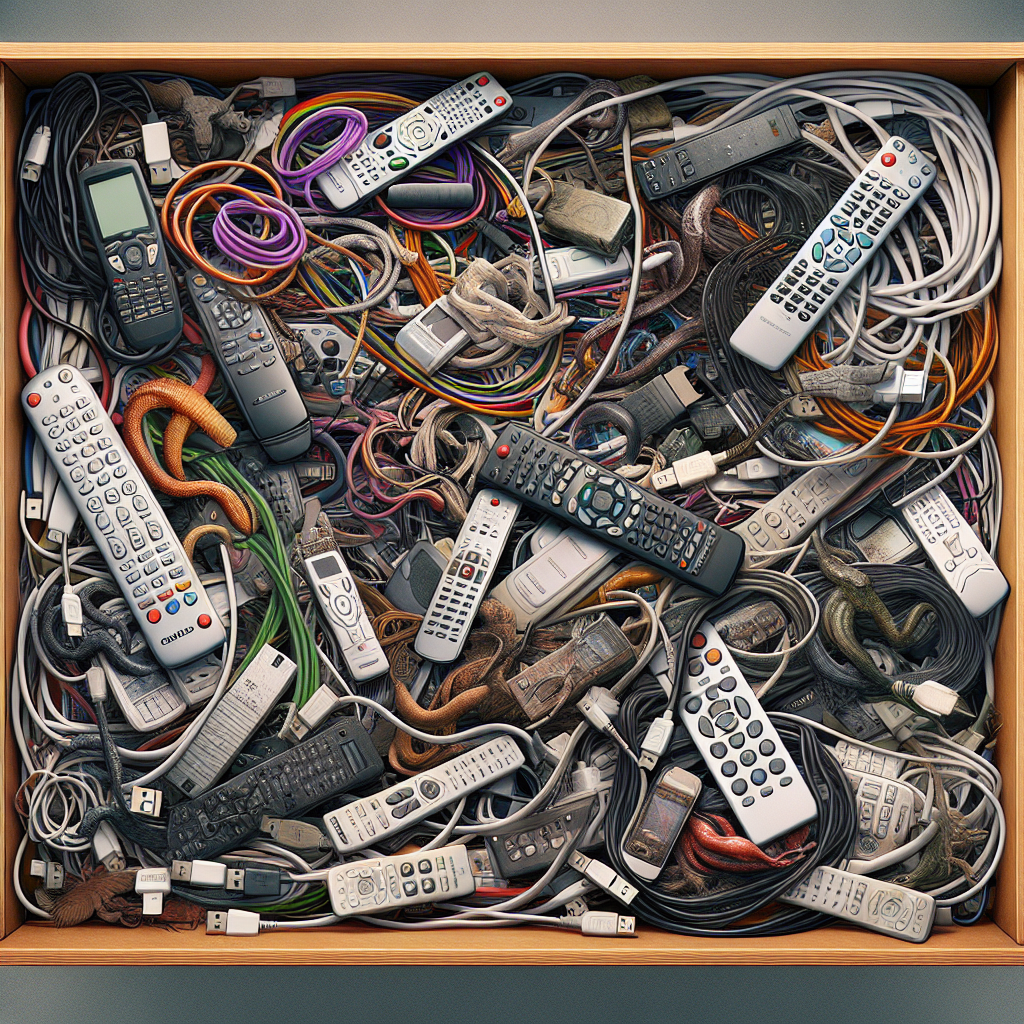
A group called Material Focus is worried about the problem of unused electricals and broken technology in homes. They say that the average number of these items being kept has gone up from 20 to 30 in the past four years. The top ten things that people keep are remote controls, mobile phones, and hairdryers. The United Nations says that electronic waste is increasing five times faster than recycling. They want people to clean out their "drawers of doom" and get rid of these items properly.
One person who admits to keeping lots of electricals is Paul Bowtell. He has over 40 items in just a couple of boxes, and even more in his attic, drawers, footstool, and other boxes. Some of the things belong to his grown-up sons, and some were once expensive but aren't worth anything now. Scott Butler from Material Focus thinks that everyone probably has a "drawer of doom" filled with cables and remote controls for things they don't use anymore.
Material Focus thinks that there are over 880 million unused electrical items in UK homes. They say that we should never throw these things in the normal rubbish because they have valuable materials that can be recycled. These materials include steel, aluminum, copper, batteries, and even gold. Getting these materials in the first place causes pollution, harms animals, and makes climate change worse. So it's important to recycle and get the value from these items.
Sarah Burns from Bristol Waste says that it's important to have fewer electrical items in the first place. One way to do this is by sharing them. For example, at Share Bristol – A Library of Things, people can borrow things like sanders, hedge trimmers, and popcorn makers that they don't need every day. If you have extra laptops or smart devices, you can also give them to people who need them by searching for "recycle your electricals" to find places to drop them off.
Material Focus says that households in the UK are throwing away 103,000 tonnes of electricals instead of recycling them. They also think that 343,000 tonnes of electrical waste are being stolen or illegally taken out of the waste system. They got these numbers by asking 2,000 adults in the UK about their habits.
Original news source: E-waste drawers of doom growing, say campaigners (BBC)
🎧 Listen:
📖 Vocabulary:
Group or Classroom Activities
Warm-up Activities:
– Charades
Instructions: Divide the class into small groups. Each group will take turns acting out a word or phrase related to the article, such as "drawer of doom," "recycling," or "electrical waste." The other groups will try to guess the word or phrase within a certain time limit. The team that guesses correctly gets a point. Repeat with different words or phrases.
– News Summary
Instructions: Have the students work individually or in pairs to write a summary of the article in their own words. Encourage them to include the main points and key details. After a designated amount of time, have the students share and compare their summaries with a partner. Discuss as a class and highlight any differences or interesting points.
– Opinion Poll
Instructions: Divide the class into pairs or small groups. Give each group a list of statements related to the article, such as "Everyone should recycle their unused electrical items" or "Sharing electrical items is a good way to reduce waste." Have each group discuss their opinions on each statement and come to a consensus. Then, have each group share their opinions with the class and facilitate a class discussion on the different perspectives.
– Vocabulary Pictionary
Instructions: Provide the students with a list of vocabulary words from the article, such as "electricals," "recycling," or "pollution." Divide the class into small groups. Each group will take turns choosing a word and drawing a picture to represent it. The other groups will try to guess the word based on the drawing. The group that guesses correctly gets a point. Repeat with different words.
– Future Predictions
Instructions: Have the students work individually or in pairs to make predictions about the future of electronic waste and recycling based on the information in the article. Encourage them to consider the potential consequences, challenges, and solutions. After a designated amount of time, have the students share and discuss their predictions in small groups or as a class.
🤔 Comprehension Questions:
Material Focus is worried about the problem of unused electricals and broken technology in homes.
The top three items that people keep in their homes are remote controls, mobile phones, and hairdryers.
The United Nations says that electronic waste is increasing five times faster than recycling.
Material Focus wants people to clean out their "drawers of doom" and get rid of unused electricals properly because these items have valuable materials that can be recycled, and getting these materials in the first place causes pollution, harms animals, and makes climate change worse.
Paul Bowtell keeps lots of electricals because some of them belong to his grown-up sons, and some were once expensive but aren't worth anything now.
Valuable materials that can be recycled from unused electrical items include steel, aluminum, copper, batteries, and even gold.
According to Sarah Burns, it is important to have fewer electrical items in the first place because it reduces the need for manufacturing new items, which causes pollution, harms animals, and contributes to climate change.
Material Focus gathered data about the amount of electrical waste being thrown away and illegally taken out of the waste system by asking 2,000 adults in the UK about their habits.
🎧✍️ Listen and Fill in the Gaps:
A group called Material Focus is about the problem of unused and broken technology in homes. They say that the average number of these items being kept has gone up from 20 to 30 in the past four years. The top ten that people keep are remote controls, mobile phones, and hairdryers. The United Nations says that electronic is increasing five times faster than recycling. They want people to clean out their "drawers of doom" and get rid of these items properly. One person who admits to keeping lots of electricals is Paul Bowtell. He has over 40 in just a of boxes, and even more in his attic, drawers, footstool, and other boxes. Some of the things belong to his grown-up sons, and some were once expensive but aren't worth anything now. Scott from Material Focus thinks that everyone probably has a "drawer of doom" filled with cables and remote for things they don't use anymore. Material Focus thinks that there are over 880 million unused electrical items in UK homes. They say that we should never throw these things in the normal rubbish because they have valuable that can be recycled. These materials include steel, aluminum, copper, batteries, and even gold. Getting these materials in the first place causes pollution, harms animals, and makes change worse. So it's important to recycle and get the value from these items. Sarah Burns from Waste says that it's important to have fewer electrical items in the first place. One way to do this is by them. For example, at Share Bristol – A Library of Things, people can borrow things like sanders, trimmers, and popcorn makers that they don't need every day. If you have extra laptops or devices, you can also give them to people who need them by searching for "recycle your electricals" to find places to drop them off. Material Focus says that in the UK are throwing away 103,000 tonnes of electricals instead of recycling them. They also that 343,000 tonnes of electrical waste are being stolen or illegally taken out of the waste system. They got these numbers by asking 2,000 adults in the UK about their habits.
💬 Discussion Questions:
1. What is Material Focus and why are they worried about unused electricals and broken technology in homes?
2. How many items on average are people keeping in their homes, according to Material Focus?
3. Do you have a "drawer of doom" filled with items you don't use anymore? Why or why not?
4. How would you feel if you had over 40 electrical items in your house like Paul Bowtell? Why?
5. Do you think it's important to recycle unused electrical items? Why or why not?
6. Why does Material Focus say we should never throw these items in the normal rubbish?
7. What valuable materials can be recycled from unused electrical items?
8. How does getting these materials in the first place affect the environment?
9. Do you agree with Sarah Burns that it's important to have fewer electrical items in the first place? Why or why not?
10. Have you ever borrowed something from a library of things or shared an electrical item with someone? How was your experience?
11. How much electrical waste do households in the UK throw away instead of recycling, according to Material Focus?
12. Why do you think some people choose to illegally take electrical waste out of the waste system?
13. Do you think the numbers provided by Material Focus accurately represent the habits of adults in the UK? Why or why not?
14. How could you personally help reduce the amount of electrical waste in your community?
15. What do you think would happen if everyone in the UK recycled their unused electrical items properly?
Individual Activities
📖💭 Vocabulary Meanings:
Click a dot next to a word, then click the dot next to its meaning to draw a line connecting them.
Words
Meanings
🔡 Multiple Choice Questions:
🕵️ True or False Questions:
📝 Write a Summary:
Write a summary of this news article in two sentences.
Check your writing now with the best free AI for English writing!