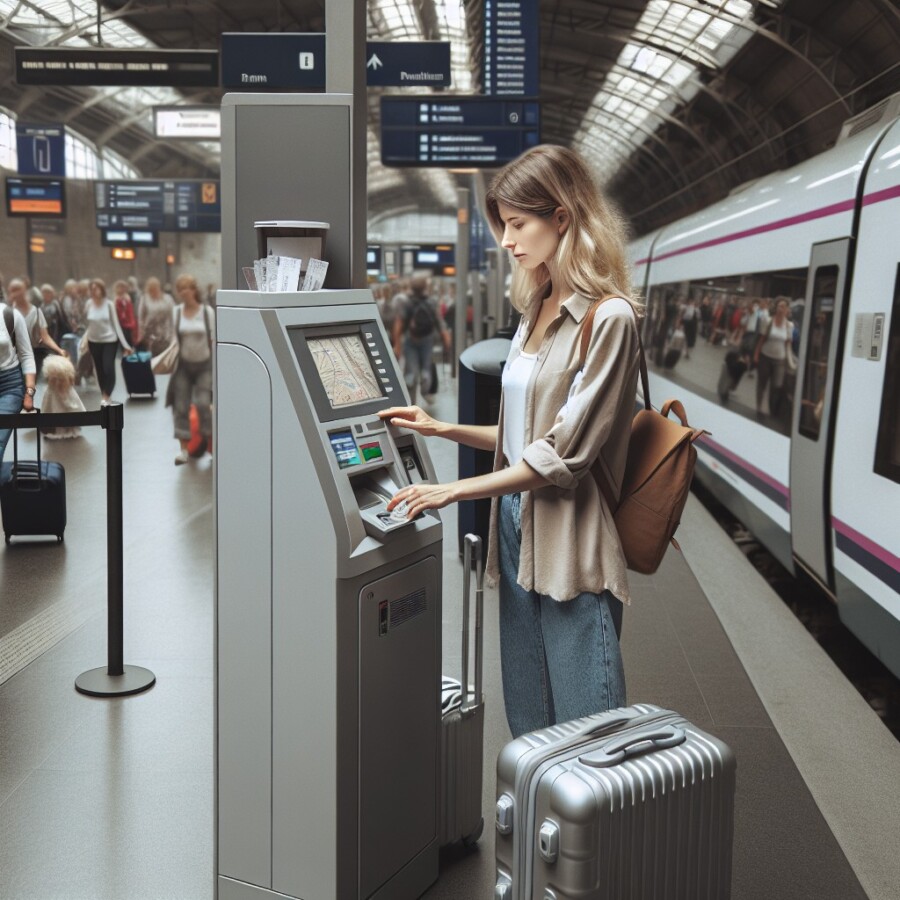
Ticket machines at railway stations are charging passengers more than double the price they would pay online for certain journeys, according to research by consumer group Which?. The study found that same-day rail tickets were on average 50% more expensive at stations compared to online prices. The best value fares were either unavailable or difficult to find among the options on many machines. Plans to close hundreds of rail ticket offices in England were abandoned in November after public outcry. Currently, only one in six government-controlled train stations has a full-time ticket office.
Which? sent mystery shoppers to 15 stations, each run by a different train operator, to compare the prices of 75 journeys from ticket machines with those from online retailer Trainline. The research found significant price differences. For example, a journey from Holmes Chapel in Cheshire to London cost £66 at a machine, while Trainline offered the same trip for £26. The price difference was even more pronounced for a journey from Northampton to Cardiff, which cost £107 at a machine but only £43 online. The reasons for the higher prices at machines include the lack of cheaper advance fares or split-ticketing options, as well as less visibility of off-peak fares.
Rory Boland, editor of Which? Travel, described the price differences as "simply astounding". He highlighted that many people, especially the elderly who may not have internet access, are potentially paying significantly more than necessary when they commute or travel across the country. Two in five stations do not have a ticket office at all, leaving people with no option but to use ticket machines if they do not have access to online tickets. The wide variety of train fares available can also make it difficult for travelers to determine which option is best for them.
Train operator LNER has been trialing ways to simplify fares, including scrapping return tickets and reducing the number of available standard class fares. The Rail Delivery Group, which represents train companies, acknowledged the need for further progress in fares reform. They highlighted the introduction of single leg pricing and the expansion of pay as you go contactless fares as important changes that make fares easier and simpler for customers. In December, the Department for Transport announced that regulated train fares in England would increase by up to 4.9% from March, below the rate of inflation and delayed from the usual January increase. Regulated fares cover approximately 45% of fares, including season tickets and off-peak return tickets.
Original news source: Train ticket machines charging double online price (BBC)
🎧 Listen:
📖 Vocabulary:
Group or Classroom Activities
Warm-up Activities:
– News Summary
Instructions: Divide the class into pairs or small groups. Give each group a copy of the article. Instruct them to read the article and then work together to write a concise summary of the main points. After a designated amount of time, have each group share their summary with the class.
– Opinion Poll
Instructions: Divide the class into pairs or small groups. Give each group a list of questions related to the article. Instruct them to discuss the questions and share their opinions with each other. After a designated amount of time, have each group share their opinions with the class.
– Vocabulary Pictionary
Instructions: Divide the class into pairs or small groups. Give each group a list of vocabulary words from the article. Instruct them to take turns drawing a word from the list while their partner(s) guess what the word is. They can only use drawings, no speaking allowed. After a designated amount of time, have each group share their drawings and the class can guess the words together.
– Pros and Cons
Instructions: Divide the class into pairs or small groups. Instruct them to discuss the pros and cons of ticket machines at railway stations based on the information in the article. Have them consider both the advantages and disadvantages of using ticket machines. After a designated amount of time, have each group share their ideas with the class.
– Future Predictions
Instructions: Divide the class into pairs or small groups. Instruct them to imagine they are in charge of improving the ticketing system at railway stations. Have them brainstorm and discuss ideas for how to make the system more fair and efficient. Instruct them to think about the potential impact of technology, pricing strategies, and customer experience. After a designated amount of time, have each group share their ideas with the class.
🤔 Comprehension Questions:
🎧✍️ Listen and Fill in the Gaps:
Ticket machines at railway stations are charging passengers more than double the price they would pay online for certain journeys, according to research by consumer group Which?. The study found that same-day rail tickets were on average 50% more expensive at stations compared to online prices. The best value fares were either unavailable or difficult to find among the options on many machines. Plans to close hundreds of rail ticket in were abandoned in after outcry. Currently, only one in six government-controlled train stations has a full-time ticket office. Which? sent mystery shoppers to 15 stations, each run by a different train operator, to compare the prices of 75 journeys from ticket s with those from online retailer Trainline. The research found significant price differences. For example, a journey from Holmes in Cheshire to London cost £66 at a machine, while Trainline the same trip for £26. The price difference was even more pronounced for a journey from Northampton to Cardiff, which cost £107 at a machine but only £43 online. The reasons for the higher prices at machines the lack of cheaper advance fares or split-ticketing options, as well as less visibility of off-peak fares. Rory Boland, editor of Which? Travel, described the differences as "simply astounding". He highlighted that many , especially the elderly who may not have internet access, are potentially paying significantly more than necessary when they commute or travel across the country. Two in five stations do not have a office at all, leaving people with no option but to use ticket machines if they do not have access to online tickets. The wide variety of train fares available can also make it difficult for travelers to which option is best for them. Train operator LNER has been trialing ways to simplify fares, including scrapping return tickets and reducing the number of available standard fares. The Rail Delivery , which represents train companies, acknowledged the need for further progress in fares reform. They highlighted the introduction of single leg pricing and the expansion of pay as you go contactless fares as important changes that make fares easier and simpler for customers. In December, the Department for Transport announced that regulated train fares in England would increase by up to 4.9% from March, below the rate of inflation and delayed from the usual January increase. fares cover approximately 45% of fares, including season tickets and off-peak tickets.
💬 Discussion Questions:
1. What is your opinion on the price differences between tickets bought at railway stations and online?
2. How would you feel if you found out that you were paying more than double the price for a train ticket at a station compared to buying it online?
3. Do you think it is fair for ticket machines to charge higher prices for certain journeys? Why or why not?
4. Have you ever experienced difficulties finding the best value fares when using a ticket machine? If so, can you explain your experience?
5. What do you think should be done to address the issue of higher prices at ticket machines?
6. How do you think the closure of ticket offices in England has affected passengers who rely on ticket machines?
7. Do you think it is important for train companies to simplify fares? Why or why not?
8. How do you think the lack of cheaper advance fares and split-ticketing options affects passengers who use ticket machines?
9. Have you ever had to use a ticket machine because there was no ticket office available? If so, can you share your experience?
10. Do you think train companies should prioritize making fares easier and simpler for customers? Why or why not?
11. How do you think the introduction of single leg pricing and pay as you go contactless fares has improved the ticketing system?
12. What are some challenges you face when trying to determine the best ticket option for your train journey?
13. How do you think the increase in regulated train fares in England will impact passengers?
14. Do you think the government should intervene to regulate ticket prices at railway stations? Why or why not?
15. Have you ever used an online retailer, like Trainline, to purchase train tickets? If so, what was your experience like compared to buying tickets at a station?
Individual Activities
📖💭 Vocabulary Meanings:
Click a dot next to a word, then click the dot next to its meaning to draw a line connecting them.
Words
Meanings
🔡 Multiple Choice Questions:
🕵️ True or False Questions:
📝 Write a Summary:
Write a summary of this news article in two sentences.
Check your writing now with the best free AI for English writing!