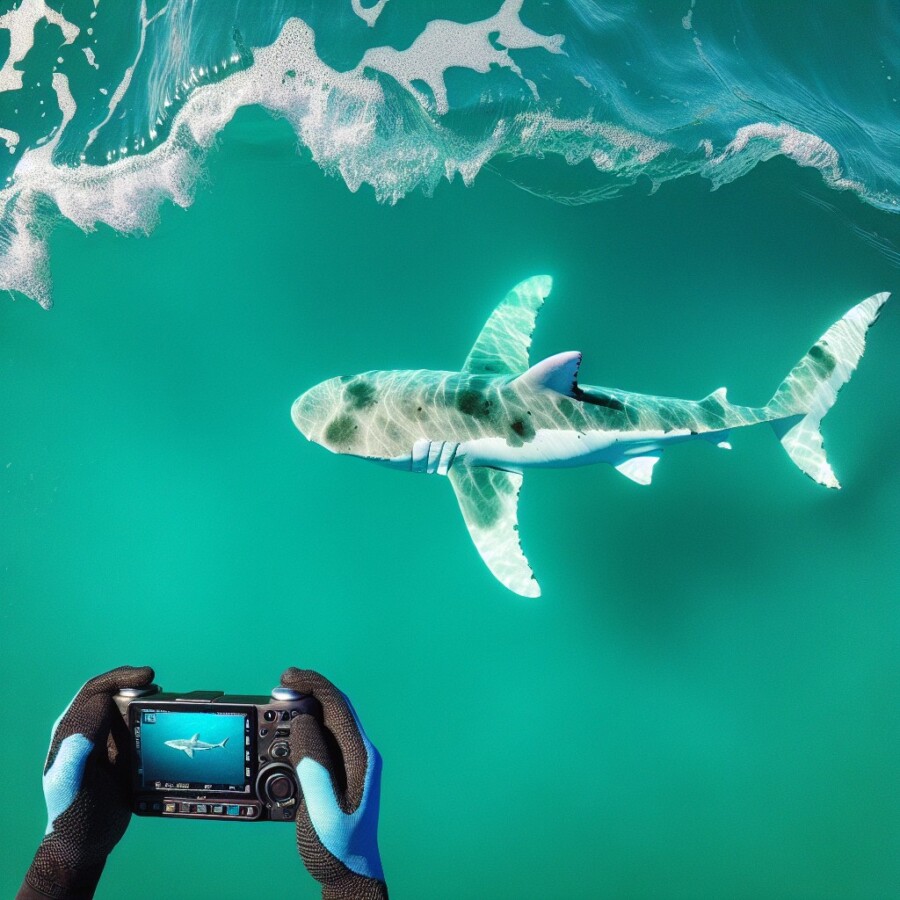
A YouTuber named Carlos Gauna, also known as TheMalibuArtist, may have captured the first-ever footage of a newborn great white shark. Carlos is known for filming sharks from above using his drone, providing unique and close-up shots of these creatures. His videos often show great whites swimming dangerously close to humans, which can be quite thrilling. Last year, while filming near Santa Barbara, California, Carlos came across a small, white shark that appeared to be albino. As he brought his drone closer, he noticed that the white layer on the shark seemed to be flaking off, leading him to believe it could be a newborn. Shark researcher Phil Sternes, who was with Carlos at the time, was equally excited by this discovery. The shape of the shark's fins, which were more rounded than usual, indicated that it could be a newborn. James Worthington from the University of San Diego estimated the shark's length to be around 1.5 meters, which is typical for a newborn. Their observation has been published in the journal Environmental Biology of Fishes. However, some marine biologists urge caution in jumping to the conclusion that it is definitely a newborn great white shark. Dr. Chris Lowe from California State University's shark lab believes there could be other explanations for the white layer, such as a skin disease. He suggests that more evidence is needed before confirming it as a newborn. Despite the skepticism, Carlos and Phil believe that the evidence from the video, including the aggressive flaking, the shape of the fins, and the size of the shark, supports their theory. Drones have revolutionized shark filming, providing valuable insights into their behavior. Carlos hopes to one day capture the first-ever footage of a great white shark being born.
Original news source: Has great white shark newborn been caught on film for the first time? (BBC)
🎧 Listen:
📖 Vocabulary:
Group or Classroom Activities
Warm-up Activities:
– News Summary
Instructions: Have students read the article individually and then write a brief summary of the main points. Encourage them to include key details and use their own words.
– Opinion Poll
Instructions: Divide the class into pairs or small groups. Have them discuss their opinions on the article and then conduct a poll to see how many students agree or disagree with certain statements or theories in the article. Afterwards, have them share their findings with the class.
– Sketch It
Instructions: Provide each student with a blank piece of paper and ask them to sketch what they think the newborn great white shark looks like based on the description in the article. Once they have finished, have them compare their sketches with a partner and discuss any similarities or differences.
– Vocabulary Pictionary
Instructions: Write down key vocabulary words from the article on separate pieces of paper and put them in a hat or bowl. Divide the class into teams and have one student from each team draw a word from the hat and try to get their team to guess the word by drawing it. The team with the most correct guesses wins.
– Pros and Cons
Instructions: Divide the class into two groups and assign one group to argue the pros of the evidence supporting the theory of the newborn great white shark, and the other group to argue the cons. Have each group take turns presenting their arguments and then open up a class discussion on which side they find more convincing.
🤔 Comprehension Questions:
Carlos Gauna is known for filming sharks from above using his drone.
Carlos Gauna came across the small, white shark near Santa Barbara, California.
The white layer on the shark appeared to be flaking off, leading Carlos to believe it could be a newborn.
Shark researcher Phil Sternes was with Carlos when he discovered the white shark.
James Worthington estimated the length of the shark to be around 1.5 meters, which is typical for a newborn.
Some marine biologists urge caution because there could be other explanations for the white layer, such as a skin disease.
The aggressive flaking, the shape of the fins, and the size of the shark support Carlos and Phil's theory.
Drones have provided valuable insights into shark behavior by revolutionizing shark filming and providing unique and close-up shots of these creatures.
🎧✍️ Listen and Fill in the Gaps:
A YouTuber Gauna, also known as TheMalibuArtist, may have captured the first-ever footage of a newborn great white shark. Carlos is known for filming sharks from above his drone, providing unique and close-up shots of these creatures. His often show great whites swimming dangerously close to humans, which can be quite thrilling. Last year, while filming near Santa Barbara, California, Carlos came across a small, white shark that appeared to be . As he brought his closer, he that the white layer on the shark seemed to be flaking off, leading him to believe it could be a newborn. Shark researcher Phil Sternes, who was with Carlos at the time, was equally excited by this discovery. The shape of the shark's fins, which were more rounded than usual, indicated that it could be a newborn. James from the University of San Diego estimated the 's length to be around 1.5 meters, which is for a newborn. Their observation has been published in the Environmental Biology of Fishes. However, some marine biologists urge caution in jumping to the conclusion that it is definitely a newborn great white shark. Dr. Chris Lowe from State University's shark lab believes there could be other explanations for the white layer, such as a skin disease. He suggests that more evidence is needed before confirming it as a newborn. Despite the skepticism, Carlos and Phil believe that the evidence from the video, the flaking, the shape of the fins, and the size of the shark, supports their theory. have revolutionized shark filming, providing valuable insights into their behavior. Carlos hopes to one day the first-ever footage of a great white shark being born.
💬 Discussion Questions:
1. What is your opinion on using drones to film sharks?
2. How would you feel if you saw a great white shark swimming dangerously close to humans?
3. Do you think it is important to capture footage of a great white shark being born? Why or why not?
4. Have you ever seen a shark in person? If so, how did it make you feel?
5. What do you think is the significance of capturing footage of an albino shark?
6. How would you react if you saw a newborn great white shark in the ocean?
7. Do you think it is possible for the white layer on the shark to be a skin disease? Why or why not?
8. What are some potential dangers or risks of using drones to film sharks?
9. Have you ever had a close encounter with a wild animal? If so, what happened and how did you feel?
10. What do you think motivates Carlos Gauna to film sharks and capture unique footage?
11. Do you believe that drones have had a positive impact on our understanding of shark behavior? Why or why not?
12. How do you think marine biologists can gather more evidence to confirm whether the shark is a newborn or not?
13. What are some other ways that technology has helped us learn more about marine life?
14. Do you think it is important for researchers to continue studying and learning about sharks? Why or why not?
15. How do you think the discovery of a newborn great white shark could impact our understanding of shark populations and conservation efforts?
Individual Activities
📖💭 Vocabulary Meanings:
Click a dot next to a word, then click the dot next to its meaning to draw a line connecting them.
Words
Meanings
🔡 Multiple Choice Questions:
🕵️ True or False Questions:
📝 Write a Summary:
Write a summary of this news article in two sentences.
Check your writing now with the best free AI for English writing!