

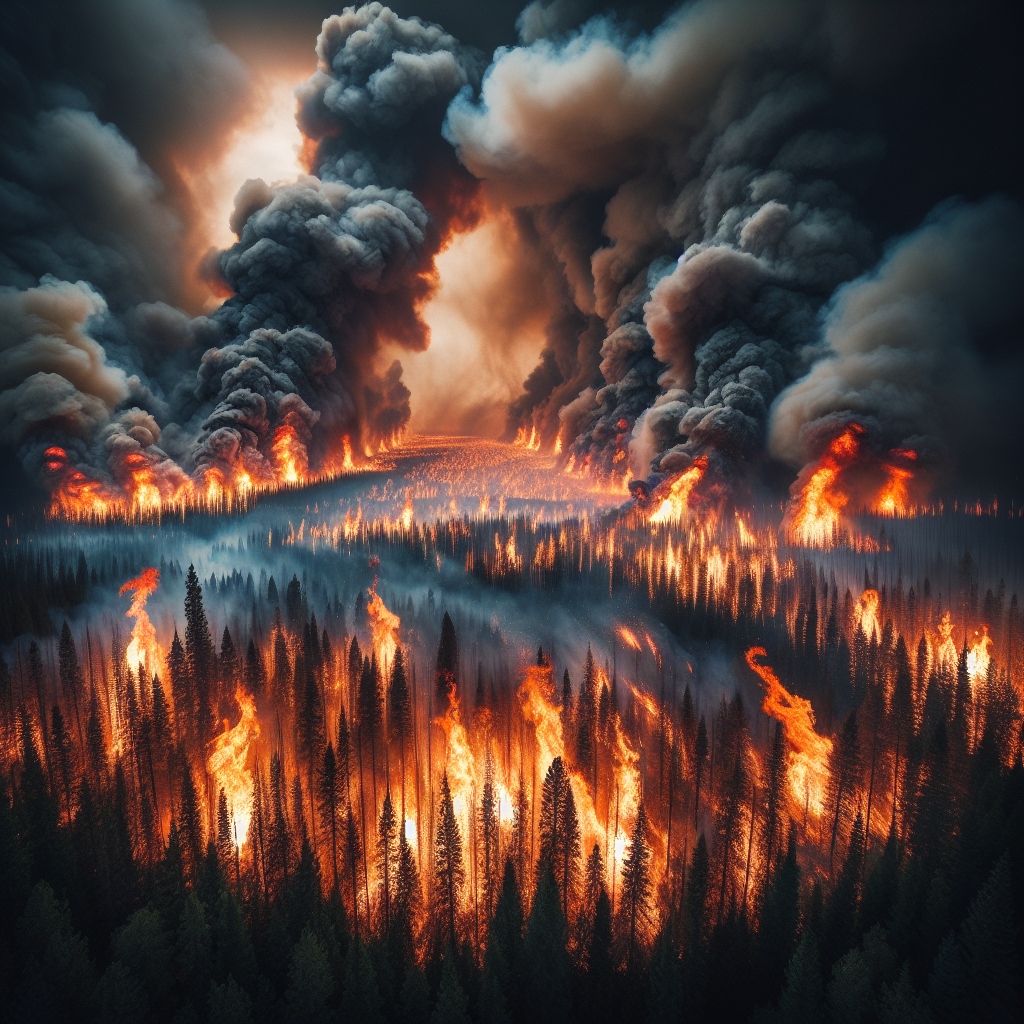
Canada is having many big fires because it is very dry and hot. These fires are making many people leave their homes in places like Alberta and British Columbia. The fires start from lightning and sometimes from people, like when a tree hits a power line. Right now, there are 135 fires burning, and 39 of them are very hard to control.
The fire season in Canada is starting earlier every year. Before, it started in July or August, but now it starts in May. Last year, Canada had the worst fires ever, burning a lot of land. This year, the fires started early again, but it might not be as bad as last year. Still, the government is worried because the weather is warmer than usual.
Original news source: Why is Canada having so many wildfires this season? (BBC)
🎧 Listen:
📖 Vocabulary:
Group or Classroom Activities
Warm-up Activities:
– Charades
Instructions: Divide the class into two teams. One student from each team will come to the front of the class and act out a word or phrase related to the article (e.g. "firefighter," "evacuation"). The team members have to guess what the word or phrase is within a certain time limit (e.g. 1 minute). The team with the most correct guesses wins.
– News Summary
Instructions: Provide the students with a simplified version of the article. In pairs or small groups, they have to summarize the main points of the article in their own words. Afterwards, they can share their summaries with the class.
– Opinion Poll
Instructions: Ask the students to think about their opinions on the topic of wildfires. Give them a list of statements related to the article (e.g. "Wildfires are a natural disaster," "Climate change is causing more wildfires"). Have them indicate whether they agree or disagree with each statement by placing themselves on a spectrum in the classroom (e.g. agree on one side, disagree on the other side). Afterwards, they can explain their reasoning to the class.
– Vocabulary Pictionary
Instructions: Write down key vocabulary words from the article on separate pieces of paper and put them in a hat. Divide the class into two teams. One student from each team will pick a word from the hat and have to draw it on the board without using any words or letters. The team members have to guess what the word is within a certain time limit (e.g. 1 minute). The team with the most correct guesses wins.
– Future Predictions
Instructions: Have the students brainstorm and discuss what they think will happen in the future regarding wildfires in Canada. They can base their predictions on the information from the article and their own knowledge. Afterwards, they can share their predictions with the class and discuss their reasoning.
🤔 Comprehension Questions:
Because it is very dry and hot.
The fires are very dangerous and can burn their homes down.
They start from lightning or when something like a tree hits a power line.
There are 135 fires burning right now.
It used to start in July or August.
Now it starts in May.
They are worried because the weather is warmer than usual.
🎧✍️ Listen and Fill in the Gaps:
Canada is having big fires because it is very dry and hot. These fires are many people leave their homes in places like Alberta and British Columbia. The fires start from and sometimes from , like when a tree hits a power line. Right now, there are 135 fires burning, and 39 of them are very hard to control. The fire season in Canada is starting earlier every year. Before, it started in July or August, but now it in May. Last year, Canada had the worst fires ever, a lot of land. This year, the fires started early again, but it might not be as bad as last year. Still, the is because the weather is warmer than usual.
💬 Discussion Questions:
1. What is a fire?
2. How would you feel if you had to leave your home because of a fire?
3. Do you like hot weather? Why or why not?
4. What do you think causes fires in Canada?
5. How do you think the government can control the fires?
6. Have you ever seen a fire? What did it look like?
7. Do you think it's important to protect the land from fires? Why or why not?
8. How do you think the fires affect the animals in the area?
9. Have you ever been in a situation where you had to leave your home? How did you feel?
10. What do you think the government should do to prevent fires in the future?
11. Do you think the weather is getting hotter where you live? Why or why not?
12. How would you help someone who lost their home in a fire?
Individual Activities
📖💭 Vocabulary Meanings:
Click a dot next to a word, then click the dot next to its meaning to draw a line connecting them.
Words
Meanings
🔡 Multiple Choice Questions:
🕵️ True or False Questions:
📝 Write a Summary:
Write a summary of this news article in two sentences.
Check your writing now with the best free AI for English writing!