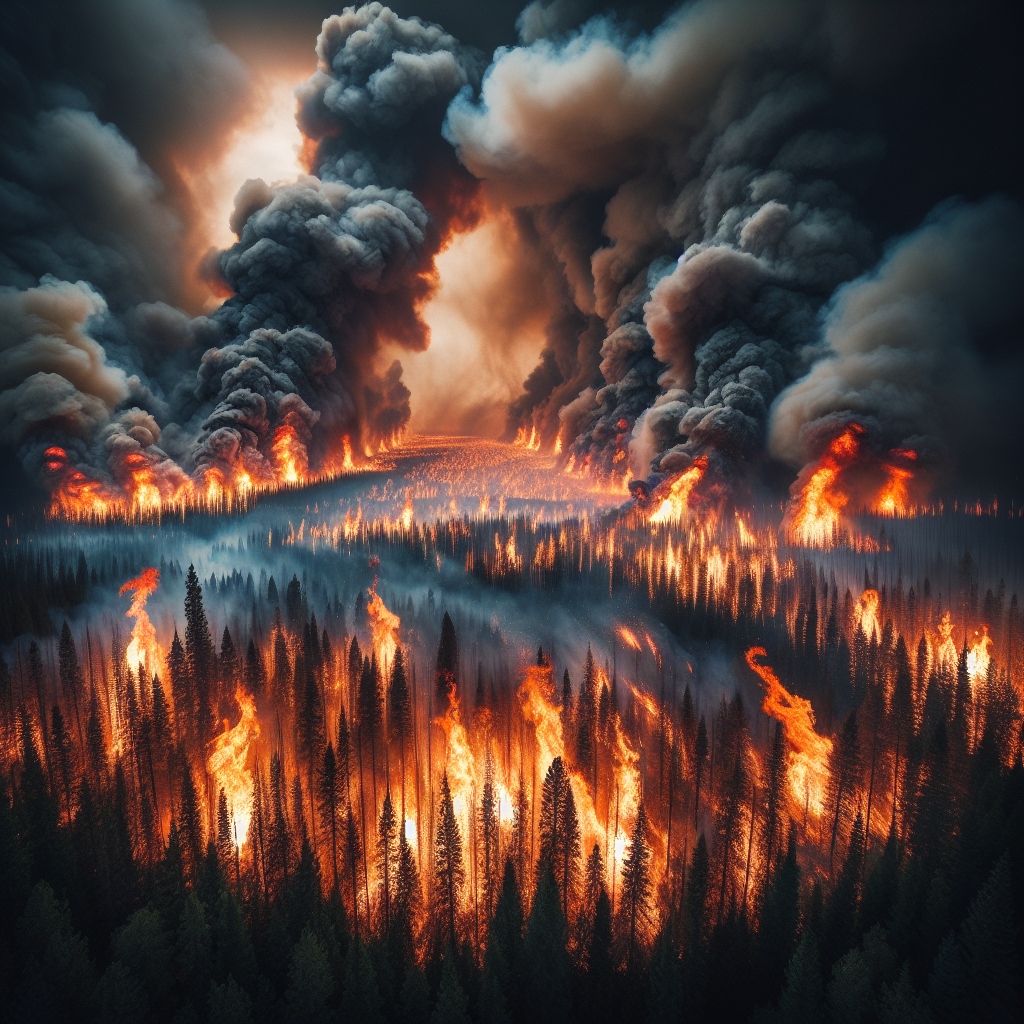
Canada is having a lot of wildfires right now, especially in the western parts of the country. The fires are spreading because it's really dry and there hasn't been much rain. Thousands of people have had to leave their homes because of the fires. The town of Fort McMurray, which was already hit by fires in 2016, is being affected again. Other places like Fort Nelson and Cranberry Portage have also been impacted by the fires.
There are a few reasons why the fires are happening. Sometimes, strong winds knock over trees and they hit power lines, which starts fires. Lightning strikes are also a common cause. People doing careless things or even starting fires on purpose can also make the fires start. Climate change and hotter temperatures are making it easier for fires to happen in Canada. Places that are already dry are becoming even more at risk because of the warming climate.
The wildfire season in Canada is starting earlier and earlier each year. It used to start in July or August, but now it's starting as early as May. Last year was the worst fire season ever, with a lot of land getting burned. This year, even though the season is starting early again, experts think it might not be as bad as last year. How bad the season is depends on the weather during the summer.
The Canadian government is warning that this year's wildfire season could be really bad because of the warmer weather. But it's important to remember that we won't know for sure until the summer is over. People are working hard to stop the fires, but it might take a few weeks to put them all out. The smoke from the fires is also affecting the air quality in both Canada and the United States, so people need to be careful.
Original news source: Why is Canada having so many wildfires this season? (BBC)
🎧 Listen:
📖 Vocabulary:
Group or Classroom Activities
Warm-up Activities:
– News Summary
Instructions: Divide the students into pairs or small groups. Give each group a copy of the article. Instruct them to read the article and summarize the main points in their own words. After a designated amount of time, have each group share their summaries with the class.
– Opinion Poll
Instructions: Divide the students into pairs or small groups. Give each group a list of questions related to the article, such as "Do you think climate change is a major factor in the increase of wildfires in Canada?" or "Should stricter measures be taken against people who start fires on purpose?" Instruct the students to discuss the questions and record their opinions. After a designated amount of time, have a class discussion where groups share their opinions.
– Sketch It
Instructions: Give each student a blank piece of paper and a pen or pencil. Instruct them to read the article and choose a scene or event to sketch. They should draw a visual representation of their chosen scene, using the information from the article as inspiration. After a designated amount of time, have students share their sketches with the class and explain their choices.
– Vocabulary Pictionary
Instructions: Write a list of vocabulary words from the article on the board. Divide the students into pairs or small groups. Instruct each group to choose a word from the list and draw a quick sketch to represent that word. The other group members must guess the word based on the sketch. After a designated amount of time, have groups switch roles and continue playing.
– Think-Pair-Share
Instructions: Instruct the students to individually read the article and think about the following question: "What are the potential consequences of the increasing number of wildfires in Canada?" After a few minutes, have the students pair up and discuss their thoughts with their partner. Finally, have a class discussion where students share their ideas and opinions.
🤔 Comprehension Questions:
There are a lot of wildfires in Canada right now because it's really dry and there hasn't been much rain.
The fires are spreading because of strong winds knocking over trees and hitting power lines, lightning strikes, and sometimes people doing careless things or starting fires on purpose.
The towns of Fort McMurray, Fort Nelson, and Cranberry Portage have been affected by the fires.
Fires are becoming more common in Canada because of climate change and hotter temperatures. The warming climate is making already dry places even more at risk for fires.
The wildfire season in Canada usually starts in July or August.
Last year's fire season was worse than this year's.
The Canadian government is warning that this year's wildfire season could be really bad because of the warmer weather.
The fires are affecting the air quality in both Canada and the United States, causing smoke and potentially harmful particles to be in the air.
🎧✍️ Listen and Fill in the Gaps:
Canada is having a lot of wild right now, especially in the western of the country. The fires are spreading because it's really dry and there hasn't been much rain. Thousands of have had to leave their homes because of the fires. The town of Fort McMurray, which was already hit by fires in 2016, is being affected again. Other places like Fort and Cranberry Portage have also been impacted by the fires. There are a few why the fires are happening. Sometimes, strong knock over trees and they hit power lines, which starts fires. Lightning strikes are also a common . People doing things or even starting fires on purpose can also make the fires start. Climate change and hotter temperatures are making it easier for fires to happen in Canada. Places that are already dry are becoming even more at risk because of the warming climate. The wildfire in is ing earlier and earlier each year. It used to start in July or August, but now it's starting as early as May. Last year was the fire season ever, with a lot of land getting burned. This year, even though the season is starting early again, experts think it might not be as bad as last year. How bad the season is depends on the weather during the summer. The government is warning that this year's wildfire season could be really bad because of the warmer weather. But it's important to remember that we won't know for sure until the summer is over. People are working hard to stop the fires, but it might take a few to put them all out. The smoke from the fires is also the air quality in both Canada and the United , so people need to be careful.
💬 Discussion Questions:
1. What do you think it would be like to have to leave your home because of a wildfire?
2. How would you feel if your town was hit by a wildfire two years in a row?
3. Do you think climate change is making wildfires worse? Why or why not?
4. How do you think the earlier start to the wildfire season affects people's lives?
5. What do you think the government can do to prevent wildfires?
6. How would you feel if you had to live with the smoke from the fires affecting the air quality?
7. Do you think it's important for people to be careful and take precautions during wildfire season? Why or why not?
8. What do you think are some of the challenges faced by the people working to stop the fires?
9. Have you ever experienced a natural disaster? How did it make you feel?
10. What do you think are some ways that communities can support each other during a wildfire?
11. How do you think the wildlife is affected by the wildfires?
12. Do you think it's fair to blame people for starting fires on purpose? Why or why not?
13. How do you think the fires impact the economy of the affected areas?
14. What do you think are some long-term solutions to prevent wildfires from happening?
15. How do you think the wildfires in Canada compare to wildfires in other parts of the world?
Individual Activities
📖💭 Vocabulary Meanings:
Click a dot next to a word, then click the dot next to its meaning to draw a line connecting them.
Words
Meanings
🔡 Multiple Choice Questions:
🕵️ True or False Questions:
📝 Write a Summary:
Write a summary of this news article in two sentences.
Check your writing now with the best free AI for English writing!