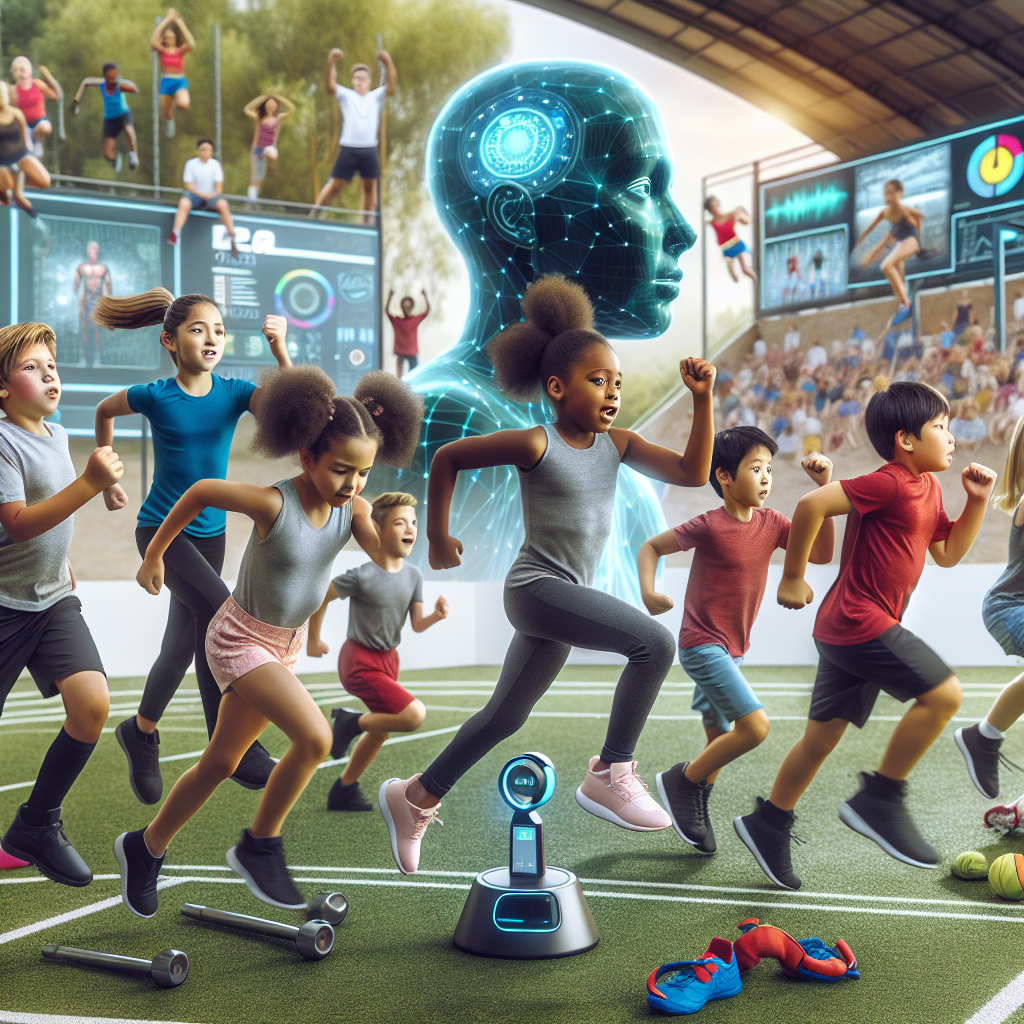
At the Paris Olympics, a new AI-powered talent identification system is being tested, aiming to discover future Olympic champions. This innovative technology is designed to assess the athletic potential of young participants, providing insights into their suitability for various sports. Developers of the system envision a portable version that could extend the reach of advanced sports science to remote areas worldwide, ensuring that talent is recognized regardless of location.
During the testing, children like Tacto and Tomo from Yokohama, Japan, engage in a series of activities that include running, jumping, and grip strength exercises. The system collects data from these tests, which is then analyzed to evaluate attributes such as power, explosiveness, endurance, reaction time, strength, and agility. By comparing the results with data from elite athletes, the system can suggest which sport each participant is best suited for. Sarah Vickers, head of Intel’s Olympic and Paralympic Program, emphasizes that this technology allows the average person to see how they measure up against elite athletes.
The AI system being showcased in Paris has a more portable counterpart that can operate on devices like mobile phones and tablets. This accessibility allows for performance assessments without the need for complex physical sensors. Recently, the International Olympic Committee utilized this technology in Senegal, where it assessed over 1,000 children in various villages. The initiative, in partnership with Senegal’s National Olympic Committee, successfully identified 48 children with significant athletic potential, offering them opportunities to further develop their skills.
While the potential for early talent identification is exciting, experts like Prof. John Brewer caution that a basic assessment system may not capture all necessary attributes, particularly for technical sports that require specific skills or endurance. He acknowledges the value of the AI system for initial evaluations, especially in areas lacking access to advanced assessment methods. However, he stresses that this technology should be part of a larger talent identification framework to ensure comprehensive evaluation of athletes.
As the testing continues at the Olympic Stadium, participants like Tacto are thrilled to learn they have been identified as potential sprinters, even if their current interests lie in other sports. More experienced athletes, Hank and Brock, also engage with the technology, humorously noting the unexpected results they received. Despite the advancements in AI, the system does not always predict accurately, highlighting the complexities of athletic talent identification. Overall, this innovative approach represents a significant step forward in recognizing and nurturing future sports stars.
Original news source: The AI tech aiming to identify future Olympians (BBC)
🎧 Listen:
📖 Vocabulary:
Group or Classroom Activities
Warm-up Activities:
– CHARADES
Instructions: Students will act out different sports without using words, while their classmates guess what sport is being represented. This will encourage vocabulary related to sports and athletic activities.
– OPINION POLL
Instructions: Students will create a poll with questions about the use of AI in sports talent identification. They will then circulate the poll among classmates and compile the results to discuss different viewpoints on the technology's impact on sports.
– ARTICLE TIMELINE
Instructions: In small groups, students will create a timeline of the key events mentioned in the article, such as the testing of the AI system, the assessment of children in Senegal, and the opinions of experts. This will help reinforce the chronological understanding of the article's content.
– HEADLINE CREATION
Instructions: Students will brainstorm and write catchy headlines for the article that summarize the main ideas. They will then share their headlines with the class and discuss the different angles they took.
– MIND MAP
Instructions: Students will work in pairs to create a mind map that visually represents the main concepts and details from the article. This will help them organize their thoughts and see the connections between the different aspects of AI in sports talent identification.
🤔 Comprehension Questions:
The primary goal is to discover future Olympic champions by assessing the athletic potential of young participants.
The system assesses athletic potential by having participants engage in activities like running, jumping, and grip strength exercises, while collecting and analyzing data from these tests.
The system evaluates attributes such as power, explosiveness, endurance, reaction time, strength, and agility.
The portable version can operate on mobile phones and tablets, allowing for performance assessments without the need for complex physical sensors.
The outcome was the assessment of over 1,000 children, resulting in the identification of 48 children with significant athletic potential who were offered opportunities to further develop their skills.
Prof. John Brewer cautions that a basic assessment system may not capture all necessary attributes, especially for technical sports that require specific skills or endurance.
Participants like Tacto are thrilled to be identified as potential sprinters, while more experienced athletes humorously note the unexpected results they received.
The article suggests that this innovative approach represents a significant step forward in recognizing and nurturing future sports stars through technology.
🎧✍️ Listen and Fill in the Gaps:
At the Paris Olympics, a new AI-powered identification system is being tested, aiming to discover future Olympic champions. This innovative technology is designed to the athletic potential of young , providing insights into their suitability for various sports. Developers of the system envision a portable version that could extend the reach of advanced sports science to remote areas worldwide, ensuring that talent is recognized regardless of . During the testing, children like Tacto and Tomo from Yokohama, Japan, engage in a series of activities that include running, jumping, and grip strength exercises. The system collects data from these tests, which is then analyzed to evaluate attributes such as power, explosiveness, endurance, time, strength, and agility. By comparing the results with data from elite athletes, the system can suggest which sport each participant is best suited for. Sarah Vickers, head of Intel’s Olympic and Paralympic Program, emphasizes that this technology allows the average person to see how they measure up against elite athletes. The AI system being showcased in Paris has a more counterpart that can operate on devices like phones and tablets. This accessibility allows for performance assessments without the need for complex sensors. Recently, the International Olympic Committee utilized this technology in Senegal, where it assessed over 1,000 children in various villages. The initiative, in with Senegal’s National Olympic , successfully identified 48 children with significant athletic potential, offering them opportunities to further develop their skills. While the potential for early talent identification is exciting, experts like Prof. John Brewer that a basic assessment system may not capture all necessary attributes, particularly for technical sports that require specific skills or endurance. He acknowledges the value of the AI system for initial , especially in areas lacking access to advanced assessment methods. However, he stresses that this technology should be part of a larger talent identification framework to ensure evaluation of athletes. As the testing continues at the Olympic Stadium, participants like Tacto are thrilled to learn they have been identified as potential sprinters, even if their current interests lie in other sports. More experienced athletes, Hank and Brock, also engage with the technology, humorously noting the unexpected results they received. Despite the in AI, the system does not always predict accurately, highlighting the complexities of athletic talent identification. Overall, this innovative represents a significant step forward in recognizing and nurturing sports stars.
💬 Discussion Questions:
1. What is your opinion on using AI technology to identify athletic talent?
2. How would you feel if you were assessed by an AI system to determine your suitability for a particular sport?
3. Do you think that talent identification should rely more on technology or on traditional coaching methods? Why?
4. What is a sport you think requires a unique set of skills that may not be easily assessed by technology?
5. How important do you believe it is to identify athletic talent at a young age? Why or why not?
6. Do you like the idea of having your athletic abilities compared to elite athletes? Why or why not?
7. How would you react if you were identified as having potential in a sport you had never considered before?
8. Do you think that access to talent identification technology should be available to all children, regardless of their location? Why?
9. What is a challenge you think the AI talent identification system might face in accurately assessing athletes?
10. How do you feel about the idea of using technology to discover talent in remote areas?
11. Do you think that the excitement of being identified as a potential athlete could motivate young people to pursue sports more seriously? Why?
12. What is your experience with technology in sports training or assessment?
13. How would you feel if the AI system suggested a sport for you that you had no interest in?
14. Do you think that the potential drawbacks of relying on AI for talent identification outweigh the benefits? Why or why not?
15. How important is it for a talent identification system to consider personal interests and preferences in addition to physical attributes? Why?
Individual Activities
📖💭 Vocabulary Meanings:
Click a dot next to a word, then click the dot next to its meaning to draw a line connecting them.
Words
Meanings
🔡 Multiple Choice Questions:
🕵️ True or False Questions:
📝 Write a Summary:
Write a summary of this news article in two sentences.
Check your writing now with the best free AI for English writing!