

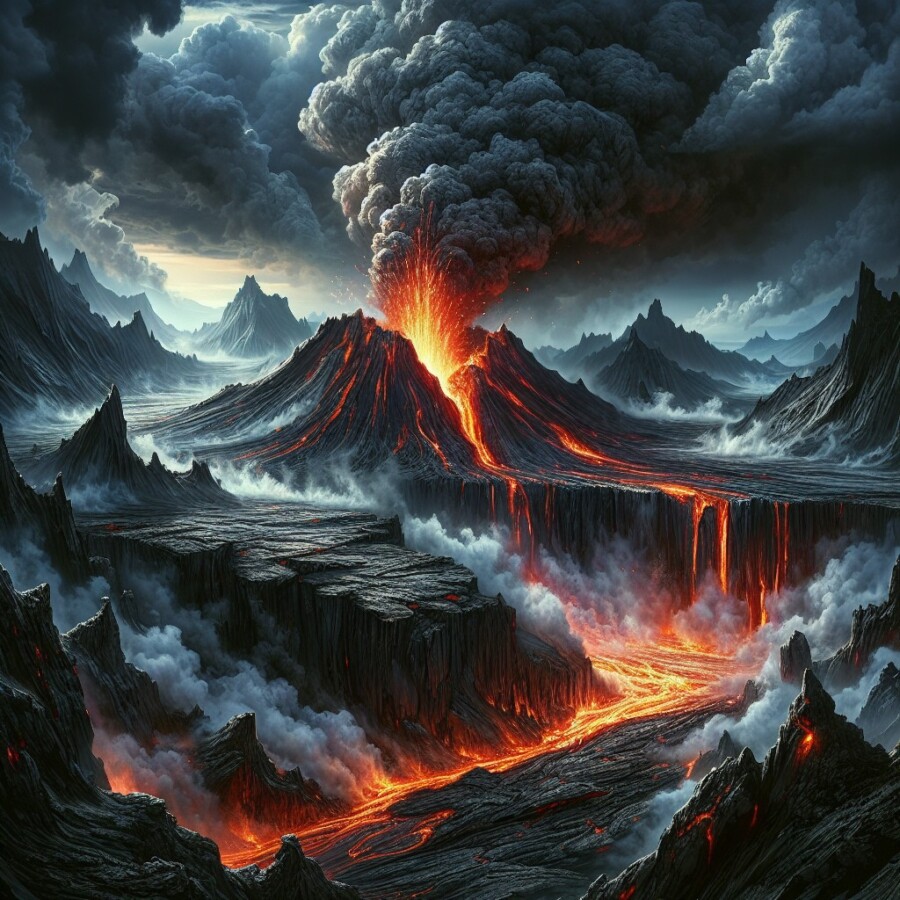
Iceland is currently experiencing a period of increased volcanic activity, with multiple eruptions occurring on the Reykjanes peninsula since 2021. This is not unusual for Iceland, as it is one of the most volcanically active places in the world. The country is located above a geological hotspot, where hot material from deep within the Earth rises to the surface. Additionally, Iceland sits on the boundary between the Eurasian and North American tectonic plates, which are slowly pulling apart, creating space for magma to flow up.
There are over 100 volcanoes in Iceland, with more than 30 currently active. However, the Reykjanes peninsula had not seen any lava flow for around 800 years until the recent eruptions. This is because the tectonic plates are constantly moving apart at a slow rate, but they also go through periods of higher activity. The rocks in the region show a pattern of quiet periods lasting around 1,000 years, followed by eruptions that continue for a few centuries. Scientists expect a series of relatively small, short-lived eruptions to occur in the coming years and decades.
Predicting when and where these eruptions will happen is a challenge. Scientists are monitoring the ground for signs of magma rising to the surface, which can help determine when an eruption is imminent. However, pinpointing the exact location of an eruption is more difficult in Iceland, as the magma is held under a larger area and erupts through cracks or fissures that can be miles long. The Icelandic authorities are taking measures to protect infrastructure and communities, but there are still risks, such as roads being cut off by lava flow and air pollution from the eruptions.
The long-term consequences of this volcanic activity could be significant for Iceland, as the affected area is densely populated and home to key infrastructure, including the main international airport and geothermal power plants. There is also a risk that the eruptions could move further east along the peninsula, potentially impacting the capital city of Reykjavik. Scientists are studying different volcanic systems on the peninsula to gain a better understanding of the magma movement and potential future eruptions. However, there is still a lot of uncertainty as Iceland enters this new volcanic era.
Original news source: Is Iceland entering a new volcanic era? (BBC)
🎧 Listen:
📖 Vocabulary:
Group or Classroom Activities
Warm-up Activities:
– News Summary
Instructions: In pairs or small groups, students will read the article and then summarize the main points in a news article format. They should include the key details and important facts while keeping the summary concise and engaging.
– Opinion Poll
Instructions: Divide the class into pairs or small groups. Each group will come up with a question related to the article and create a short opinion poll. They will then take turns asking the other groups their question and recording their responses. Afterward, they will discuss the results and share their opinions on the topic.
– Vocabulary Pictionary
Instructions: Create a list of vocabulary words from the article and write them on separate pieces of paper. Divide the class into teams. One member from each team will come to the front of the class and choose a word without showing it to their team. They must then draw a picture to represent the word while their team tries to guess. The first team to guess correctly gets a point.
– Future Predictions
Instructions: In pairs or small groups, students will discuss and make predictions about the future of volcanic activity in Iceland based on the information in the article. They should consider factors such as geological patterns, scientific research, and potential consequences. Each group will present their predictions to the class, explaining their reasoning.
– Pros and Cons
Instructions: In pairs or small groups, students will create a list of the pros and cons of living in an area prone to volcanic activity, such as Iceland. They should consider factors such as tourism, natural resources, safety, and infrastructure. Afterward, each group will share their lists and engage in a class discussion about the advantages and disadvantages of living in such an area.
🤔 Comprehension Questions:
🎧✍️ Listen and Fill in the Gaps:
is currently experiencing a period of increased activity, with multiple eruptions occurring on the Reykjanes peninsula since 2021. This is not unusual for Iceland, as it is one of the most volcanically active places in the world. The country is located above a geological hotspot, where hot material from deep within the Earth rises to the surface. Additionally, Iceland sits on the boundary between the and North American tectonic plates, which are slowly apart, creating space for magma to flow up. There are over 100 volcanoes in Iceland, with more than 30 currently active. However, the Reykjanes peninsula had not seen any lava flow for around 800 until the recent eruptions. This is because the tectonic plates are constantly moving apart at a slow rate, but they also go through periods of higher activity. The rocks in the region show a of periods lasting around 1,000 years, followed by eruptions that continue for a few centuries. Scientists expect a series of relatively small, short-lived eruptions to occur in the coming years and . Predicting when and where these eruptions will happen is a challenge. Scientists are monitoring the ground for signs of magma rising to the , which can help determine when an is imminent. However, pinpointing the exact location of an eruption is more difficult in Iceland, as the magma is held under a larger area and erupts through cracks or fissures that can be miles long. The Icelandic authorities are taking measures to protect infrastructure and communities, but there are still , such as roads being cut off by lava flow and air pollution from the . The long-term consequences of this volcanic activity could be significant for Iceland, as the affected area is densely populated and home to key , the main international and geothermal power plants. There is also a risk that the eruptions could move further east along the peninsula, potentially impacting the capital city of Reykjavik. Scientists are studying different volcanic systems on the peninsula to gain a better understanding of the magma movement and potential future eruptions. However, there is still a lot of uncertainty as Iceland this new volcanic era.
💬 Discussion Questions:
1. How would you feel if you lived in Iceland during this period of increased volcanic activity?
2. Do you think it would be exciting or scary to witness a volcanic eruption in person? Why or why not?
3. What do you think are the advantages and disadvantages of living in a volcanically active area like Iceland?
4. How do you think the volcanic activity in Iceland affects tourism in the country?
5. Have you ever experienced a natural disaster in your country? If so, how did it impact your community?
6. What measures do you think the Icelandic authorities should take to protect infrastructure and communities from the volcanic eruptions?
7. Do you think it is possible to accurately predict when and where a volcanic eruption will occur? Why or why not?
8. How do you think the volcanic activity in Iceland could impact the environment and wildlife in the affected area?
9. What role do you think geothermal power plants play in Iceland's energy production? Do you think the volcanic activity will have an impact on this?
10. How do you think the volcanic activity in Iceland could impact the economy of the country?
11. What precautions do you think people should take if they find themselves in an area affected by volcanic eruptions?
12. How do you think the volcanic activity in Iceland could impact the daily lives of people living in the affected area?
13. Do you think the government should provide financial assistance to individuals and businesses affected by the volcanic eruptions? Why or why not?
14. How do you think the volcanic activity in Iceland could impact the mental health of the people living in the affected area?
15. What do you think scientists can learn from studying the volcanic systems on the Reykjanes peninsula?
Individual Activities
📖💭 Vocabulary Meanings:
Click a dot next to a word, then click the dot next to its meaning to draw a line connecting them.
Words
Meanings
🔡 Multiple Choice Questions:
🕵️ True or False Questions:
📝 Write a Summary:
Write a summary of this news article in two sentences.
Check your writing now with the best free AI for English writing!