
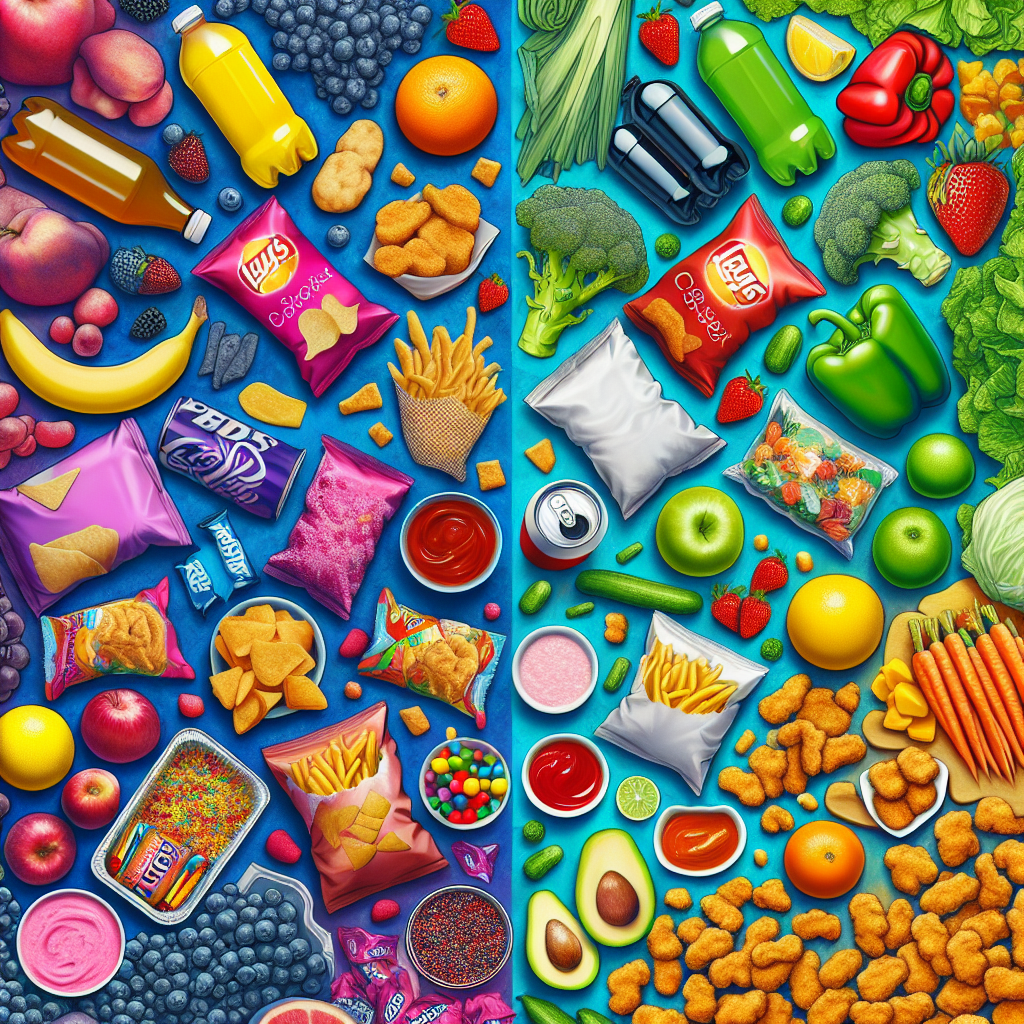
Ultra-processed foods (UPFs) are becoming a big worry for nutrition experts because they are so common and may be bad for our health. These foods include things like chicken nuggets, packaged snacks, and sugary drinks, and they make up more than half of the calories eaten in the UK, especially by kids and people in lower-income areas. UPFs are made with lots of industrial processing and contain many ingredients that are hard to recognize. They usually have high levels of fat, sugar, and salt, which is why many health advocates are focusing on them. However, scientists are still debating how exactly these foods affect our health.
Recent studies have shown a link between eating UPFs and health problems like obesity, heart disease, and some types of cancer. For example, a large study in the United States found that people who ate the most UPFs had a 10% higher chance of dying early, even when considering their weight and overall diet. But it’s tough to prove that UPFs directly cause these health issues. While many studies suggest a connection, they don’t clearly show that the way these foods are processed is the main reason for the health problems.
To really understand how UPFs affect health, researchers think we need to do detailed studies comparing people who eat a lot of UPFs with those who eat very few. Both groups would need to have similar calorie and nutrient intake, which makes these studies complicated and expensive to conduct. Plus, getting funding for this kind of research can be tricky because researchers might have biases about what they want to find out.
Another issue in the UPF debate is figuring out what exactly counts as an ultra-processed food. UPFs usually have more than five ingredients, many of which you wouldn’t find in a regular kitchen. This broad definition raises questions about whether all UPFs should be treated the same, since some might affect health differently than others. For instance, sugary cereals and low-fat yogurts are both UPFs, but they can have very different nutritional values and health effects. The conversation around UPFs also brings up the problem of food accessibility, as healthier options can often be more expensive, making it hard for people on a budget to avoid UPFs. Overall, while there isn't clear evidence that UPFs are harmful, nutritionists recommend eating a balanced diet full of whole foods, fruits, and vegetables.
Original news source: Why we might never know the truth about ultra-processed foods (BBC)
🎧 Listen:
📖 Vocabulary:
Group or Classroom Activities
Warm-up Activities:
– CHARADES
Instructions: Divide the class into small groups. Each group takes turns acting out different ultra-processed foods (e.g., chicken nuggets, sugary drinks) without speaking while the other groups guess the food. This activity helps build vocabulary related to nutrition and food items.
– OPINION POLL
Instructions: Create a series of statements about ultra-processed foods (e.g., "Ultra-processed foods should be banned," "They are too convenient to avoid"). Students walk around the room and ask their classmates for their opinions, marking "agree," "disagree," or "neutral" on a chart. After polling, students can share the results and discuss their findings.
– MIND MAP
Instructions: In pairs, students create a mind map on a large sheet of paper about ultra-processed foods. They start with "Ultra-Processed Foods" in the center and branch out with related concepts such as health effects, examples, and alternatives. This helps reinforce vocabulary and concepts from the article.
– HEADLINE CREATION
Instructions: Students work in small groups to come up with catchy headlines for the article on ultra-processed foods. They should aim to capture the essence of the article in a few words. Afterward, groups can share their headlines with the class, and a discussion can follow on which headlines are most effective and why.
– PROS AND CONS
Instructions: In small groups, students list the pros and cons of ultra-processed foods based on the information in the article. They should think critically about both sides, considering health concerns, convenience, and accessibility. Afterward, each group can present their lists and engage in a class discussion on their findings.
🤔 Comprehension Questions:
Examples of ultra-processed foods mentioned in the article include chicken nuggets, packaged snacks, and sugary drinks.
Nutrition experts are concerned because ultra-processed foods make up more than half of the calories eaten in the UK, particularly by kids and people in lower-income areas, and they may lead to health problems.
Recent studies have linked the consumption of ultra-processed foods to health problems like obesity, heart disease, and some types of cancer.
The large study found that people who ate the most ultra-processed foods had a 10% higher chance of dying early, even when considering their weight and overall diet.
Researchers face challenges like needing detailed studies that compare people with different UPF consumption levels, which can be complicated and expensive, and they may struggle to get funding due to potential biases.
It's difficult to define ultra-processed foods because they usually contain more than five ingredients, many of which are not found in a regular kitchen, leading to a broad definition that raises questions about how to categorize them.
Sugary cereals and low-fat yogurts differ in their nutritional values and health effects, even though both are classified as ultra-processed foods.
Nutritionists recommend eating a balanced diet that includes whole foods, fruits, and vegetables to minimize the consumption of ultra-processed foods.
🎧✍️ Listen and Fill in the Gaps:
Ultra-processed foods (UPFs) are becoming a big worry for nutrition because they are so common and may be bad for our health. These foods things like chicken nuggets, snacks, and sugary drinks, and they make up more than half of the eaten in the UK, especially by kids and people in lower-income areas. UPFs are made with lots of industrial processing and contain many ingredients that are hard to recognize. They usually have high levels of fat, sugar, and salt, which is why many health advocates are focusing on them. However, scientists are still debating how exactly these foods affect our health. Recent studies have shown a link between eating UPFs and health problems like obesity, heart disease, and some types of . For example, a large study in the States found that people who ate the most UPFs had a 10% higher chance of dying early, even when their weight and overall diet. But it’s tough to that UPFs directly cause these health issues. While many studies suggest a connection, they don’t clearly show that the way these foods are processed is the main reason for the health problems. To really understand how UPFs affect health, think we need to do detailed studies people who eat a lot of UPFs with those who eat very few. Both groups would need to have similar calorie and nutrient intake, which these studies complicated and expensive to conduct. Plus, getting funding for this kind of research can be tricky because researchers might have biases about what they want to find out. Another issue in the UPF debate is figuring out what exactly as an ultra-processed food. UPFs usually have more than five ingredients, many of which you wouldn’t find in a regular kitchen. This broad definition raises questions about whether all UPFs should be treated the same, since some might affect health differently than . For instance, sugary cereals and low-fat yogurts are both UPFs, but they can have very different nutritional values and health effects. The conversation around UPFs also brings up the problem of food accessibility, as options can often be more expensive, it hard for people on a budget to avoid UPFs. Overall, while there isn't clear evidence that UPFs are harmful, nutritionists recommend eating a balanced diet full of whole foods, , and vegetables.
💬 Discussion Questions:
1. What is your favorite type of food, and do you think it is healthy or unhealthy?
2. How would you feel if you had to give up all ultra-processed foods for a month?
3. Do you like cooking at home or eating out? Why?
4. What is a healthy snack you enjoy, and why do you think it’s better than ultra-processed snacks?
5. Do you think it’s easy to find healthy food options in your area? Why or why not?
6. How do you feel about the price of healthy foods compared to ultra-processed foods?
7. Have you ever tried to eat healthier? What changes did you make, and how did it feel?
8. Do you think schools should provide healthier food options for students? Why or why not?
9. What is a food that you think is misunderstood when it comes to being healthy or unhealthy?
10. How would you feel if your favorite fast food restaurant changed its menu to include only healthy options?
11. Do you think people are aware of what ultra-processed foods are? Why or why not?
12. How do you think advertising affects people's choices about food, especially young people?
13. What is your opinion on the role of social media in promoting healthy eating habits?
14. Do you think it's possible to enjoy food while also being healthy? Why or why not?
15. How do you think your eating habits will change as you get older?
Individual Activities
📖💭 Vocabulary Meanings:
Click a dot next to a word, then click the dot next to its meaning to draw a line connecting them.
Words
Meanings
🔡 Multiple Choice Questions:
🕵️ True or False Questions:
📝 Write a Summary:
Write a summary of this news article in two sentences.
Check your writing now with the best free AI for English writing!