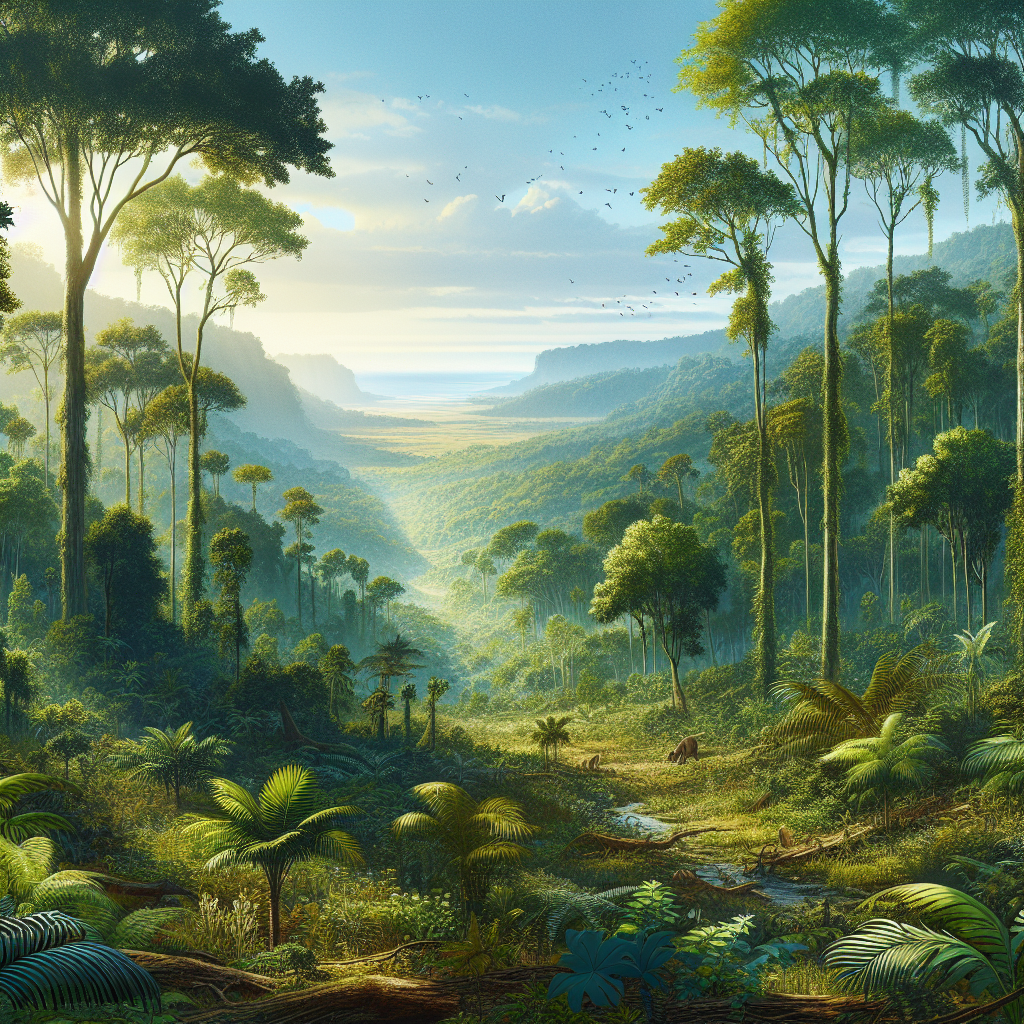
The video talks about deforestation in Mozambique and a project that wants to bring back the forests to their natural state. Mozambique has been losing a lot of trees because people are cutting them down to make room for farms and for logging. But this project is working with villages near Chimanimani National Park to fix this problem.
The project knows that forests are important because they help with things like the weather, protecting different kinds of plants and animals, and helping the people who live nearby. They want to get the local communities involved so that they feel like they are a part of the project and take care of the forests. This is really important for the project to work in the long run.
The video also talks about how we need to use the land in a way that doesn't hurt the environment and how we need to protect the forests for the future. It shows that we can bring back the forests that used to be in Mozambique by planting new trees and taking care of the ones that are left.
The project needs help from different groups like the government, non-profit organizations, and the local communities. By working together, they can come up with good plans to stop deforestation and take care of the forests in a way that will last. The video shows us that deforestation is a big problem in Mozambique, but there are people who are trying to fix it. It also shows us that we can bring back the forests if we work together.
Original news source: ‘It's possible to regain the forest we once had’ (BBC)
🎧 Listen:
📖 Vocabulary:
Group or Classroom Activities
Warm-up Activities:
– News Summary
Instructions: Divide the students into pairs and give each pair a copy of the article. Ask them to read the article and then summarize the main points in their own words. After a few minutes, have the pairs share their summaries with the rest of the class.
– Opinion Poll
Instructions: Divide the class into small groups and give each group a set of statements related to deforestation and the project in Mozambique. Ask the students to discuss each statement and indicate whether they agree or disagree, and explain their reasons. After the discussion, have each group present their opinions to the class.
– Vocabulary Pictionary
Instructions: Write a list of vocabulary words from the article on the board. Divide the class into two teams and give each team a whiteboard or a large sheet of paper. One student from each team will come to the front of the class and you will say one of the vocabulary words. The students must then draw a picture on the whiteboard or paper to represent the word, while their team members try to guess the word.
– Pros and Cons
Instructions: Divide the class into pairs or small groups and give each group a copy of the article. Ask the students to discuss the pros and cons of the project in Mozambique, considering both the environmental and social aspects. After the discussion, have each group present their findings to the class.
– Future Predictions
Instructions: Ask the students to imagine that they are part of the project in Mozambique and that they have successfully restored the forests to their natural state. In pairs or small groups, have the students discuss and write down their predictions about the positive impacts that the restored forests will have on the environment, the local communities, and the future of Mozambique. After the discussion, have some groups share their predictions with the class.
🤔 Comprehension Questions:
People are cutting down trees in Mozambique to make room for farms and for logging.
The goal of the project is to bring back the forests to their natural state in Mozambique.
It is important for local communities to be involved in the project because they will feel like they are a part of it and they will take care of the forests in the long run.
Some of the benefits of forests mentioned in the video are that they help with things like the weather, protect different kinds of plants and animals, and help the people who live nearby.
We can bring back the forests in Mozambique by planting new trees and taking care of the ones that are left.
The project needs help from different groups like the government, non-profit organizations, and the local communities in order to be successful.
The video shows us that deforestation is a big problem in Mozambique, but there are people who are trying to fix it.
The main message of the video is that by working together, we can bring back the forests in Mozambique and protect them for the future.
🎧✍️ Listen and Fill in the Gaps:
The video about in Mozambique and a project that wants to bring back the forests to their natural state. Mozambique has been losing a lot of trees because people are cutting them down to make room for farms and for logging. But this project is working with villages near Chimanimani Park to fix this problem. The project that forests are because they help with things like the , different kinds of plants and animals, and helping the people who live nearby. They want to get the local involved so that they feel like they are a part of the project and take care of the forests. This is really important for the project to work in the long run. The video also talks about how we need to use the land in a way that doesn't hurt the environment and how we need to protect the forests for the future. It shows that we can bring back the forests that used to be in by new trees and care of the ones that are left. The project needs help from different like the government, non-profit organizations, and the local communities. By working together, they can come up with good to stop deforestation and take care of the forests in a way that will last. The video shows us that deforestation is a big in Mozambique, but there are people who are to fix it. It also shows us that we can back the forests if we work together.
💬 Discussion Questions:
1. What is deforestation and why is it a problem?
2. How do you think the local communities can be involved in the project to bring back the forests?
3. How would you feel if your hometown was losing its forests due to deforestation?
4. Do you think it is important to protect the forests for the future? Why or why not?
5. What are some ways we can use the land without hurting the environment?
6. Do you think planting new trees is a good solution to bring back the forests in Mozambique? Why or why not?
7. How do you think the government, non-profit organizations, and local communities can work together to stop deforestation?
8. Have you ever participated in a project to protect the environment? If so, what did you do and how did it make you feel?
9. What do you think are the benefits of having forests in a country?
10. How do you think deforestation affects the weather?
11. Do you like spending time in nature? Why or why not?
12. How can we raise awareness about the importance of forests and the problem of deforestation?
13. Do you think it is possible to bring back the forests that used to be in Mozambique? Why or why not?
14. How can we encourage people to take care of the forests in their area?
15. What are some other ways we can protect the environment besides stopping deforestation?
Individual Activities
📖💭 Vocabulary Meanings:
Click a dot next to a word, then click the dot next to its meaning to draw a line connecting them.
Words
Meanings
🔡 Multiple Choice Questions:
🕵️ True or False Questions:
📝 Write a Summary:
Write a summary of this news article in two sentences.
Check your writing now with the best free AI for English writing!