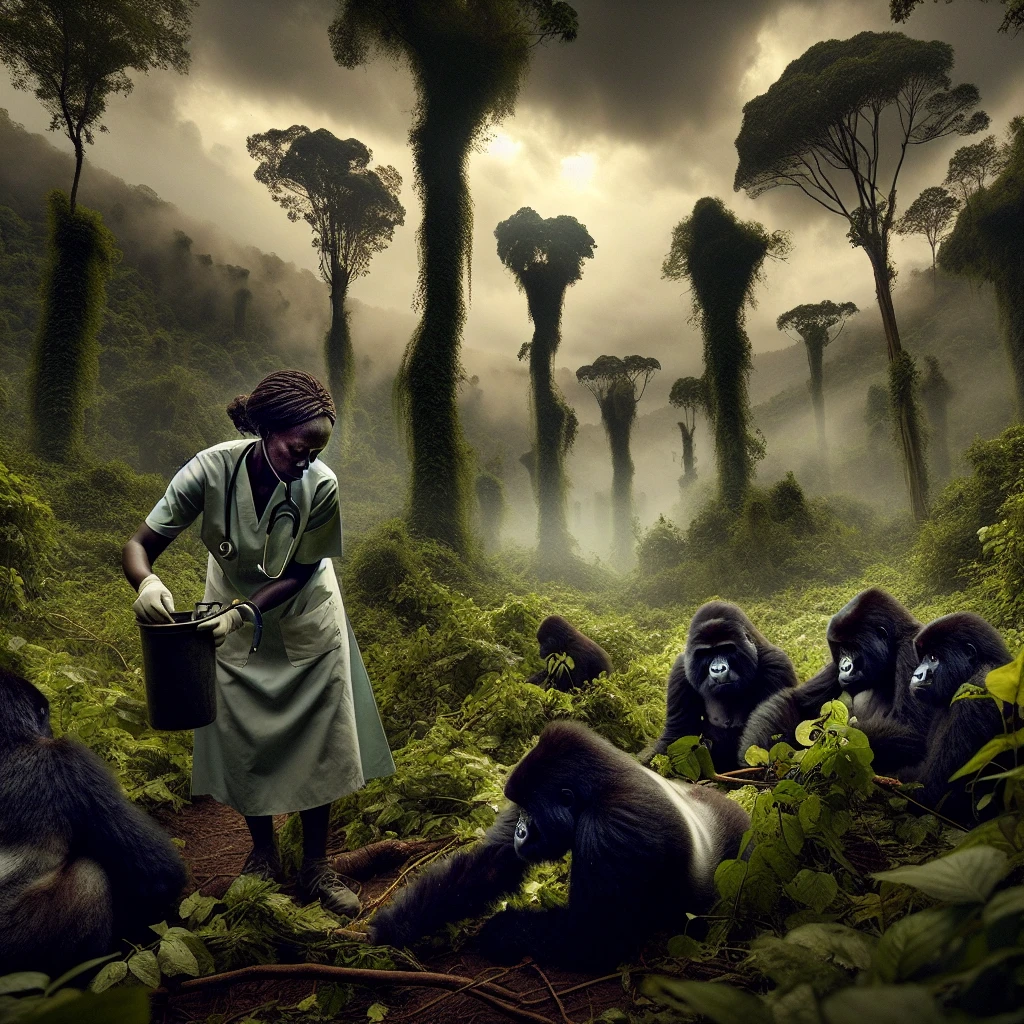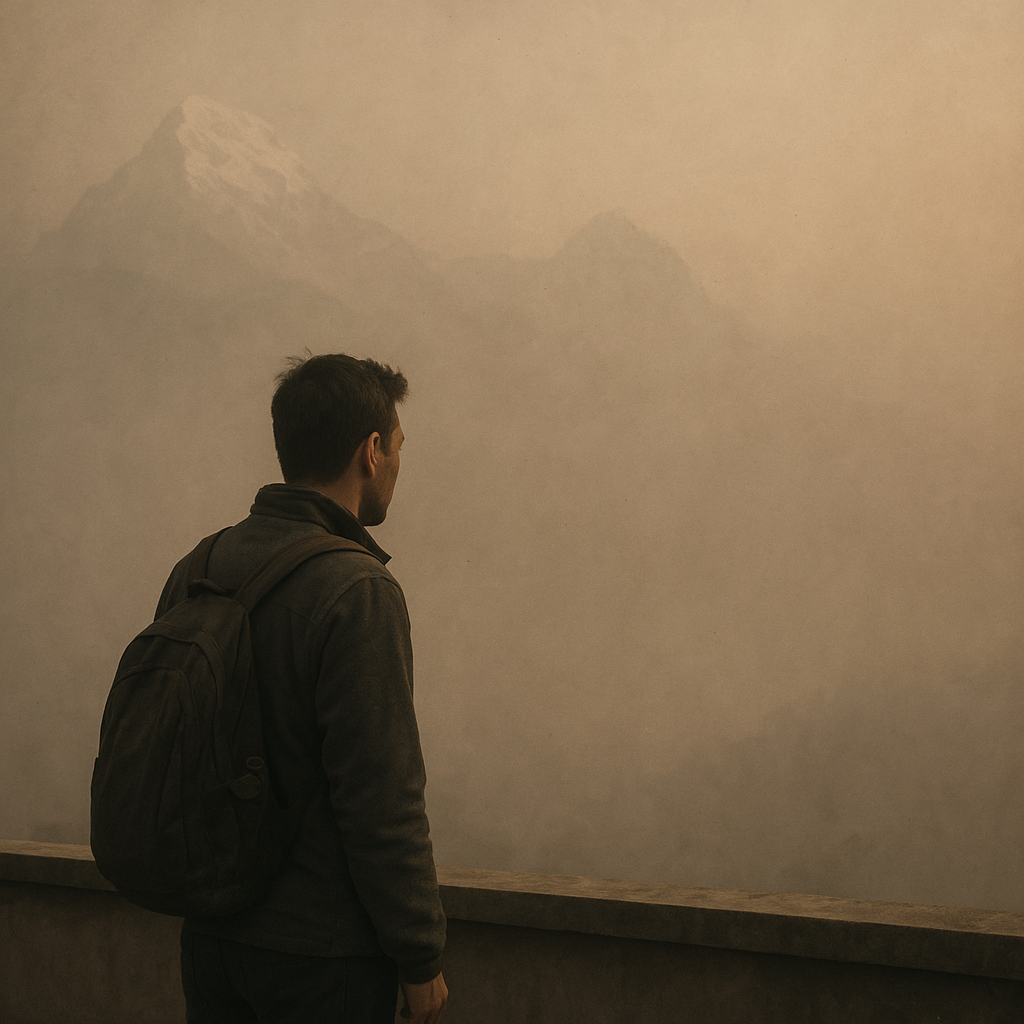
The majestic Himalayas, known for their breathtaking beauty, are becoming increasingly difficult to see due to severe air pollution. Growing up in Kathmandu, I always cherished the panoramic views of these towering peaks. However, during my recent visits, I found that haze often obscured the mountains, even during the traditionally clear spring and autumn months. On one occasion, my flight had to circle Kathmandu multiple times before landing due to poor visibility caused by haze. Despite staying at a hotel with a good view, I was unable to see the mountains during my entire two-week visit.
The haze in the region is primarily caused by a combination of pollutants, including dust and smoke from various sources. Scientists have noted that these hazy conditions are becoming more intense and lasting longer, significantly reducing visibility. Traditionally, the best times for trekking in the Himalayas were from March to May and October to November, when skies were clear. However, rising temperatures and worsening air quality have led to thick haze during these months, diminishing the chances of seeing the mountains.
This decline in visibility has serious implications for the local tourism industry. Trekking guide Lucky Chhetri reported a 40% decrease in business due to the haze, which has left many operators feeling despondent. Tourists, like Australian visitor John Carrol, have expressed disappointment at not being able to see the mountains as they once could. The Trekking Agents Association of Nepal has indicated that many trekking operators are considering changing professions due to the lack of business stemming from poor visibility.
On the Indian side of the Himalayas, tour operators have also noted that haze is returning more quickly and is denser than in the past. Malika Virdi, who runs a community tourism business in Uttarakhand, mentioned that the weather patterns have changed, leading to prolonged periods of haze. In contrast, the western Himalayas in Pakistan have experienced less haze, but even there, locals report that the mountains are not as visible as they used to be. The persistent haze has become a significant concern for both tourists and those working in the tourism sector.
The air pollution affecting the Himalayas is a result of various factors, including vehicular emissions, industrial activity, and agricultural practices. The increase in forest fires and the burning of crop residues further contribute to the problem. Experts warn that the trend of increasing haze and dust storms in South Asia is likely to continue due to climate change. As a result, the stunning views of the Himalayas may soon be relegated to photographs and postcards, leaving those in the tourism industry grappling with the challenge of providing experiences that meet visitor expectations.
Original news source: Why the mighty Himalayas are getting harder and harder to see (BBC)
🎧 Listen:
📖 Vocabulary:
Group or Classroom Activities
Warm-up Activities:
– CHARADES
Instructions: Students will take turns acting out words or phrases related to the article (e.g., "Himalayas," "pollution," "trekking"). The rest of the class will guess the word or phrase being acted out. This helps reinforce vocabulary in a fun and engaging way.
– OPINION POLL
Instructions: Divide the class into small groups and ask them to discuss their opinions on the impact of air pollution on tourism in the Himalayas. Each group will then share their main points with the class, allowing for a broader discussion on environmental issues and tourism.
– HEADLINE CREATION
Instructions: Students will be tasked with creating catchy headlines for the article. They should think creatively and consider what aspects of the article are most newsworthy. Once created, students can share their headlines with the class and discuss the reasons behind their choices.
– MIND MAP
Instructions: In pairs, students will create a mind map that outlines the main points of the article. They should include causes of air pollution, effects on tourism, and potential solutions. Afterward, pairs can present their mind maps to the class for further discussion.
– TWO TRUTHS AND A LIE
Instructions: Each student will come up with two true statements and one false statement related to the article's content. They will share these with the class, and the other students will try to identify which statement is the lie. This activity encourages comprehension and critical thinking.
🤔 Comprehension Questions:
The author cherished the panoramic views of the Himalayas while growing up in Kathmandu, but during recent visits, they found that haze often obscured the mountains, preventing them from seeing them even during traditionally clear months.
Air pollution has led to thick haze during traditionally clear months, such as spring and autumn, significantly reducing visibility and diminishing the chances of seeing the mountains.
The haze is primarily caused by a combination of pollutants, including dust and smoke from various sources, such as vehicular emissions, industrial activity, and agricultural practices.
The haze has resulted in a 40% decrease in business for trekking guides, leading many operators to feel despondent and consider changing professions due to the lack of business stemming from poor visibility.
Tourists have expressed disappointment at not being able to see the mountains as they once could, with many reporting that their experiences have been negatively affected by the persistent haze.
Tour operators in the Indian side of the Himalayas have noted that haze is returning more quickly and is denser than in the past, while the western Himalayas in Pakistan have experienced less haze, but locals still report that the mountains are not as visible as they used to be.
Factors contributing to air pollution include vehicular emissions, industrial activity, agricultural practices, an increase in forest fires, and the burning of crop residues.
Experts warn that the trend of increasing haze and dust storms in South Asia is likely to continue due to climate change, which may result in the stunning views of the Himalayas being relegated to photographs and postcards.
🎧✍️ Listen and Fill in the Gaps:
The majestic , known for their breathtaking beauty, are becoming increasingly difficult to see due to severe air pollution. up in Kathmandu, I always cherished the panoramic views of these towering peaks. However, during my recent visits, I that haze often obscured the mountains, even during the traditionally clear spring and autumn months. On one occasion, my flight had to circle Kathmandu times before landing due to poor visibility caused by haze. Despite staying at a hotel with a good view, I was unable to see the mountains during my entire two-week visit. The haze in the region is primarily caused by a combination of pollutants, including dust and smoke from various sources. Scientists have noted that these hazy conditions are becoming more intense and lasting longer, significantly reducing visibility. Traditionally, the best times for trekking in the Himalayas were from March to May and October to November, when skies were clear. However, rising temperatures and worsening air quality have led to thick haze during these months, diminishing the chances of seeing the mountains. This decline in visibility has serious implications for the local tourism industry. Trekking guide Chhetri reported a 40% in business due to the haze, which has left many feeling despondent. , like Australian visitor John Carrol, have expressed disappointment at not being able to see the mountains as they once could. The Trekking Association of Nepal has indicated that many trekking operators are considering changing professions due to the lack of business stemming from poor visibility. On the side of the Himalayas, tour operators have also noted that haze is returning more quickly and is denser than in the past. Malika , who runs a community tourism business in Uttarakhand, mentioned that the weather patterns have changed, leading to prolonged periods of haze. In contrast, the western Himalayas in Pakistan have experienced less haze, but even there, locals that the mountains are not as visible as they used to be. The persistent haze has become a significant concern for both tourists and those working in the sector. The air pollution affecting the Himalayas is a result of various factors, including vehicular emissions, industrial , and agricultural practices. The increase in forest and the burning of crop residues further contribute to the problem. Experts warn that the trend of increasing haze and dust storms in South Asia is likely to continue due to climate . As a result, the stunning views of the Himalayas may soon be relegated to photographs and postcards, leaving those in the tourism industry grappling with the challenge of providing experiences that meet visitor expectations.
💬 Discussion Questions:
1. What is a significant natural landmark in your country, and how does it compare to the Himalayas in terms of beauty and cultural importance?
2. How would you feel if you traveled to a famous destination but were unable to see it due to pollution or weather conditions?
3. Do you think tourism can thrive in areas suffering from severe air pollution? Why or why not?
4. What is a personal experience you have had with pollution affecting your enjoyment of a place or activity?
5. How do you think local communities can adapt to the challenges posed by declining visibility of natural landmarks?
6. Do you like to travel to places known for their natural beauty? Why or why not?
7. What is a solution you believe could help reduce air pollution in tourist areas like the Himalayas?
8. How would you feel if your favorite outdoor activity was impacted by environmental changes, such as pollution or climate change?
9. Do you think that tourists should be more aware of the environmental impact of their travels? Why or why not?
10. What is a way that you think travelers can contribute positively to the environment when visiting natural sites?
11. How would you react if you found out that a destination you planned to visit was suffering from severe air quality issues?
12. Do you think governments should take more responsibility for controlling pollution in tourist hotspots? Why or why not?
13. What is a memorable experience you have had in nature, and how did it make you feel about protecting the environment?
14. How do you feel about the idea of changing professions due to a decline in business caused by environmental issues?
15. Do you think that climate change will continue to affect popular tourist destinations in the future? Why or why not?
Individual Activities
📖💭 Vocabulary Meanings:
Click a dot next to a word, then click the dot next to its meaning to draw a line connecting them.
Words
Meanings
🔡 Multiple Choice Questions:
🕵️ True or False Questions:
📝 Write a Summary:
Write a summary of this news article in two sentences.
Check your writing now with the best free AI for English writing!