


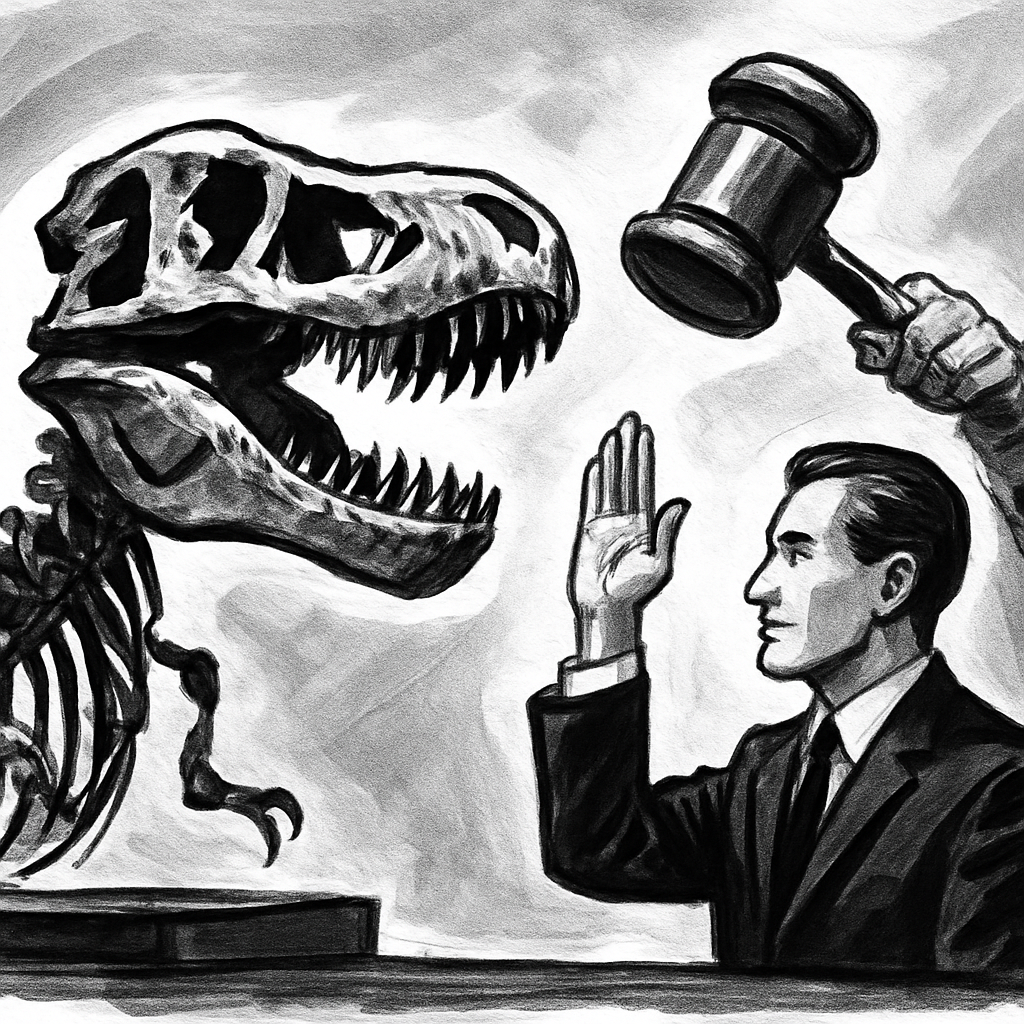
A Tyrannosaurus rex fossil, nicknamed Gus, has shattered records by selling for $50.1 million at Sotheby's auction in New York. The 12-foot-tall dinosaur, discovered in South Dakota in 2021, boasts over 60% of its bones intact, making it one of the most complete T. rex specimens ever found. This remarkable find gives insights into the life of the infamous predator.
The auction surpasses the previous record for a dinosaur fossil sale set by a stegosaurus in 2024. The fossil shows evidence of a violent past, with bite marks on the skull and multiple healed ribs, hinting at battles and survival struggles. It took several years to carefully excavate and prepare the fossil for sale.
Sotheby's head of science and natural history, Cassandra Hatton, emphasized the rigorous process of excavation and preparation that justified the high price. Such sales highlight how rare fossils are becoming prized possessions among the ultra-wealthy, valued not only for their scientific importance but as status symbols.
Although the buyer of Gus remains anonymous, there is hope that, like other record-breaking dinosaur sales, Gus might be loaned to a museum. This could allow public display, bridging private ownership with educational opportunities for people to appreciate the significance of this ancient giant.
Original news source: Tyrannosaurus Rex most expensive dinosaur ever sold – BBC News (BBC)
🎧 Listen:
📖 Vocabulary:
Group or Classroom Activities
Warm-up Activities:
1. Have you ever visited a museum with dinosaur exhibits? Describe your experience.
2. What do you think life was like in the time of dinosaurs?
3. Why are people so fascinated by dinosaurs, do you think?
4. Can you name any other famous dinosaur species besides T. rex?
5. How do you feel about fossils being sold at auctions?
🤔 Comprehension Questions:
The auction took place at Sotheby's in New York.
Over 60% of Gus's bones were intact.
Gus was discovered in
The fossil shows bite marks and healed ribs, suggesting a violent past.
Cassandra Hatton is Sotheby's head of science and natural history who emphasized the excavation process.
There is hope that Gus might be loaned to a museum for public display.
Fossils are valuable not only for their scientific importance but also as status symbols.
🎧✍️ Listen and Fill in the Gaps:
A rex fossil, nicknamed Gus, has shattered records by selling for $50.1 million at auction in New York. The 12-foot-tall dinosaur, in South Dakota in 2021, boasts over 60% of its bones intact, making it one of the most complete T. rex specimens ever found. This find gives into the life of the infamous predator. The auction surpasses the previous record for a dinosaur sale set by a stegosaurus in 2024. The fossil shows evidence of a violent past, with bite marks on the skull and healed ribs, hinting at battles and survival . It took several years to carefully excavate and prepare the fossil for sale. Sotheby's head of science and natural , Hatton, emphasized the rigorous process of excavation and preparation that justified the high price. Such sales highlight how rare are becoming prized possessions among the , valued not only for their scientific importance but as status symbols. Although the buyer of Gus remains anonymous, there is hope that, like other record-breaking dinosaur sales, Gus might be loaned to a . This could allow public , bridging private with educational opportunities for people to appreciate the significance of this giant.
💬 Discussion Questions:
1. What would you do if you discovered a dinosaur fossil?
2. Why do you think fossils are scientifically important?
3. How do you feel about the idea of private ownership of fossils?
4. What are the benefits of displaying fossils in museums?
5. Should there be regulations on fossil sales? Why or why not?
6. What role do auctions play in the science world?
7. How can we ensure that fossil remains are preserved for future generations?
8. Would you be interested in attending a fossil excavation? Why?
9. Do you think the price Gus sold for was justified? Explain.
10. How might new fossil discoveries impact our understanding of the past?
11. Why is the preservation process of fossils important?
12. Have you ever collected something valuable? Share your experience.
Individual Activities
📖💭 Vocabulary Meanings:
Click a dot next to a word, then click the dot next to its meaning to draw a line connecting them.