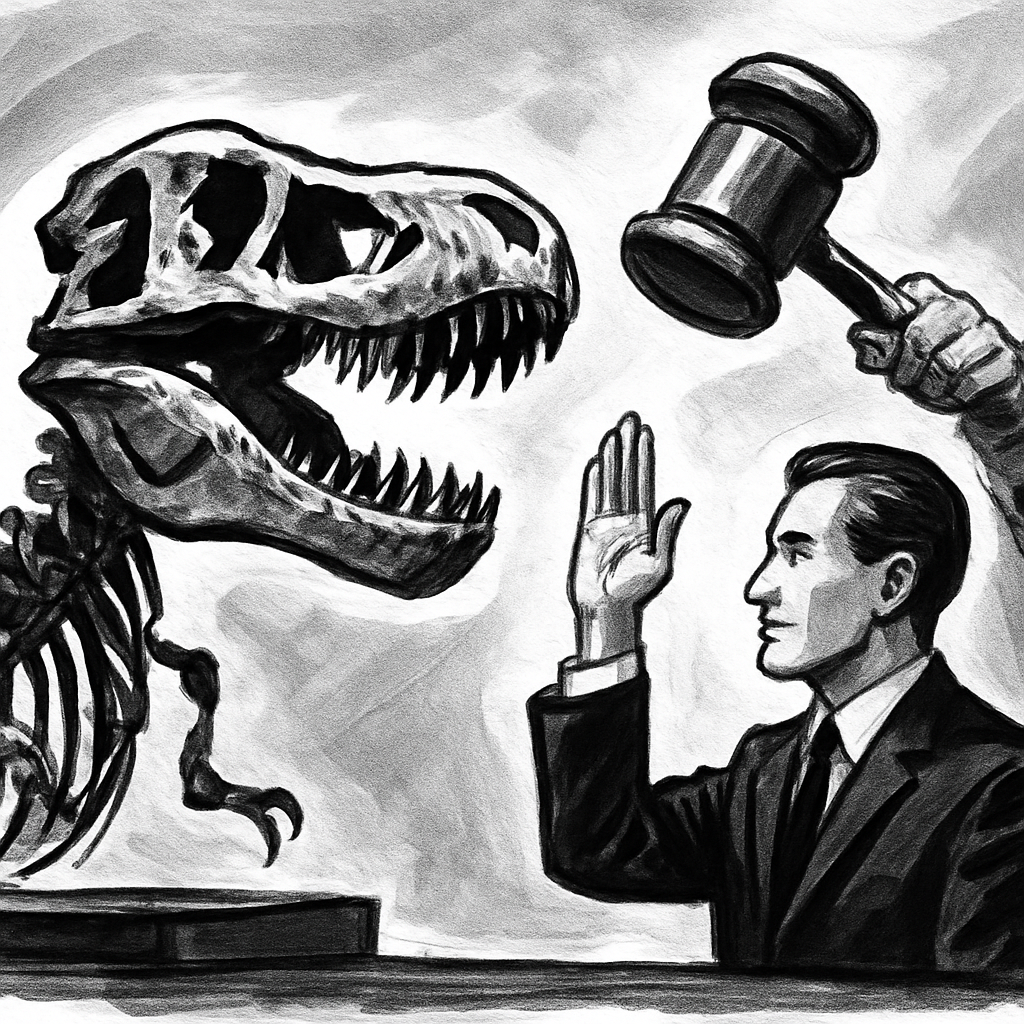
In an unprecedented auction, a Tyrannosaurus rex fossil known as Gus fetched a staggering $50.1 million at Sotheby's in New York, setting a new benchmark for dinosaur fossil sales. The fossil, a striking 12-foot-tall relic recovered from South Dakota, comprises over 60% of its original bone structure, making it one of the most complete T. rex fossils excavated to date.
Gus, discovered in 2021, provides a unique glimpse into the brutal and precarious life of this fearsome carnivore, evident from its skull riddled with bite marks and ribs that had once been fractured and healed. The fossil's sale surpasses the record previously held by a stegosaurus fossil auction in 2024, and it's the first dinosaur fossil to cross the $50 million mark.
The meticulous excavation and preparation of Gus spanned three years, executed with precision to preserve its historical integrity. Cassandra Hatton, Sotheby's worldwide head of science and natural history, noted this dedication as a justification for the auction's substantial price, acknowledging the fossil's immense scientific and historical value.
This sale highlights an evolving pattern wherein such fossils become prized assets among affluent collectors, sparking discussions about their role in private collections vs. public exhibitions. While the purchaser of Gus remains undisclosed, history suggests a possible loan to a museum, ensuring this rare artifact is accessible to the public and not just kept behind private walls.
As fossil collecting gains traction among the elite, the broader implications for science and education remain a topic of debate. Yet, auctions like this illuminate the undeniable allure and relevance of such ancient specimens, not only as relics of the earth's distant past but as symbols of discovery and wealth in contemporary society.
Original news source: Tyrannosaurus Rex most expensive dinosaur ever sold – BBC News (BBC)
🎧 Listen:
📖 Vocabulary:
Group or Classroom Activities
Warm-up Activities:
1. Share your thoughts on historical artifacts in private collections.
2. Discuss the impact of high auction sales on scientific research.
3. Have you ever visited a museum with dinosaur fossils? Share your experience.
4. What might be the reasons people are fascinated with dinosaurs?
5. Why do you think ancient artifacts attract high sales in modern times?
🤔 Comprehension Questions:
Gus' auction was significant because it set a new benchmark for dinosaur fossil sales at $50.1 million.
Gus was discovered in South Dakota.
The fossil showed evidence of a brutal life with bite marks and healed rib fractures.
It took three years to excavate and prepare Gus.
Cassandra Hatton is Sotheby's worldwide head of science and natural history, who remarked on the auction.
The sale implies discussions about the access of such fossils in private collections versus museums.
Fossil collecting prompts conversations about its impacts on science and education, and the allure it holds.
🎧✍️ Listen and Fill in the Gaps:
In an unprecedented auction, a Tyrannosaurus rex fossil known as Gus fetched a staggering $50.1 million at Sotheby's in New York, setting a new for dinosaur fossil . The fossil, a striking 12-foot-tall relic recovered from South , comprises over 60% of its original bone structure, making it one of the most T. rex fossils excavated to date. Gus, discovered in 2021, provides a unique glimpse into the brutal and precarious life of this fearsome , evident from its skull with bite marks and ribs that had once been fractured and healed. The fossil's sale surpasses the record previously held by a stegosaurus fossil auction in 2024, and it's the first fossil to cross the $50 mark. The meticulous excavation and preparation of Gus spanned three years, executed with precision to preserve its historical integrity. Cassandra Hatton, Sotheby's worldwide head of science and natural history, noted this dedication as a justification for the auction's substantial price, acknowledging the fossil's immense scientific and historical value. This sale highlights an evolving pattern wherein such fossils prized assets affluent collectors, sparking discussions about their role in private collections vs. public exhibitions. the of Gus remains undisclosed, history suggests a possible loan to a museum, this rare artifact is accessible to the public and not just kept behind private . As fossil collecting gains traction among the elite, the broader for science and education remain a topic of debate. Yet, auctions like this illuminate the undeniable allure and of such ancient specimens, not only as relics of the earth's distant past but as symbols of discovery and wealth in contemporary society.
💬 Discussion Questions:
1. How do you feel about fossils being sold to private collectors?
2. What are the potential benefits of fossils being in a museum?
3. How might private ownership of fossils impact scientific research?
4. In what ways do you think fossils contribute to our understanding of history?
5. Should there be regulations on fossil sales? Why or why not?
6. How do you think the value of fossils is determined at auctions?
7. What challenges do you foresee with the private collection of fossils?
8. How could public access to rare fossils be ensured?
9. Have you ever been to an auction? What was your experience?
10. How does the interest in fossils reflect our society's values?
11. Do you think technology could impact fossil discoveries? How?
12. What would you do if you discovered a fossil in your backyard?
Individual Activities
📖💭 Vocabulary Meanings:
Click a dot next to a word, then click the dot next to its meaning to draw a line connecting them.