
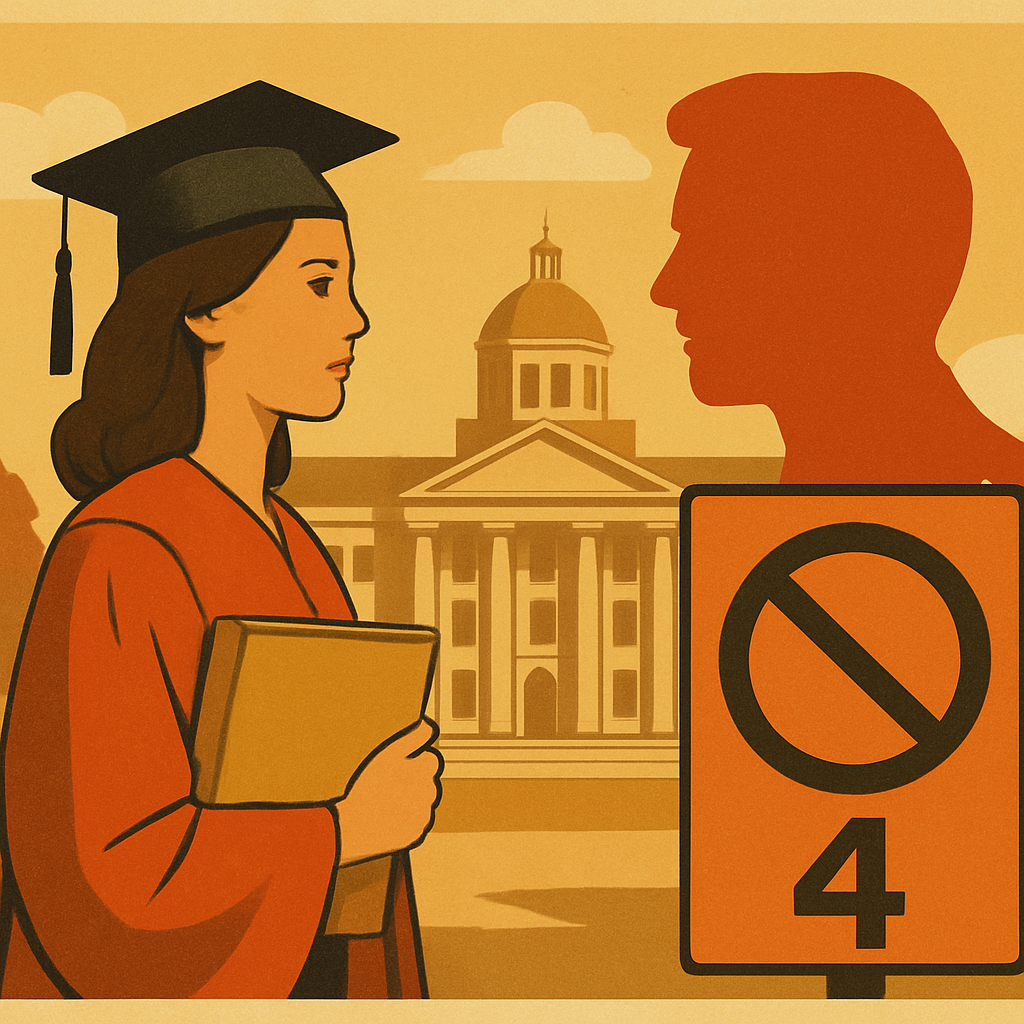
In a significant policy shift, the Trump administration has revised the visa rules governing international students in the United States, introducing changes that restrict their stay to a maximum of four years unless granted exceptional leave by authorities. This marks a departure from previous norms where universities held the autonomy to extend visas based on academic requirements, allowing students to remain for the entirety of their degree programs.
Set to be enforced starting September, the new regulations are part of efforts purportedly aimed at curtailing visa abuse and enhancing security through routine checks. Critics, however, denounce these measures as unnecessary, arguing that they introduce undue uncertainty and administrative burdens into a system that previously operated efficiently. The National Association of Foreign Student Advisers (NAFSA) decries the policy as "injecting fear and bureaucracy."
The amended rules also reduce the grace period for post-graduate transitions, truncating it from 60 days to merely 30 days. This change may disproportionately affect numerous international students engaged in lengthy, research-intensive graduate programs, including doctoral studies in technical fields, which intrinsically demand more than the prescribed four years for completion.
Many contend that these new measures could dissuade prospective international students, impacting the US’s standing as a premier destination for higher education. Given that program duration can be extended due to financial constraints or personal circumstances, the rigid timeline may prove detrimental to student success and innovation cultivation in US institutions.
Thus, while the administration aims to realign immigration controls with broader regulatory objectives, education advocates urge reconsideration, highlighting the possible ramifications on academic collaboration and cultural exchange, which have historically enriched US academic landscapes immensely.
Original news source: Trump administration tightens visa rules for foreign students – BBC News (BBC)
🎧 Listen:
📖 Vocabulary:
Group or Classroom Activities
Warm-up Activities:
1. Discuss how a change in visa policy can impact international students.
2. List reasons the US is considered a popular destination for international students.
3. Brainstorm potential challenges international students might face with the new visa rules.
4. Compare student visa policies between different countries.
5. Role-play a conversation between a university official and an international student discussing the policy change.
🤔 Comprehension Questions:
Revised visa rules to restrict their stay to a maximum of four years.
Universities, based on academic requirements.
Starting September.
To curtail visa abuse and enhance security through routine checks.
They argue the rules introduce undue uncertainty and administrative burdens.
Research-intensive graduate programs and doctoral studies.
It could negatively impact its standing as a premier destination.
🎧✍️ Listen and Fill in the Gaps:
In a significant policy shift, the Trump administration has revised the visa rules governing international students in the United States, introducing changes that restrict their stay to a maximum of four years granted exceptional leave by authorities. This marks a departure from norms where universities held the autonomy to extend based on academic requirements, students to remain for the entirety of their degree programs. Set to be enforced starting September, the new regulations are part of efforts purportedly aimed at curtailing visa abuse and enhancing security through routine checks. Critics, however, denounce these measures as unnecessary, arguing that they introduce undue uncertainty and administrative burdens into a system that operated . The National Association of Foreign Advisers (NAFSA) decries the as "injecting fear and bureaucracy." The amended rules also reduce the grace period for post-graduate transitions, truncating it from 60 days to 30 days. This change may disproportionately affect international students engaged in lengthy, graduate programs, including doctoral studies in technical fields, which intrinsically demand more than the prescribed four years for completion. Many contend that these new measures could dissuade prospective international students, the US’s standing as a premier destination for higher education. Given that program duration can be extended due to financial constraints or personal , the timeline may detrimental to student success and innovation cultivation in US institutions. Thus, while the administration aims to realign controls with broader regulatory objectives, education advocates urge reconsideration, highlighting the possible ramifications on academic collaboration and cultural exchange, which have historically enriched US academic landscapes immensely.
💬 Discussion Questions:
1. Do you think visa restrictions should be based on study duration? Why or why not?
2. How might the new visa rules affect the diversity of academic communities?
3. Should economic or security concerns influence educational policies? Discuss your views.
4. What are the potential benefits of the visa policy changes?
5. How important is cultural exchange in education?
6. What could be the long-term effects on US universities if fewer international students enroll?
7. Should students have a say in immigration policy affecting their studies? Why?
8. How do visa restrictions affect the innovation potential of international students?
9. What are alternative ways to prevent visa abuse without limiting student opportunities?
10. Is it fair to have different rules for international students compared to local students?
11. What role do international students play in the US economy?
12. How can universities support students impacted by these new regulations?
Individual Activities
📖💭 Vocabulary Meanings:
Click a dot next to a word, then click the dot next to its meaning to draw a line connecting them.