


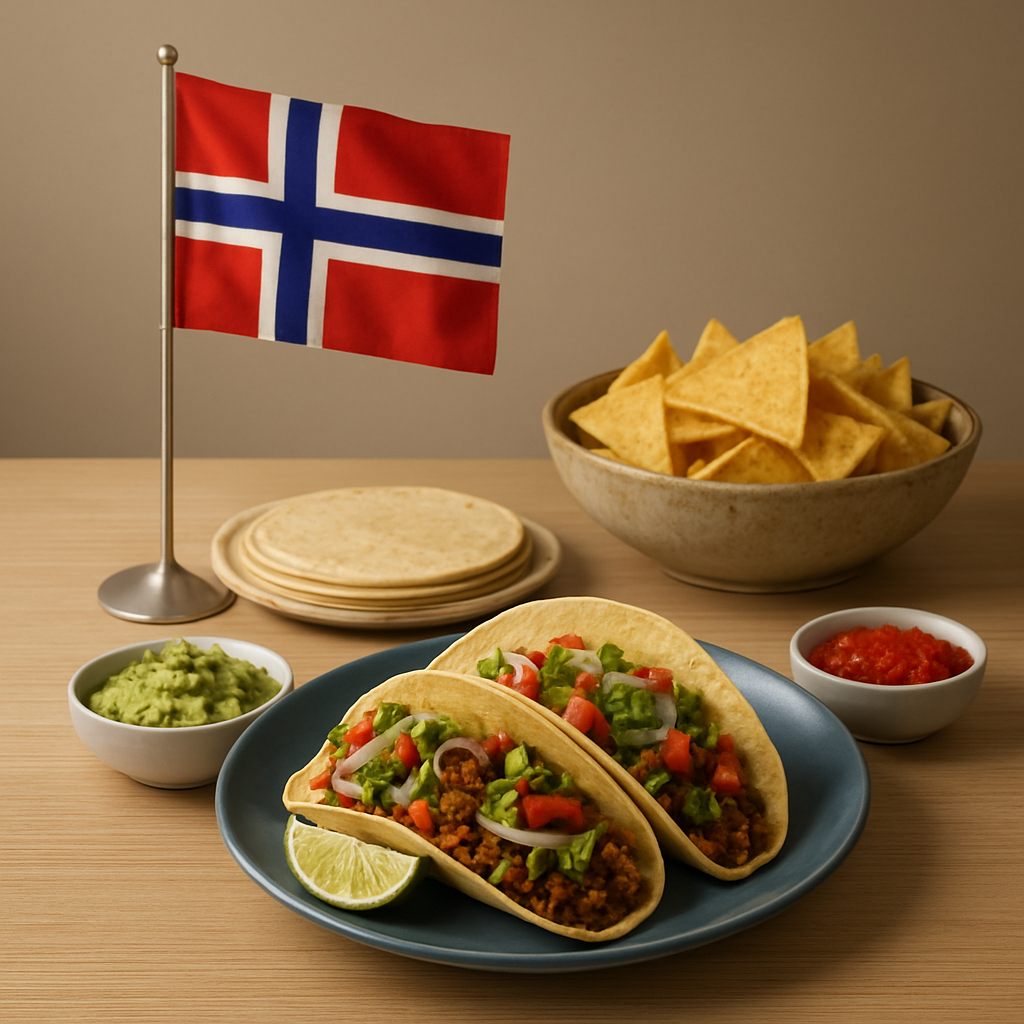
In recent years, the concept of Taco Friday has established itself firmly within Norwegian households. The practice began when Texan oilfield workers, alongside their skill in oil drilling, brought Tex-Mex culinary habits to Norway during the oil boom of the 1960s. Observing the growing interest, Norwegian retailers soon began to stock Tex-Mex meal kits. Unlike their Mexican counterparts, Norwegian tacos utilize hard shells, minced meats, and are traditionally topped with cheese, lettuce, and sour cream. This customization-friendly meal has adapted over time, with some regions replacing standard ingredients with local flavors like reindeer or salmon, showcasing the country's willingness to adapt over generations. Critics argue about the authenticity of this dish, citing its distance from traditional Mexican cuisine. Nonetheless, food enthusiasts like Helle Valebrokk view Norwegian tacos as an example of cultural adaptation. "The Norwegian Happy Meal," as she dubs it, celebrates flexibility and personalization at the dinner table. Over the decades, tacos have transitioned from a Tex-Mex novelty to an integral cultural phenomenon. Driven by convenience and adaptability, they encourage a relaxed yet celebratory end-of-week family ritual. The tacofredag phenomenon epitomizes how the fusion of food cultures can lead to inventive, new culinary customs. While authenticity debates continue, the Norwegian taco remains beloved, serving as a testament to international culinary exchange and cultural adaptation.
Original news source: How tacos became Norway's national comfort food (BBC)
🎧 Listen:
📖 Vocabulary:
Group or Classroom Activities
Warm-up Activities:
1. Discuss your favorite fusion cuisine and why you enjoy it.
2. Describe a typical meal from your country that has changed over time.
3. Share an interesting experience you had with a new type of food.
4. What food from your culture would you introduce to another country? Why?
5. How has globalization impacted the food industry in your country?
🤔 Comprehension Questions:
Taco Friday.
Via Texan oilfield workers during the oil boom of the 1960s.
Norwegian tacos use hard shells and standard toppings like cheese and sour cream.
They question it due to its departure from traditional Mexican cuisine.
She views them as an example of cultural adaptation, calling them "The Norwegian Happy Meal."
The fusion of food cultures and international culinary exchange.
🎧✍️ Listen and Fill in the Gaps:
In years, the concept of Taco Friday has established itself firmly within Norwegian households. The began when Texan oilfield workers, alongside their skill in oil drilling, brought Tex-Mex culinary habits to Norway during the oil boom of the 1960s. the growing interest, Norwegian retailers soon began to Tex-Mex meal kits. Unlike their Mexican counterparts, Norwegian tacos utilize hard shells, minced , and are topped with cheese, lettuce, and sour . This customization-friendly meal has adapted over time, with some regions replacing standard ingredients with local flavors like reindeer or salmon, showcasing the country's willingness to adapt over generations. argue about the authenticity of this dish, citing its distance from traditional cuisine. Nonetheless, food like Valebrokk view Norwegian tacos as an example of cultural adaptation. "The Norwegian Happy Meal," as she dubs it, celebrates flexibility and personalization at the dinner table. Over the decades, tacos have transitioned from a novelty to an cultural phenomenon. Driven by convenience and , they a relaxed yet celebratory end-of-week family ritual. The tacofredag phenomenon epitomizes how the fusion of food cultures can lead to inventive, new culinary customs. While authenticity debates continue, the Norwegian taco remains beloved, serving as a to international culinary exchange and cultural adaptation.
💬 Discussion Questions:
1. How important is authenticity in global cuisines?
2. Do you think adaptation is necessary for a dish to become popular in a new culture?
3. How do you feel about traditional dishes being given a modern twist?
4. Is it possible for a fusion dish to become more popular than the original? Why?
5. What role do restaurants play in introducing new cuisines to a culture?
6. Should the focus be on preserving traditional recipes or evolving them?
7. How can food be a tool for cultural exchange and understanding?
8. What is a "comfort food" in your culture?
9. How do food trends affect people's attitudes towards traditional cuisine?
10. Why might some people resist changes to traditional dishes?
11. What is your opinion on food authenticity versus innovation?
12. How can culinary traditions remain relevant in a constantly changing world?
Individual Activities
📖💭 Vocabulary Meanings:
Click a dot next to a word, then click the dot next to its meaning to draw a line connecting them.