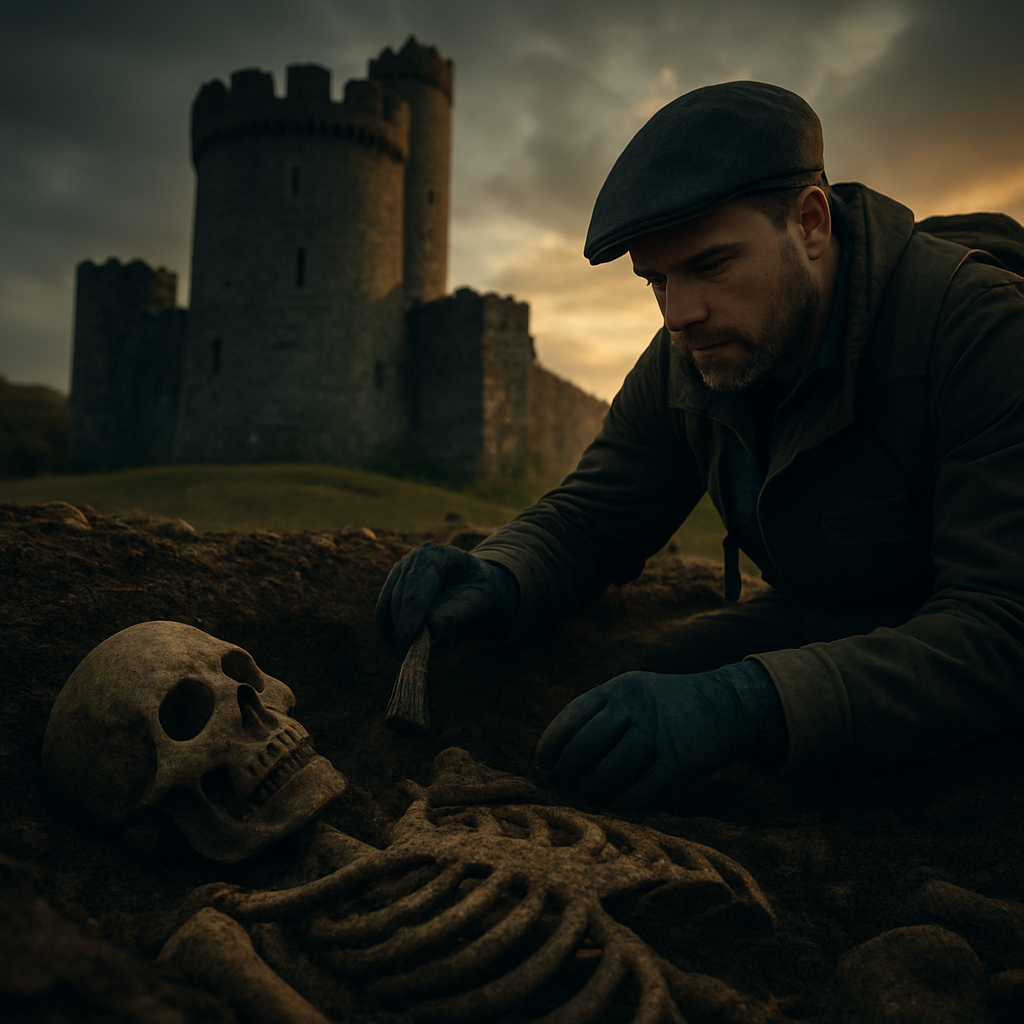
A routine family holiday became extraordinary when they uncovered remnants of the past beneath Pembroke Castle in Wales. John Bolton, an archaeologist, learned about Wogan Cavern, an untouched cave beneath the castle, during his visit. Intrigued, Bolton encouraged his colleague, Dr. Rob Dinnis from the University of Aberdeen, to explore it further.
After initial small digs, they unearthed rare evidence of prehistoric humans and animals, like the extraordinarily rare bones of a hippopotamus, suggesting these creatures roamed Wales 120,000 years ago. The findings could dramatically change our understanding of Britain's ancient history. Larger, more detailed excavations are set to continue, potentially offering significant insight into how early humans and animals adapted to climatic shifts.
Dr. Dinnis expressed excitement, noting that many caves were previously excavated to such an extent that valuable information was lost forever. However, Wogan Cavern defied expectations, providing a preservation site filled with archaeological significance. The Pembroke Castle Trust plans to preserve these findings, thereby promoting local cultural heritage and further academic research.
The exploration of Wogan Cavern highlights the importance of preserving historical sites for future study. Discoveries like these not only shed light on the history of a specific area but also inspire broader inquiry into human and animal adaptations over thousands of years. Future explorations at the site may lead to a deeper appreciation of history in local communities and beyond.
Original news source: Family holiday unearths 'mind-blowing' ancient discovery – BBC News (BBC)
🎧 Listen:
📖 Vocabulary:
Group or Classroom Activities
Warm-up Activities:
1. Have you ever visited a historical site? Share your experience.
2. Why do you think learning about history is important?
3. What do you know about archaeology?
4. How can discoveries from the past affect our present and future?
5. Discuss what you hope to find in an untouched historical site.
🤔 Comprehension Questions:
An extraordinary exploration of a historical site beneath Pembroke Castle.
John Bolton is an archaeologist, and Dr. Rob Dinnis is his colleague from the University of Aberdeen.
Rare evidence of prehistoric humans and hippopotamus bones.
They could dramatically change our understanding of Britain's ancient history.
As a preservation site filled with archaeological significance.
To preserve the findings and promote local cultural heritage and further academic research.
It sheds light on human and animal adaptations over thousands of years, inspiring broader inquiry.
🎧✍️ Listen and Fill in the Gaps:
A holiday became extraordinary when they uncovered remnants of the past beneath Pembroke Castle in Wales. John , an archaeologist, learned about Wogan Cavern, an untouched cave beneath the castle, during his visit. Intrigued, Bolton encouraged his colleague, Dr. Rob Dinnis from the University of Aberdeen, to it further. After initial small digs, they unearthed rare evidence of prehistoric humans and animals, like the extraordinarily rare bones of a hippopotamus, these creatures roamed Wales 120,000 years ago. The findings could dramatically change our understanding of Britain's history. Larger, more detailed excavations are set to continue, potentially offering insight into how early humans and animals to climatic shifts. Dr. Dinnis expressed excitement, noting that many caves were previously excavated to such an extent that valuable was lost forever. However, Wogan Cavern defied expectations, providing a preservation site with archaeological significance. The Pembroke Castle Trust plans to preserve these , thereby promoting local cultural heritage and academic research. The exploration of Wogan Cavern highlights the importance of preserving sites for study. Discoveries like these not only shed light on the history of a area but also inspire broader inquiry into human and animal over thousands of years. Future explorations at the site may lead to a deeper appreciation of history in local communities and beyond.
💬 Discussion Questions:
1. How do you feel about preserving historical sites?
2. What are the benefits of discovering ancient artifacts?
3. What challenges do archaeologists face during excavations?
4. How can we protect historical sites from damage?
5. Should governments invest more in archaeological research?
6. What do you think motivates people to become archaeologists?
7. How important is it for communities to be aware of local history?
8. How do findings from the past influence our understanding of human evolution?
9. What would you do if you found an ancient artifact?
10. How do archaeological discoveries affect tourism in an area?
11. Should schools include more history from archaeological discoveries in their curriculum?
12. How can modern technology aid in archaeological discoveries?
Individual Activities
📖💭 Vocabulary Meanings:
Click a dot next to a word, then click the dot next to its meaning to draw a line connecting them.