
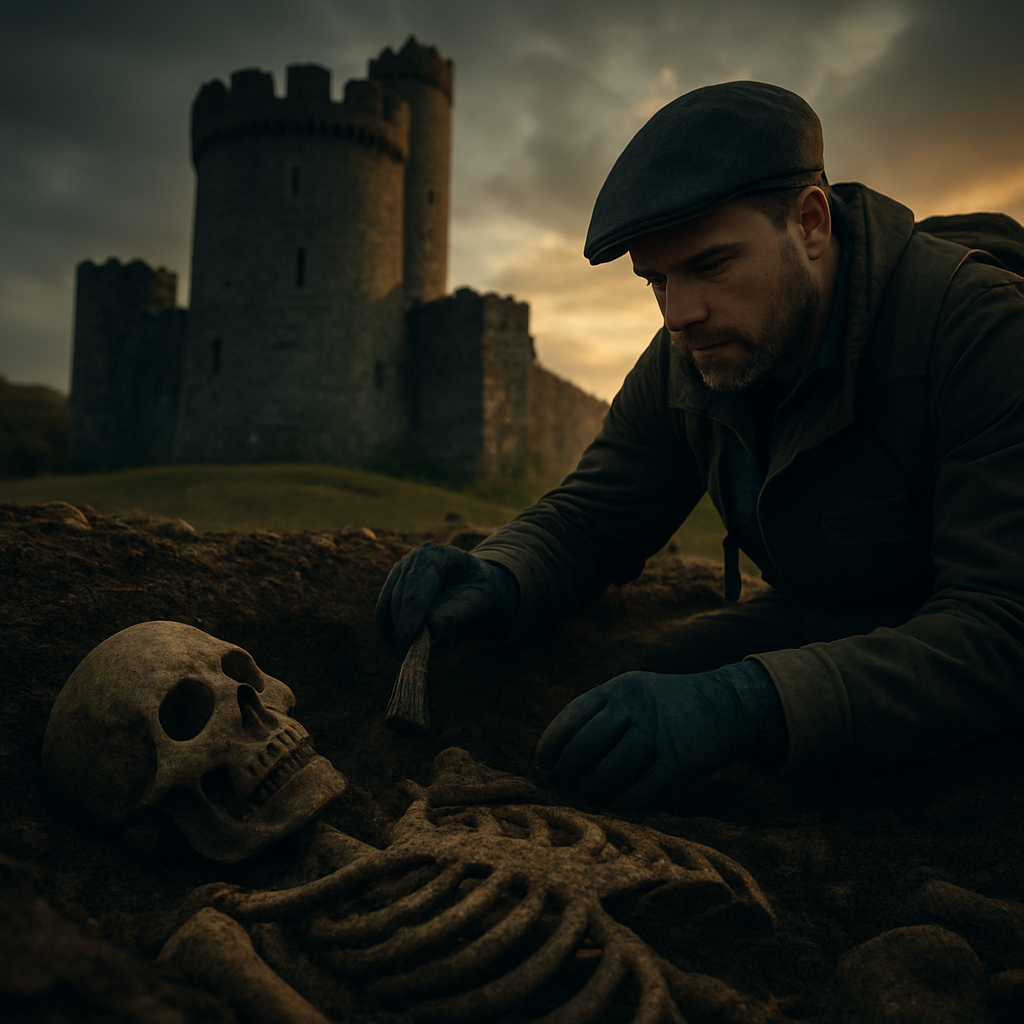
The serene landscapes of Pembroke Castle in Wales became the backdrop for a groundbreaking archaeological discovery thanks to an inquisitive visitor. While visiting the historic site in 2010, archaeologist John Bolton was captivated by the idea of a cave known as Wogan Cavern, which lay beneath the castle, reportedly untouched since the Victorian era. This curiosity set off a chain of events leading Bolton to enlist the expertise of Dr. Rob Dinnis from the University of Aberdeen.
Following persistent reminders from Bolton, Dr. Dinnis agreed to delve into the potential-held by the cavern. The initial excavations, conducted from 2021 to 2024, unearthed remarkably preserved fossils and tools, captivating historians and researchers alike. Particularly astonishing was the discovery of hippopotamus bones, indicating that these creatures existed in the region 120,000 years ago, preceding the last Ice Age. These findings provide a rare glimpse into the prehistoric past that could alter our understanding of Britain's ancient inhabitants.
The presence of such well-preserved evidence amidst the cavern's interior is a stroke of archaeological luck. Unlike many caves prior despoiled during the 1800s, Wogan Cavern retained its historical essence, holding secrets waiting to be unraveled. Dr. Dinnis hailed the discoveries as pivotal, given the potential to extract detailed data such as DNA, which can unveil the dynamics of human-animal interactions and adaptation strategies thousands of years ago.
Further exploration is anticipated under the leadership of the University of Aberdeen, boasting the promise of unlocking crucial information about climate impacts on early life. As part of conservation efforts, both researchers and the Pembroke Castle Trust enthusiastically aim to preserve these artifacts within Wales. Such efforts not only enrich academic pursuits but also serve to enlighten the public on the significance of archeological integrity and historical narratives.
Ultimately, this accidental discovery embodies the unforeseen potential of every corner of historical sites, reinforcing the perpetuity of knowledge affiliated with context-specific human and environmental heritage.
Original news source: Family holiday unearths 'mind-blowing' ancient discovery – BBC News (BBC)
🎧 Listen:
📖 Vocabulary:
Group or Classroom Activities
Warm-up Activities:
1. Discuss any historical sites you have visited and describe your experiences.
2. Brainstorm why preservation of archaeological sites is important for future generations.
3. Share thoughts on the role of curiosity in scientific discoveries.
4. Imagine you are an archaeologist; what would you be most eager to discover?
5. Debate the potential consequences of ignoring historical contexts in modern development.
🤔 Comprehension Questions:
In Wales.
The idea to investigate Wogan Cavern.
Archaeologist John Bolton and Dr. Rob Dinnis were involved.
Hippopotamus bones were discovered.
They were approximately 120,000 years old.
It offers insights into Britain's prehistoric past and ancient inhabitants.
Unlocking crucial information about climate impacts on early life and preserving artifacts.
🎧✍️ Listen and Fill in the Gaps:
The serene landscapes of Pembroke Castle in Wales became the backdrop for a discovery thanks to an inquisitive visitor. While visiting the historic site in 2010, archaeologist John Bolton was captivated by the idea of a cave known as Wogan Cavern, which lay beneath the castle, reportedly untouched since the Victorian era. This curiosity set off a chain of events leading Bolton to enlist the of Dr. Rob Dinnis from the University of . Following persistent reminders from Bolton, Dr. Dinnis agreed to delve into the potential-held by the cavern. The initial excavations, conducted from 2021 to 2024, unearthed remarkably fossils and tools, captivating historians and alike. Particularly astonishing was the discovery of hippopotamus bones, indicating that these creatures existed in the region 120,000 years ago, preceding the last Ice Age. These findings a rare glimpse into the prehistoric past that could alter our understanding of Britain's ancient inhabitants. The of such well-preserved evidence amidst the cavern's interior is a stroke of archaeological luck. Unlike many caves prior despoiled during the 1800s, Wogan Cavern retained its historical , holding secrets to be unraveled. Dr. Dinnis hailed the as pivotal, given the potential to extract detailed data such as DNA, which can unveil the dynamics of human-animal interactions and adaptation strategies thousands of years ago. Further exploration is anticipated the leadership of the University of Aberdeen, boasting the promise of unlocking crucial information about climate impacts on early life. As part of conservation efforts, both researchers and the Pembroke Castle Trust enthusiastically aim to preserve these artifacts Wales. Such efforts not only enrich academic but also serve to the public on the significance of archeological integrity and historical narratives. , this accidental discovery embodies the unforeseen potential of every corner of historical sites, reinforcing the perpetuity of knowledge affiliated with context-specific human and environmental heritage.
💬 Discussion Questions:
1. Why do you think the Wogan Cavern remained untouched for so long?
2. How significant are collaborations among scientists in such discoveries?
3. What impact do unexpected discoveries have on our understanding of history?
4. How important is it to preserve the historical integrity of archaeological sites?
5. Do you believe every artifact should stay within its country of origin? Why or why not?
6. How can public awareness of archaeological integrity be increased?
7. What are the challenges of extracting DNA from ancient remains?
8. In what ways can historical findings influence contemporary culture?
9. What role should technology play in future archaeological endeavors?
10. How might climate change impact future archaeological discoveries?
11. Discuss the notion of perpetuity in relation to human heritage.
12. How do archaeological discoveries contribute to national identity?
Individual Activities
📖💭 Vocabulary Meanings:
Click a dot next to a word, then click the dot next to its meaning to draw a line connecting them.