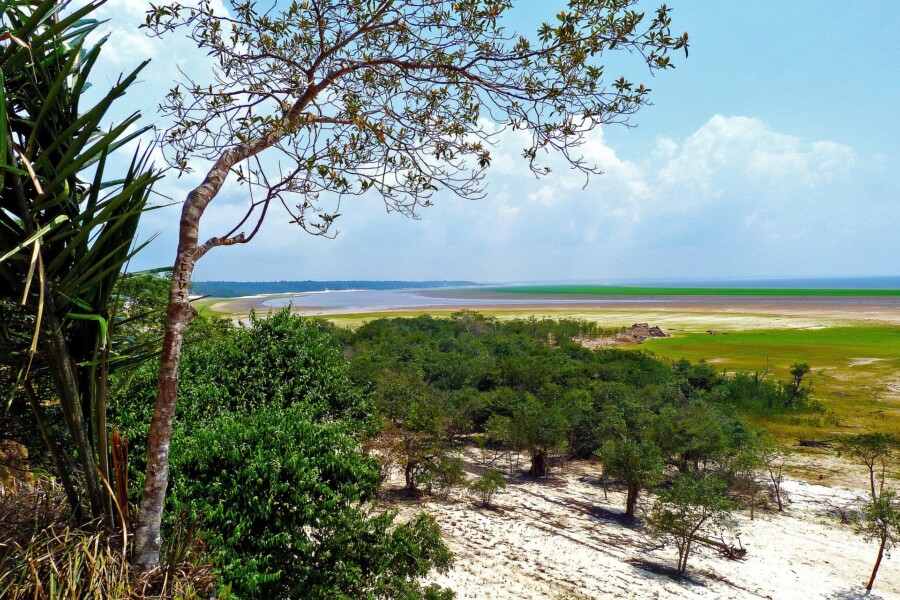
The Amazon rainforest experienced its worst drought on record in 2023, causing devastating effects on villages, wildlife, and vegetation. Scientists are concerned that these events are a warning sign that the Amazon is nearing a point of no return. Oliveira Tikuna, a resident of a village in the middle of the forest, expressed his disbelief at the severity of the drought, stating that he had never seen anything like it before. The lack of water has led to spoiled crops and increased isolation for the villagers. The drought is attributed to the cyclical El Niño weather pattern, exacerbated by climate change.
Flávia Costa, a plant ecologist, who has been studying the rainforest for 26 years, explains that each drought has been stronger than the previous one, causing significant damage to plant life. The 2015 "Godzilla drought" alone killed billions of trees and plants. The Amazon rainforest is not only a biodiversity hotspot but also a crucial carbon sink, storing around 150 billion tonnes of carbon. Scientists fear that if deforestation reaches 25% and global temperatures rise by 2-2.5°C, the forest will reach a tipping point and transform into a savannah.
Brazilian climatologist Carlos Nobre expresses his increased concern about the future of the Amazon, especially considering the lack of progress in reducing greenhouse gas emissions. Currently, 17% of the Amazon has been deforested, and the global temperature is already 1.1-1.2°C above pre-industrial levels. However, there is hope as deforestation rates have decreased in all Amazon countries, and there is a commitment to reaching zero deforestation by 2030.
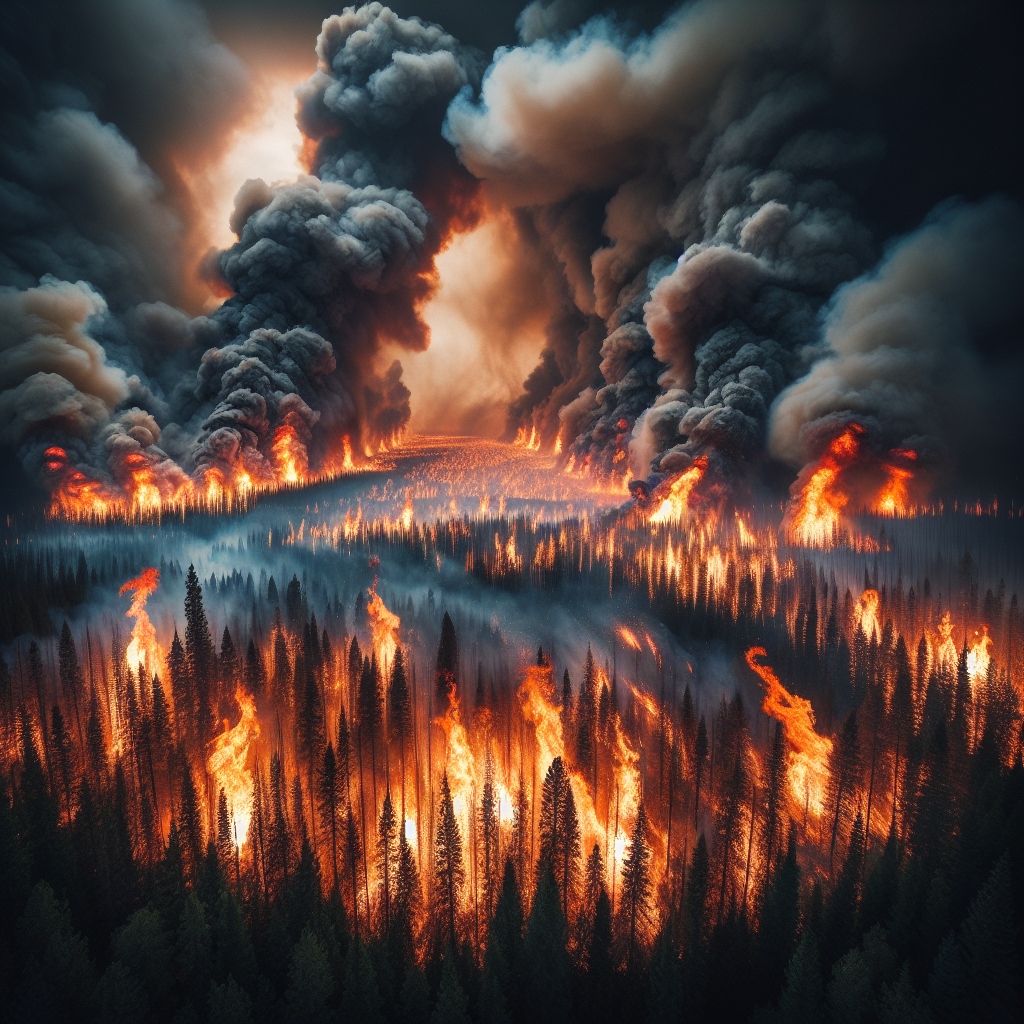
While some scientists believe that parts of the forest will survive even if the tipping-point conditions occur, signs of degradation are evident everywhere. Small fires set for land clearing purposes have spread out of control, affecting untouched or primary forest areas. Additionally, hundreds of dolphins have been found dead in lakes due to high water temperatures. The changing climate and its impact on the Amazon have shocked researchers and residents alike, emphasizing the urgent need to protect and preserve the rainforest.
Original news source: Amazon drought: 'We've never seen anything like this' (BBC)
🎧 Listen:
📖 Vocabulary:
Group or Classroom Activities
Warm-up Activities:
– News Summary
Instructions:
1. Divide the students into pairs or small groups.
2. Give each group a copy of the article.
3. Ask each group to read the article and summarize the main points in 3-4 sentences.
4. Have each group present their summaries to the class.
– Opinion Poll
Instructions:
1. Divide the students into pairs.
2. Assign one student in each pair to be the interviewer and the other to be the interviewee.
3. Give the interviewers a list of questions related to the article (e.g., Do you think the Amazon rainforest is in danger? What do you think should be done to protect it?).
4. The interviewers should ask the questions to their partners and record their responses.
5. After the interviews, have a class discussion where students share their partner's opinions and discuss the different viewpoints.
– Vocabulary Pictionary
Instructions:
1. Write a list of vocabulary words from the article on the board (e.g., drought, biodiversity, deforestation).
2. Divide the students into small groups.
3. Give each group a piece of paper and a pen.
4. In each round, one student from each group will choose a word from the list and draw a picture to represent it.
5. The other students in the group must guess the word based on the drawing.
6. The group that guesses correctly gets a point.
7. Continue playing until all the words have been drawn.
– Pros and Cons
Instructions:
1. Divide the students into small groups.
2. Assign each group a role: pro or con.
3. Give the groups some time to discuss and brainstorm arguments for their assigned position regarding the future of the Amazon rainforest.
4. Have each group present their arguments to the class.
5. Encourage a class discussion where students can challenge and debate each other's points.
– Future Predictions
Instructions:
1. Write the following question on the board: "What do you think will happen to the Amazon rainforest in the next 10 years?"
2. Divide the students into pairs.
3. In their pairs, ask the students to discuss their predictions for the future of the Amazon rainforest based on the information in the article.
4. After the discussion, have each pair share their predictions with the class.
5. Encourage a class discussion where students can compare and analyze the different predictions.
🤔 Comprehension Questions:
🎧✍️ Listen and Fill in the Gaps:
The Amazon rainforest experienced its worst drought on record in 2023, causing devastating on , wildlife, and vegetation. Scientists are concerned that these are a warning sign that the Amazon is nearing a point of no return. Oliveira Tikuna, a resident of a village in the middle of the forest, expressed his disbelief at the severity of the drought, stating that he had never seen anything like it before. The lack of water has led to spoiled crops and increased isolation for the . The drought is attributed to the cyclical El Niño weather pattern, exacerbated by climate change. Costa, a plant ecologist, who has been studying the for 26 years, explains that each drought has been stronger than the previous one, causing significant damage to plant life. The 2015 "Godzilla drought" alone killed billions of trees and plants. The Amazon rainforest is not only a biodiversity hotspot but also a crucial carbon sink, around 150 billion tonnes of carbon. fear that if deforestation reaches 25% and global temperatures rise by 2-2.5°C, the forest will a tipping point and transform into a savannah. Brazilian Carlos Nobre expresses his increased concern about the future of the Amazon, especially considering the lack of progress in reducing greenhouse gas . Currently, 17% of the Amazon has been deforested, and the global temperature is already 1.1-1.2°C above pre-industrial . However, there is hope as deforestation rates have decreased in all Amazon countries, and there is a commitment to reaching zero deforestation by 2030. While some scientists believe that of the forest will survive even if the tipping-point conditions occur, signs of degradation are evident everywhere. Small fires set for land clearing purposes have spread out of control, affecting untouched or forest areas. Additionally, hundreds of dolphins have been found dead in due to high water temperatures. The changing climate and its on the Amazon have shocked researchers and residents alike, emphasizing the urgent need to protect and preserve the rainforest.
💬 Discussion Questions:
1. What is the significance of the Amazon rainforest?
2. How would you feel if you lived in a village in the Amazon and experienced a severe drought?
3. Do you think the drought in the Amazon is a result of climate change? Why or why not?
4. What do you think would happen if the Amazon rainforest reached a tipping point and transformed into a savannah?
5. How do you feel about the current progress in reducing greenhouse gas emissions?
6. What are some potential consequences of deforestation in the Amazon?
7. Do you think it is possible to reach zero deforestation in the Amazon by 2030? Why or why not?
8. How do you think the changing climate is affecting the wildlife in the Amazon?
9. What measures do you think should be taken to protect and preserve the rainforest?
10. How do you think the drought and its effects on the Amazon will impact the global ecosystem?
11. Why do you think small fires set for land clearing purposes have spread out of control in the Amazon?
12. How do you think the changing climate in the Amazon will affect indigenous communities?
13. Do you think the international community is doing enough to address the issues facing the Amazon? Why or why not?
14. How would you feel if you saw the effects of deforestation and climate change firsthand in the Amazon?
15. What do you think individuals can do to contribute to the protection and preservation of the rainforest?
Individual Activities
📖💭 Vocabulary Meanings:
Click a dot next to a word, then click the dot next to its meaning to draw a line connecting them.
Words
Meanings
🔡 Multiple Choice Questions:
🕵️ True or False Questions:
📝 Write a Summary:
Write a summary of this news article in two sentences.
Check your writing now with the best free AI for English writing!