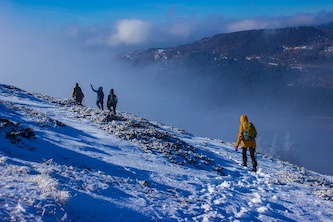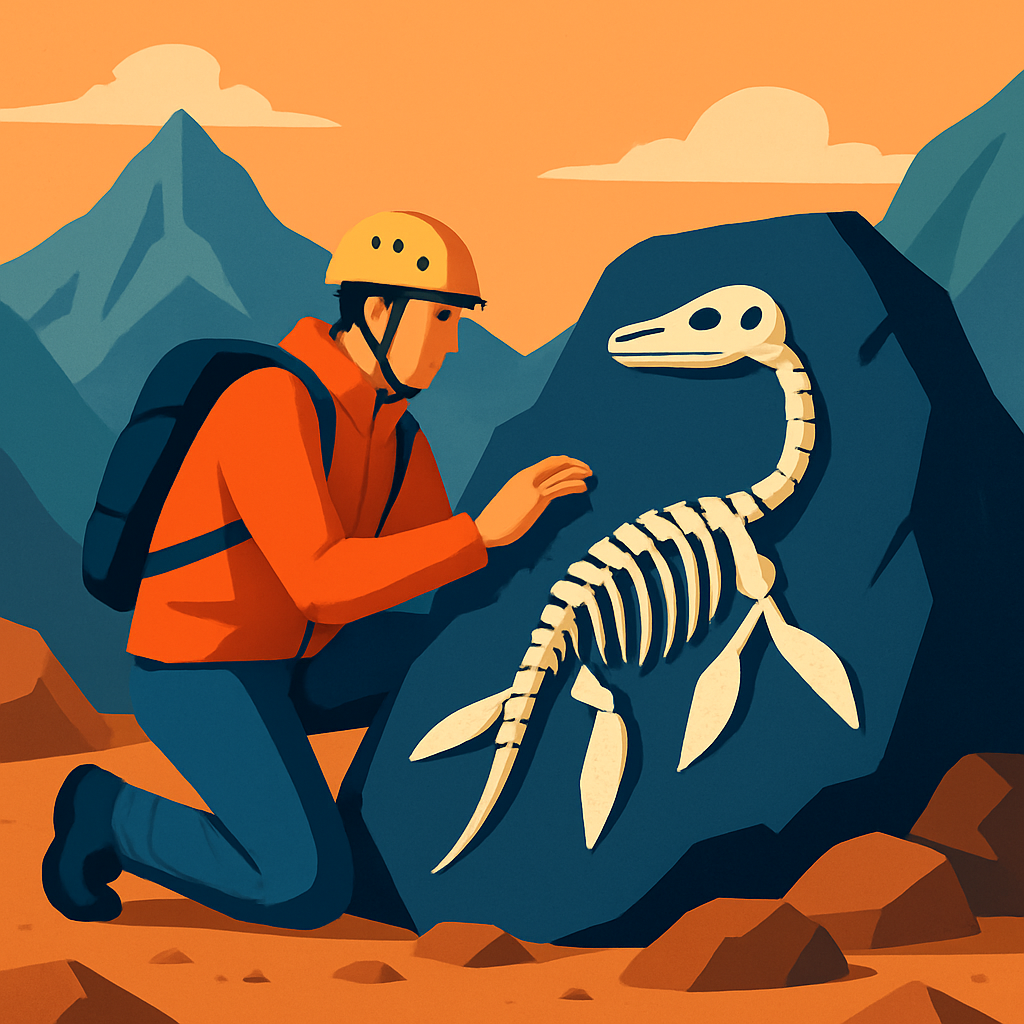
Matthew Myerscough, once nearly killed in an avalanche, redirected his life to fossil hunting, leading to a significant paleontological discovery. In 2014, he was buried under snow for 20 minutes on Yr Wyddfa, which contributed to post-traumatic stress disorder. Seeking solace, Matthew focused on fossil hunting along the beaches of Wales, which offered him much-needed tranquility.
During one of his excursions at Lavernock Point, Matthew unearthed a jawbone dating back 200 million years, belonging to a marine reptile termed as a 'sea dragon.' This fossil discovery was a pivotal moment, especially as it represented a species not previously documented in Wales, a plesiosaur from the Jurassic period. The process of meticulous searching and identifying fossils served as a therapeutic practice for him, akin to mindfulness exercises.
Matthew considers fossil hunting more than a hobby; it's an analytical pursuit requiring keen observation rather than vigorous tools. His experiences in nature, where he often lets his stress fade while scouring stretches of shoreline, demonstrate natural sites' healing capabilities. This rewarding recreational activity also allowed him to bond with fellow enthusiasts, sharing knowledge and experiences with other amateur and professional paleontologists.
The identification of the rhomaleosaurus, confirmed by expert analysis, is poised to contribute significantly to scientific literature, with ongoing research facilitated by National Museum Cardiff. Matthew hopes the detailed study of the fossil will result in an academic publication, enabling a broader understanding of Wales' prehistoric marine life.
Through his writings, such as 'In Search of Sea Dragons,' Matthew aims to demystify fossil hunting practices. By sharing the precise locations and conditions of his finds, he inspires a greater community to embrace the hidden secrets of paleontology, emphasizing the open enjoyment and educational value of these discoveries.
Original news source: Fossil hunter discovers rare 'sea dragon' at Lavernock Point – BBC News (BBC)
🎧 Listen:
📖 Vocabulary:
Group or Classroom Activities
Warm-up Activities:
1. Share an experience where you found solace in a surprising hobby.
2. Discuss with a partner a time when nature helped you reduce stress.
3. What is a hobby that requires meticulous attention but is rewarding?
4. If you could find a prehistoric artifact, what would you hope to discover?
5. How do you think hobbies like fossil hunting can impact mental health?
🤔 Comprehension Questions:
He started fossil hunting after surviving an avalanche as it provided him solace and tranquility.
He discovered a jawbone of a marine reptile, referred to as a 'sea dragon,' not previously documented in Wales.
It serves as a therapeutic practice, similar to mindfulness exercises.
The identification of the rhomaleosaurus was confirmed by expert analysis facilitated by National Museum Cardiff.
He aims to demystify fossil hunting practices and inspire others to enjoy and learn from these discoveries.
Because it contributes to the understanding of Wales' prehistoric marine life and is a species not previously documented there.
It allows him to bond with fellow enthusiasts, sharing knowledge and experiences.
🎧✍️ Listen and Fill in the Gaps:
Matthew Myerscough, once nearly killed in an avalanche, redirected his life to fossil , leading to a significant paleontological discovery. In 2014, he was buried under snow for 20 minutes on Yr Wyddfa, which contributed to post-traumatic stress disorder. Seeking solace, Matthew on fossil hunting the beaches of Wales, which offered him much-needed tranquility. one of his excursions at Lavernock Point, Matthew unearthed a jawbone dating back 200 million years, belonging to a marine reptile termed as a 'sea dragon.' This fossil discovery was a pivotal moment, especially as it represented a species not previously documented in Wales, a plesiosaur from the period. The process of searching and identifying fossils as a therapeutic practice for him, akin to mindfulness exercises. Matthew considers fossil hunting more than a hobby; it's an pursuit requiring keen observation rather than tools. His experiences in nature, he often lets his stress fade while scouring stretches of shoreline, demonstrate natural sites' healing capabilities. This rewarding recreational activity also allowed him to bond with fellow enthusiasts, sharing knowledge and experiences with other amateur and professional paleontologists. The identification of the rhomaleosaurus, confirmed by expert , is poised to contribute significantly to literature, with ongoing research facilitated by National Museum Cardiff. Matthew hopes the detailed of the fossil will result in an academic publication, enabling a broader understanding of Wales' prehistoric marine life. Through his writings, such as 'In of Sea Dragons,' Matthew aims to demystify fossil hunting practices. By sharing the precise locations and conditions of his finds, he a greater to embrace the hidden secrets of paleontology, emphasizing the open enjoyment and educational value of these discoveries.
💬 Discussion Questions:
1. How do you interpret the therapeutic effects of hobbies?
2. Do you think nature has a profound healing capability? Why or why not?
3. What role does community play in niche hobbies like paleontology?
4. Have you ever found something unexpected during a nature excursion?
5. How might one's life change after a near-death experience?
6. Discuss the importance of documenting new scientific discoveries.
7. How can sharing experiences with others enhance a hobby?
8. In what ways can writing about a hobby increase its appeal?
9. What are the benefits and drawbacks of having a specialized hobby?
10. Is there a hobby that you think is universally beneficial for well-being?
11. How does analytical thinking contribute to success in hobbies?
12. What measures can be taken to preserve natural sites for recreational activities?
Individual Activities
📖💭 Vocabulary Meanings:
Click a dot next to a word, then click the dot next to its meaning to draw a line connecting them.