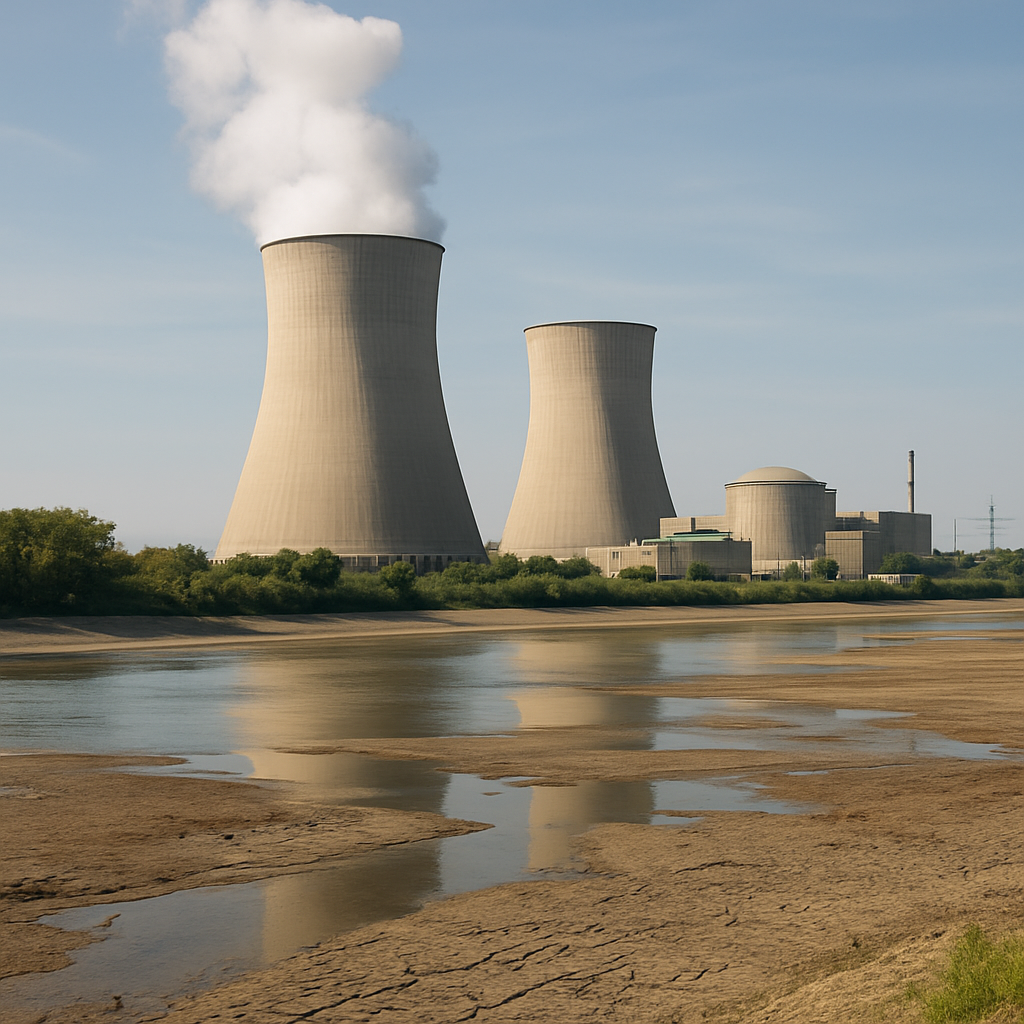
Romania recently shut down its only nuclear power plant, Cernavodă. This decision was made because water levels in the Danube River are extremely low, due to prolonged heatwaves. The plant's two 706-megawatt reactors provide around 20% of Romania's electricity, so their closure is significant.
Authorities even tried placing barges loaded with rocks in the river to increase water flow to the plant, but the measures were unsuccessful. The plant is likely to remain closed for at least 10 more days, during which Romania will rely on wind, solar, and electricity imports.
The situation in Romania highlights a growing issue faced by many European countries: climate change. Europe is warming at a rate twice as fast as the global average. This results in severe heatwaves, decreased water levels in rivers, and even increased wildfires.
These events not only threaten energy production but also have severe consequences for agriculture and transportation. For example, Italy and France are reporting significant economic hits from climate-related events, putting pressure on their economies.
5. authoritiespeople with official responsibilities
6. unsuccessfulfailed to achieve desired outcome
7. highlightto emphasize or make more visible
8. severevery intense or serious
9. consequencesresults or effects
10. transportationsystem of moving goods or people
11. economicrelating to finance or economy
12. importssomething bought or brought in
13. bargesflat-bottomed boats
14. reliancedependence on something
15. closurethe act of closing or ending
Group or Classroom Activities
Warm-up Activities:
1. Discuss what you know about nuclear power and its importance. 2. Share any recent news you've heard about climate change. 3. Talk about the rivers in your country and their roles in daily life. 4. Discuss the energy sources used in your country. 5. Have you experienced any weather extremes? Share your experience.
🤔 Comprehension Questions:
1. Why was Cernavodă Nuclear Power Plant shut down?
Due to extremely low water levels in the Danube River caused by prolonged heatwaves.
2. What percentage of electricity does the Cernavodă plant provide in Romania?
Around 20%.
3. What did authorities attempt to do to address the water issue?
They placed barges loaded with rocks in the river to try to increase water flow.
4. For how long is the plant expected to remain closed?
At least 10 more days.
5. What alternative energy sources will Romania use during the closure?
Romania will use wind, solar, and electricity imports.
6. How is climate change affecting Europe according to the article?
Europe is warming at a rate twice as fast as the global average, causing severe heatwaves and decreased water levels.
7. Which other sectors are impacted by climate change events, as mentioned in the article?
Agriculture and transportation sectors are affected, along with economic impacts in countries like Italy and France.
🎧✍️ Listen and Fill in the Gaps:
Romania recently shut down its only nuclear power plant, Cernavodă. This was made water levels in the Danube River are extremely low, due to prolonged heatwaves. The two 706-megawatt reactors provide around 20% of Romania's electricity, so their closure is significant. even tried placing loaded with rocks in the to increase water flow to the plant, but the were unsuccessful. The plant is likely to remain closed for at least 10 more days, during which Romania will rely on wind, solar, and electricity . The situation in Romania a growing issue faced by many countries: change. Europe is warming at a rate twice as fast as the global average. This results in severe heatwaves, decreased levels in rivers, and even increased wildfires. These events not only energy production but also have consequences for agriculture and transportation. For , Italy and France are reporting significant economic hits from climate-related events, putting pressure on their economies.
💬 Discussion Questions:
1. What are the environmental impacts of nuclear power? 2. How can countries better prepare for the effects of climate change? 3. Should governments invest more in renewable energy? 4. What can individuals do to reduce their carbon footprint? 5. How serious do you think the threat of climate change is? 6. How does your community deal with extreme weather events? 7. In your opinion, what is the most efficient energy source? 8. What role does government policy play in addressing climate issues? 9. How do you think the global community should respond to climate change? 10. How have weather patterns changed in recent years in your area? 11. What is the importance of international cooperation in climate action? 12. How do economic pressures affect decisions about energy sources?
Individual Activities
📖💭 Vocabulary Meanings:
Click a dot next to a word, then click the dot next to its meaning to draw a line connecting them.
Words
1. prolonged
2. megawatt
3. reactors
4. significant
5. authorities
6. unsuccessful
7. highlight
8. severe
9. consequences
10. transportation
11. economic
12. imports
13. barges
14. reliance
15. closure
Meanings
(A) relating to finance or economy
(B) important and notable
(C) flat-bottomed boats
(D) people with official responsibilities
(E) devices for generating nuclear energy
(F) a unit for measuring power
(G) dependence on something
(H) something bought or brought in
(I) the act of closing or ending
(J) results or effects
(K) to emphasize or make more visible
(L) system of moving goods or people
(M) very intense or serious
(N) drawn out over time
(O) failed to achieve desired outcome
🔡 Multiple Choice Questions:
1. What led to the shutdown of Cernavodă Nuclear Power Plant?
(a) Technical malfunction
(b) Lack of funding
(c) Obsolete technology
(d) Low water levels due to heatwaves
2. How much electricity did the nuclear plant provide?
(a) Around 50%
(b) Around 20%
(c) Around 10%
(d) Around 70%
3. What did authorities try to do to increase water flow?
(a) Build a dam
(b) Widen the river
(c) Dig deeper channels
(d) Use barges loaded with rocks
4. What kind of energy sources will Romania rely on during the plant's closure?
(a) Wind, solar, and imports
(b) Coal and oil
(c) Gas and biomass
(d) Geothermal and hydropower
5. What is happening in Europe at a rate twice as fast as the global average?
(a) Cooling
(b) Rainfall
(c) Warming
(d) Population growth
6. Which countries are mentioned as suffering economic hits from climate-related events?
(a) Italy and France
(b) Spain and Portugal
(c) Germany and Sweden
(d) Greece and Hungary
7. What other areas besides energy production are affected by these events?
(a) Fashion and tourism
(b) Education and healthcare
(c) Agriculture and transportation
(d) Entertainment and sports
8. How long is the plant expected to remain closed?
(a) 5 more weeks
(b) At least 10 more days
(c) 3 more months
(d) 1 more year
🕵️ True or False Questions:
1. Europe is warming faster than the global average.
2. Cernavodă Nuclear Plant contributes to 20% of Romania's electricity.
3. Italy and France face economic challenges due to climate events.
4. Romania will rely on wind, solar, and imports during the closure.
5. The Danube River's high water levels led to the opening of Cernavodă.
6. Agriculture and transportation are unaffected by climate issues.
7. Authorities were successful in their attempts to fix the water flow issue.
8. Climate change leads to mild temperatures and calm weather.
Writing Questions:
1. Describe how energy shortages can impact everyday life.
2. Explain the challenges of managing energy production amid climate change.
3. Discuss the importance of renewable energy in combating climate change.
4. Write about the role of rivers in a country's energy supply.
5. Analyze the economic effects of extreme weather events on countries.
Sir Demis Hassabis, co-founder and CEO of Google’s DeepMind, believes that video games can boost creativity in young people and encourages parents to support their children’s creative use of technology.
Sales to kidults, adults who buy toys for themselves, have defied the overall downturn in toy sales, accounting for over a quarter of the UK toy market and worth over £1 billion a year, as adults find toys fun and beneficial for their mental health.
Microsoft’s new AI assistant, Microsoft 365 Copilot, can attend meetings, draft emails, and create presentations, but concerns about job displacement and reliance on AI remain.
US President Joe Biden and Chinese President Xi Jinping are set to meet in the San Francisco Bay area next week, with the goal of managing competition and preventing conflict between the two countries.