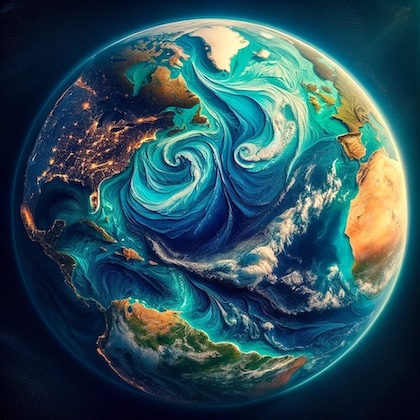
The Gulf Stream system, also known as the Atlantic Meridional Overturning Circulation (Amoc), is a complicated set of currents. It brings warm water from the south to the north, and then the water cools down and sinks. But because of global warming, the Amoc is being affected by the melting ice caps and other sources of fresh water. If the Amoc were to collapse, it could make Europe colder, cause sea levels to rise in the eastern US, and mess up farming because of changes in rainfall. The last time the Amoc stopped and started again was during the Ice Ages a long time ago.
The study that got everyone talking used data about sea surface temperatures from 1870 to figure out how strong the Amoc currents have been over time. It said that the Amoc could collapse sometime between 2025 and 2095, depending on how much greenhouse gases we keep putting into the air. But some scientists are not convinced by this study. They say there's not enough proof to say that the Amoc has been getting weaker. The climate system is really complicated, and we don't have all the information we need to fully understand the Amoc.
Even though we should be careful about the predictions of the Amoc collapse, scientists still think we should take the possibility of sudden changes in the North Atlantic climate seriously. It's important to keep studying and watching the Amoc, because it has a big role in the global climate.
Original news source: Will the Gulf Stream really collapse by 2025? (BBC)
📖 Vocabulary:
Group or Classroom Activities
Warm-up Activities:
– News Summary
Instructions: Have students read the article individually and then summarize the main points in their own words. They can then share their summaries with a partner or small group and discuss any differences or similarities.
– Opinion Poll
Instructions: Divide the class into small groups and give each group a statement related to the article, such as "The Gulf Stream system will collapse by 2025." Have each group discuss and share their opinions on the statement, and then conduct a poll within the class to see how many students agree or disagree with each statement. Discuss the results as a class.
– Vocabulary Pictionary
Instructions: Write down key vocabulary words from the article on small pieces of paper and put them in a hat or bowl. Divide the class into teams and have one student from each team come up to the front of the class. Give each student a vocabulary word and have them draw a picture to represent the word while their team tries to guess what it is. The team that guesses the most words correctly wins.
– Future Predictions
Instructions: Have students work in pairs or small groups and discuss what they think will happen to the Gulf Stream system in the future. They can make predictions based on the information in the article and their own knowledge of climate change. After discussing, have each group share their predictions with the class and discuss the different possibilities.
– Think-Pair-Share
Instructions: Have students individually read the article and think about the following question: "What are the potential consequences of the Gulf Stream system collapsing?" After a few minutes, have students pair up and discuss their thoughts with their partner. Finally, have students share their ideas with the whole class and discuss as a group.
🤔 Comprehension Questions:
The Gulf Stream system, also known as the Atlantic Meridional Overturning Circulation (Amoc), is a complex set of currents in the Atlantic Ocean. It brings warm water from the south to the north, which helps to keep Europe's climate mild and temperate. The warm water also affects the wind patterns, which in turn affect the weather in Europe.
Scientists are worried about the Gulf Stream system collapsing because it could have a significant impact on the climate. If the system were to collapse, it could make temperatures colder in Europe and disrupt rainfall patterns. This could have serious consequences for agriculture, ecosystems, and even human populations.
Global warming is affecting the Gulf Stream system in several ways. The melting ice caps and increased freshwater input into the ocean are disrupting the balance of saltwater and freshwater in the Atlantic. This disrupts the natural process of warm water moving north and cooling down, which is a crucial part of the Gulf Stream system. As a result, the system could weaken or even collapse.
If the Gulf Stream system were to collapse, it could have far-reaching consequences. Europe could experience colder temperatures, which could impact agriculture and ecosystems. Sea levels in the eastern United States could rise, leading to increased coastal flooding. Changes in rainfall patterns could also disrupt farming and water availability in different regions.
The last time the Gulf Stream system stopped and started again was during the Ice Ages, a long time ago. This was a natural occurrence that happened due to changes in the Earth's climate at that time.
The study used data about sea surface temperatures from 1870 to analyze the strength of the Gulf Stream currents over time. By examining historical records, researchers were able to track changes in the currents and make predictions about their future behavior.
Some scientists are skeptical of the study's findings because they believe there is not enough evidence to support the claim that the Gulf Stream system is weakening. The climate system is incredibly complex, and there are still many unknown factors that could affect the behavior of the currents. Therefore, more research and data are needed to fully understand the Gulf Stream system.
It is important for scientists to continue studying and monitoring the Gulf Stream system because of its significant role in the global climate. Understanding how the system works and how it is changing is crucial for predicting and preparing for potential climate impacts. By monitoring the Gulf Stream system, scientists can provide valuable information for policymakers and help mitigate the effects of climate change on both regional and global scales.
🎧✍️ Listen and Fill in the Gaps:
A new study has got worried about something called the Gulf Stream . This system controls the currents in the Ocean and affects the weather in Europe. The study suggests that the Gulf Stream could collapse by 2025, which would have a big impact on the climate. It could make temperatures colder and mess up rainfall patterns. But other scientists are not so sure about this study. They say it's not and the collapse of the Gulf Stream is not likely to happen so soon. The Intergovernmental Panel on Climate Change also disagrees with the study's . The Gulf Stream system, also known as the Atlantic Meridional Overturning Circulation (Amoc), is a complicated set of currents. It warm from the south to the north, and then the water cools down and sinks. But because of global warming, the Amoc is being affected by the melting ice caps and sources of fresh water. If the Amoc were to collapse, it could make Europe colder, cause sea levels to rise in the eastern US, and mess up farming because of changes in rainfall. The last time the Amoc and started again was during the Ice Ages a long time ago. The study that got everyone talking used data about sea surface from 1870 to out how strong the Amoc have been over time. It said that the Amoc could collapse sometime between 2025 and 2095, depending on how much greenhouse gases we keep putting into the air. But some scientists are not convinced by this study. They say there's not enough proof to say that the Amoc has been getting weaker. The climate system is really complicated, and we don't have all the we need to fully understand the Amoc. Even though we should be careful about the of the Amoc collapse, scientists still we should take the possibility of sudden changes in the North Atlantic climate seriously. It's to keep studying and watching the Amoc, because it has a big role in the global climate.
💬 Discussion Questions:
1. What is the Gulf Stream system and why is it important?
2. How would you feel if the Gulf Stream system collapsed and made temperatures colder in Europe?
3. Do you think the study's prediction that the Gulf Stream could collapse by 2025 is likely to happen? Why or why not?
4. What do you think would happen if the Gulf Stream system stopped and started again, like during the Ice Ages?
5. How do you think changes in rainfall patterns could affect farming?
6. Do you like studying about climate change? Why or why not?
7. What do you think scientists should do to gather more information about the Gulf Stream system?
8. How do you think the collapse of the Gulf Stream system would affect sea levels in the eastern US?
9. Why do you think some scientists disagree with the study's findings about the Gulf Stream system?
10. How do you think the melting ice caps and other sources of fresh water are affecting the Gulf Stream system?
11. What do you think would happen if the Gulf Stream system collapsed and made Europe colder?
12. How would you feel if sudden changes in the North Atlantic climate started happening?
13. Do you think it's important for scientists to keep studying and watching the Gulf Stream system? Why or why not?
14. How do you think the Gulf Stream system affects the global climate?
15. Why do you think the Intergovernmental Panel on Climate Change disagrees with the study's findings about the Gulf Stream system?
Individual Activities
📖💭 Vocabulary Meanings:
Click a dot next to a word, then click the dot next to its meaning to draw a line connecting them.
Words
Meanings
🔡 Multiple Choice Questions:
🕵️ True or False Questions:
📝 Write a Summary:
Write a summary of this news article in two sentences.
Check your writing now with the best free AI for English writing!