

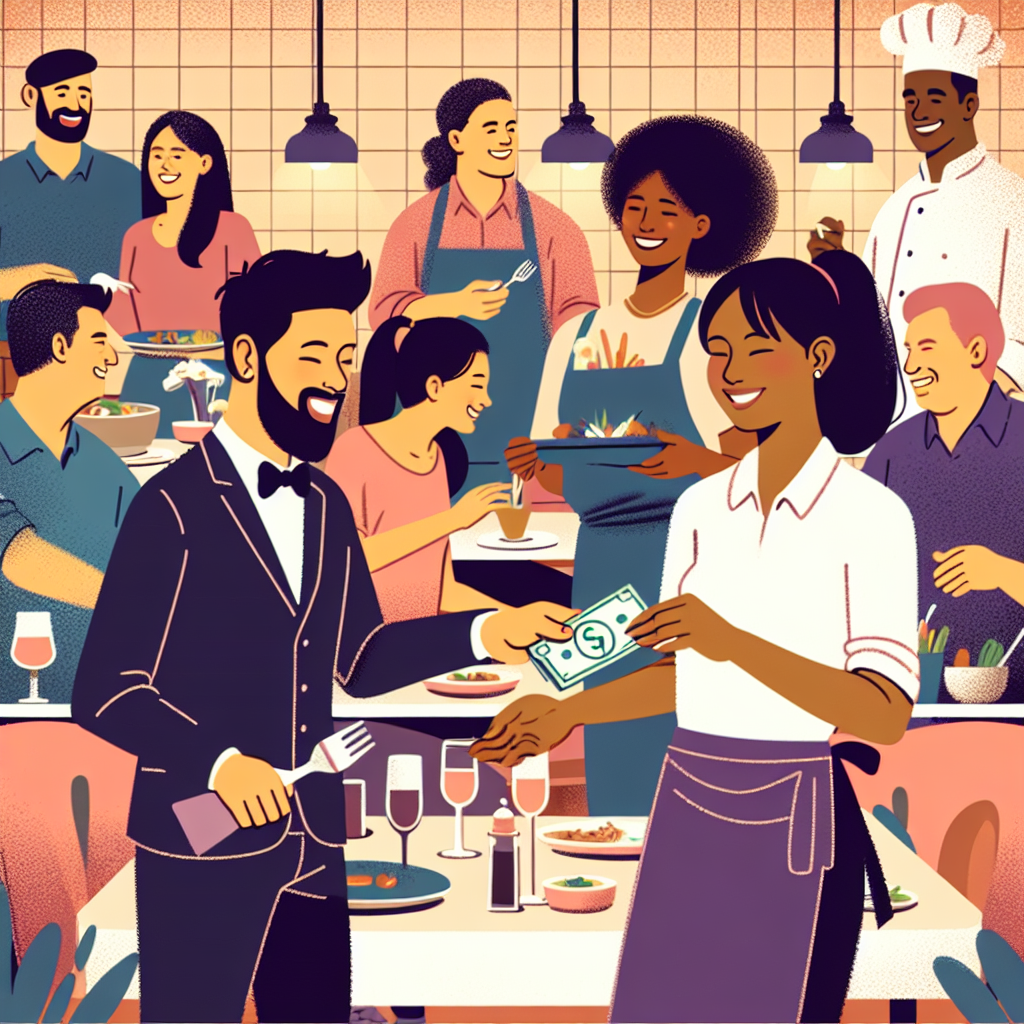
When you eat out, deciding whether to tip, especially if the service wasn't great, can be stressful. Tipping is common in places like restaurants, hair salons, taxis, and hotels. A recent law in the UK guarantees that workers get all their tips, which helps many employees. While there aren't strict rules on how much to tip, it's important to show gratitude for good service, according to etiquette experts.
Tipping customs differ between people and countries. In the UK, a service charge is often added to the bill, and a 10-15% tip is recommended. In the US, tipping can go over 20% and might even be expected. In some Asian nations, tipping used to be seen as impolite, but Western influence is changing that. The amount you tip could be influenced by the type of restaurant, with fancier places usually getting bigger tips to show generosity.
Some customers don't like automatic service charges on their bills because they feel pressured. It's important to check if a service charge is included and ask to remove it if you think it's not needed. Leaving a good review on social media is becoming another way to show appreciation instead of tipping. This can help the whole team, from the front-of-house staff to the kitchen workers, and businesses really value this kind of support.
Tipping has changed from just leaving coins to now including card and contactless payments. The idea behind tipping is still strong as a way to thank workers for their hard work. Even though tipping is a personal decision, it's crucial to make sure that staff get the recognition they deserve for good service. Whether you tip or leave a positive review, recognizing and valuing the work of service workers is vital in the hospitality industry.
Original news source: Should you tip even if the service wasn't worth it? (BBC)
🎧 Listen:
📖 Vocabulary:
Group or Classroom Activities
Warm-up Activities:
– Headline Creation
Instructions: Ask students to work in pairs or small groups to create a catchy headline summarizing the main idea of the article about tipping etiquette. Encourage them to be creative and concise in their headline.
– Vocabulary Pictionary
Instructions: Write down key vocabulary words from the article on separate pieces of paper. Divide the class into two teams. One person from each team will pick a word and have to draw it on the board without using letters or numbers. Their team members have to guess the word. Set a time limit for each round.
– Think-Pair-Share
Instructions: Have the students think individually about a time when they had a positive or negative experience with tipping. Then, pair them up to discuss their stories. Finally, ask some pairs to share their experiences with the whole class. Encourage them to use vocabulary from the article.
– Opinion Poll
Instructions: Create a set of questions related to tipping customs, such as "Do you think tipping should be mandatory?" or "What factors influence how much you tip?" Have students move around the classroom and ask their classmates these questions, tallying the responses. Afterward, discuss the results as a class.
– Synonym Challenge
Instructions: Write down key words from the article on the board (e.g., tip, service, gratitude, recognition). In pairs, students have to come up with as many synonyms for each word as they can in a limited amount of time. The pair with the most synonyms wins. Discuss the different synonyms as a class.
🤔 Comprehension Questions:
Deciding whether to tip can be stressful when eating out because some people may feel unsure about how much to tip, especially if the service was not great.
The recent law in the UK guarantees that workers get to keep all their tips, ensuring they receive the full amount left by customers, which helps many employees.
In the UK, a 10-15% tip is often recommended as a gesture of gratitude for good service.
In the US, tipping can go over 20% and sometimes is even expected, which is higher compared to the UK's recommendation of 10-15%.
Leaving a good review on social media is becoming an alternative way to show appreciation because it can help the whole team, from the front-of-house staff to the kitchen workers, and businesses really value this kind of support.
The method of tipping has changed over time to include not just leaving coins but also card and contactless payments, making it more convenient for customers to tip.
Some customers dislike automatic service charges on their bills because they may feel pressured and prefer to have the choice of how much to tip based on the service they received.
It is crucial to recognize and value the work of service workers in the hospitality industry because they work hard to provide good service, and showing appreciation through tipping or other means ensures they receive the recognition they deserve.
🎧✍️ Listen and Fill in the Gaps:
When you eat out, deciding whether to tip, especially if the service wasn't great, can be . Tipping is common in places like , hair salons, taxis, and hotels. A recent law in the UK that get all their tips, which helps many employees. While there aren't strict rules on how much to tip, it's important to show gratitude for good service, according to etiquette experts. Tipping customs differ between people and countries. In the UK, a service charge is often added to the bill, and a 10-15% tip is recommended. In the US, tipping can go over 20% and might even be expected. In some Asian nations, tipping used to be seen as , but Western influence is changing that. The you tip could be influenced by the type of , with fancier usually getting bigger tips to show generosity. Some customers don't like automatic on their bills because they feel pressured. It's important to check if a service charge is included and ask to remove it if you think it's not needed. Leaving a good review on social media is becoming another way to show appreciation instead of tipping. This can help the whole team, from the front-of-house staff to the kitchen workers, and really this kind of support. Tipping has changed from just leaving coins to now including card and contactless . The idea behind is still as a way to thank workers for their hard work. Even though tipping is a personal decision, it's crucial to make sure that staff get the recognition they deserve for good service. Whether you tip or leave a positive , recognizing and valuing the work of service workers is vital in the hospitality industry.
💬 Discussion Questions:
1. What is tipping and why do you think it's important?
2. How would you feel if you received bad service at a restaurant but still had to tip?
3. Do you like the idea of leaving a good review on social media instead of tipping? Why or why not?
4. Do you think it's fair for automatic service charges to be added to bills? Why or why not?
5. What is your opinion on the different tipping customs in various countries?
6. How do you decide how much to tip when you go out to eat?
7. Have you ever felt pressured to tip even when you didn't want to? How did you handle it?
8. Why do you think tipping is more common in some places than others?
9. Do you think tipping should be based on a percentage of the bill or a flat rate? Why?
10. What would you do if you received exceptional service at a restaurant but couldn't afford to leave a big tip?
11. How do you think tipping affects the morale of service workers?
12. Have you ever left a positive review for a business online? How do you think it helps the staff?
13. Why do you think some people prefer to tip in cash rather than on a card?
14. Do you think the hospitality industry would function the same without tipping? Why or why not?
15. How important do you think it is to show gratitude for good service, whether through tipping or other means?
Individual Activities
📖💭 Vocabulary Meanings:
Click a dot next to a word, then click the dot next to its meaning to draw a line connecting them.
Words
Meanings
🔡 Multiple Choice Questions:
🕵️ True or False Questions:
📝 Write a Summary:
Write a summary of this news article in two sentences.
Check your writing now with the best free AI for English writing!