

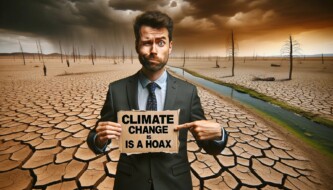
Sarah's family background and her parents' love for science made her care about nature and the environment. When she first heard about "climate change" as a kid, she didn't think it would affect her. She went to college to study animals and became a science teacher, but she started believing that climate change was a hoax because of what she heard on conservative radio shows.
One thing that made Sarah change her mind was listening to a non-profit radio station that talked about climate change in a reasonable way. She started looking at other sources of information and realized that her friends and church group had different views. After the 2016 US presidential elections, she decided to leave her old group and went back to teaching. She made new friends who believed in the same things as her.
Now, Sarah volunteers with groups that want to find solutions to climate change and teaches her students about it. It was hard for her to admit that she was wrong, but she thinks it's important to be a good example and to understand others who might be going through the same thing. She says that it's important to connect with people by finding things you have in common and creating a supportive environment for them to change their minds.
New research shows that in the US, people are becoming more divided when it comes to climate change. But there is also evidence that people are changing their minds. Sarah's story shows that education and being open to new ideas can help us deal with climate change skepticism.
Original news source: I thought climate change was a hoax. Now I've changed my mind' (BBC)
📖 Vocabulary:
Group or Classroom Activities
Warm-up Activities:
– News Summary
Instructions: Divide the class into small groups. Provide each group with a copy of the article. Instruct them to read the article and then summarize the main points in a paragraph or two. After a designated amount of time, have each group share their summaries with the rest of the class.
– Opinion Poll
Instructions: Create a list of statements related to climate change beliefs (e.g. "Climate change is a hoax," "Climate change is caused by human activity," "Climate change is a natural occurrence," etc.). Have the students stand on opposite sides of the room, representing a spectrum of agreement or disagreement with each statement. Read out each statement and ask the students to move to the position that best represents their opinion. After each statement, give the students an opportunity to discuss their opinions with others who are standing in the same position.
– Vocabulary Pictionary
Instructions: Create a list of key vocabulary words from the article (e.g. climate change, skepticism, conservative, non-profit, etc.). Divide the class into small groups. Give each group a set of vocabulary words. Instruct the groups to take turns selecting a word and drawing a picture to represent it. The other groups must guess the word based on the picture. The group that guesses correctly earns a point. The group with the most points at the end of the game wins.
– Pros and Cons
Instructions: Divide the class into pairs or small groups. Instruct each group to make a list of the pros and cons of climate change skepticism. After a designated amount of time, have each group share their lists with the rest of the class. Encourage a respectful discussion and debate about the different perspectives.
– Future Predictions
Instructions: Instruct the students to imagine themselves in the year 2050. Ask them to write a short paragraph or create a visual representation of what they think the world will look like in terms of climate change. Encourage them to consider both positive and negative outcomes. After a designated amount of time, have the students share their predictions with the class and discuss their reasoning behind their predictions.
🤔 Comprehension Questions:
Sarah used to think climate change was fake because her friends at church and a conservative radio host had convinced her that it was a hoax.
Sarah changed her mind about climate change after listening to a non-profit radio station that talked about it in a reasonable way. She also started looking at other sources of information and realized that her friends and church group had different views.
Sarah's family background and her parents' love for science made her care about nature and the environment. They taught her to appreciate and respect the natural world.
Sarah started looking at a non-profit radio station and other sources of information to learn more about climate change.
After the 2016 US presidential elections, Sarah decided to leave her old group because she realized that their beliefs and values were different from hers. She wanted to surround herself with people who shared her passion for addressing climate change.
Sarah volunteers with groups that are working to find solutions to climate change. She also teaches her students about climate change and its impact on the environment.
It was hard for Sarah to admit that she was wrong about climate change because she had to leave her old community and deal with criticism from people who disagreed with her. It can be challenging to change one's beliefs and face judgment from others.
Sarah believes that it is important to connect with people by finding common ground and creating a supportive environment for them to change their minds. She understands that changing one's beliefs can be difficult, and it requires patience, understanding, and open-mindedness.
🎧✍️ Listen and Fill in the Gaps:
Sarah Ott used to think that change was fake. She got this idea from her friends at church and a radio host who had conservative views. But now, she has changed her mind and is all about clean energy and teaching teenagers about climate change. It wasn't easy for Sarah to make this change because she had to her old community and deal with people her. But she realized that the truth is important and she wanted to make a difference. Sarah's background and her parents' love for science made her care about nature and the . When she first heard about "climate " as a kid, she didn't it would affect her. She went to college to study animals and became a science teacher, but she started that climate change was a hoax because of what she heard on conservative radio shows. One thing that made Sarah change her mind was listening to a non-profit radio station that talked about climate change in a reasonable way. She started looking at other sources of information and realized that her friends and church had different views. After the 2016 US presidential elections, she decided to leave her old group and went back to teaching. She made new friends who believed in the same things as her. Now, Sarah volunteers with groups that want to find solutions to climate change and her about it. It was hard for her to admit that she was wrong, but she it's important to be a good example and to understand who might be going through the same thing. She says that it's important to connect with people by finding things you have in common and a supportive environment for them to change their . New research shows that in the US, people are becoming more divided when it comes to climate change. But there is also evidence that people are changing their minds. Sarah's shows that education and being open to new ideas can help us deal with climate change skepticism.
💬 Discussion Questions:
1. What is climate change and why is it important?
2. How would you feel if your friends and family didn't believe in climate change?
3. Do you think it's easy or difficult to change your mind about something you strongly believe in? Why or why not?
4. What do you think are some reasons why people might be skeptical about climate change?
5. How do you think Sarah felt when she realized she had been wrong about climate change?
6. Do you think it's important for people to admit when they are wrong? Why or why not?
7. What are some ways that Sarah is making a difference in the fight against climate change?
8. How do you think Sarah's background and parents' love for science influenced her beliefs about climate change?
9. Do you think it's important to listen to different perspectives and sources of information? Why or why not?
10. How can education and being open to new ideas help us address climate change skepticism?
11. What are some ways that you can connect with people who have different opinions about climate change?
12. How do you think Sarah's new friends supported her in changing her mind about climate change?
13. What are some challenges that Sarah faced when she decided to change her beliefs about climate change?
14. Do you think it's important for young people to be involved in finding solutions to climate change? Why or why not?
15. How can we encourage more people to be open to changing their minds about climate change?
Individual Activities
📖💭 Vocabulary Meanings:
Click a dot next to a word, then click the dot next to its meaning to draw a line connecting them.
Words
Meanings
🔡 Multiple Choice Questions:
🕵️ True or False Questions:
📝 Write a Summary:
Write a summary of this news article in two sentences.
Check your writing now with the best free AI for English writing!