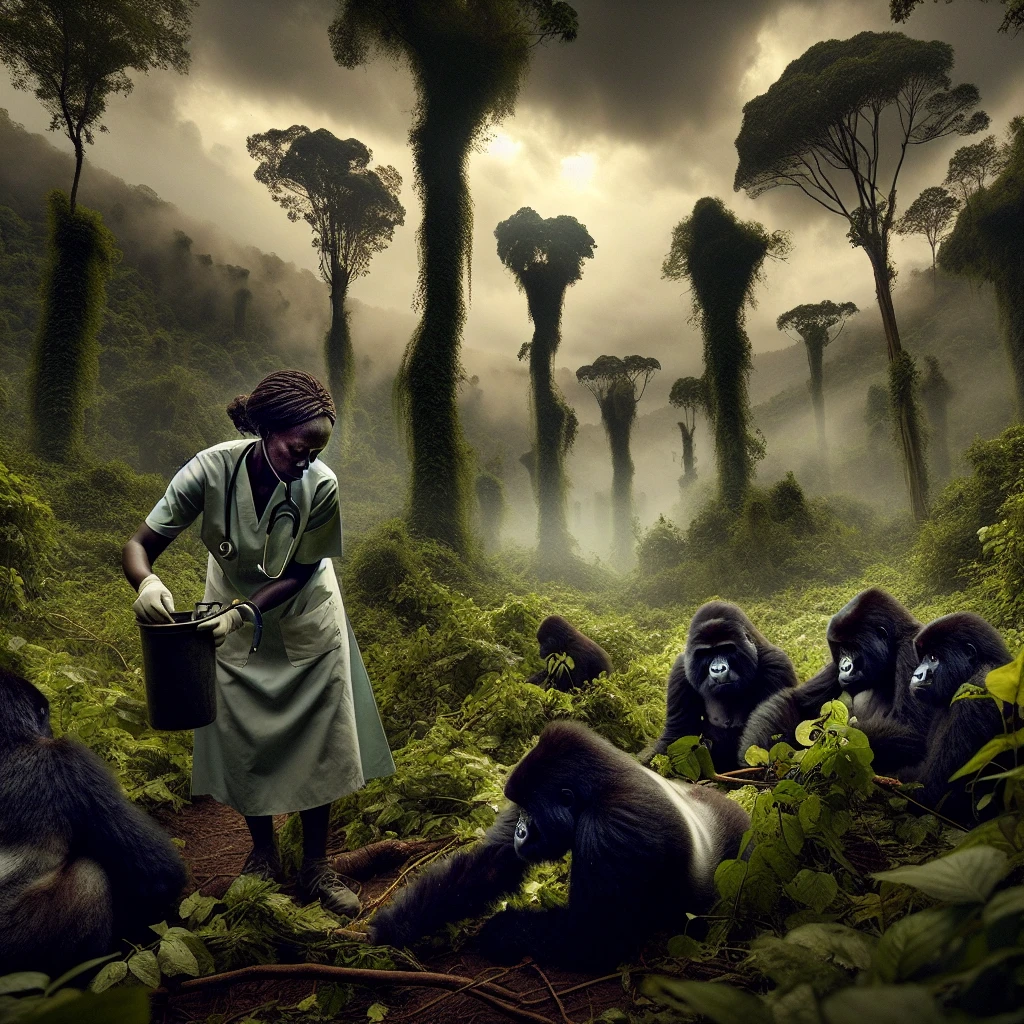
Dr. Kalema-Zikusoka has done a great job in increasing the number of mountain gorillas from 300 to about 500. Because of this, they have been moved from the critically endangered list to the endangered list. She has been working for over 30 years and has made a big difference in saving these amazing creatures.
Dr. Kalema-Zikusoka has been recognized for her amazing work and has been included in the BBC 100 Women list. This list shows women who are making a difference in different areas, like protecting wildlife from climate change. You can read more about her and other women who are working on this important cause on the BBC website.
If you want to know more about Dr. Kalema-Zikusoka and other inspiring women, you can follow BBC 100 Women on Facebook and Instagram. You can also join the conversation using the hashtag #BBC100Women. The video that goes with this article, made by Rebecca Thorn and filmed by Godfrey Badebye, gives more information about the efforts to save Uganda's gorillas from climate change.
In conclusion, Dr. Gladys Kalema-Zikusoka and Conservation Through Public Health are doing important work to protect Uganda's mountain gorillas from the effects of climate change. Because of her dedication and knowledge, she has been able to increase their numbers and improve their conservation status. Her inclusion in the BBC 100 Women list shows how much she has done for wildlife conservation.
Original news source: Climate change: Saving Uganda's mountain gorillas (BBC)
📖 Vocabulary:
Group or Classroom Activities
Warm-up Activities:
– Charades
Instructions: Divide the class into small groups. Give each group a list of words related to the article (e.g. gorilla, conservation, climate change, wildlife, vet). One person from each group will act out the word without speaking, while the others try to guess the word. The group with the most correct guesses wins.
– News Summary
Instructions: Ask students to read the article individually, and then summarize the main points in their own words. Afterward, divide the class into pairs and have them share their summaries with each other. Encourage discussion and ask follow-up questions to check comprehension.
– Opinion Poll
Instructions: Divide the class into small groups. Give each group a statement related to the article (e.g. "Climate change is the biggest threat to wildlife conservation"). Have each group discuss the statement and come up with their own opinions. Then, conduct a class poll by asking each group to share their opinions and provide reasons for their choices. Facilitate a discussion to compare and contrast different viewpoints.
– Vocabulary Pictionary
Instructions: Create a list of vocabulary words from the article (e.g. endangered, conservation, wildlife, dedication). Divide the class into pairs. One student from each pair will choose a word and draw a picture representing that word, while the other student tries to guess the word. Students can take turns drawing and guessing. This activity helps reinforce vocabulary and understanding of the article.
– Future Predictions
Instructions: In small groups, have students discuss and make predictions about the future of Uganda's mountain gorillas and wildlife conservation in the face of climate change. Encourage them to consider the challenges and potential solutions. Each group can present their predictions to the class, and a class discussion can follow to share ideas and insights.
🤔 Comprehension Questions:
🎧✍️ Listen and Fill in the Gaps:
Uganda's gorillas are in because of climate change. Dr. Gladys Kalema-Zikusoka, a wildlife vet and of Conservation Through Public Health, is working hard to protect these endangered animals. Her organization wants to help humans, gorillas, and other wildlife live together peacefully and stay healthy. Dr. Kalema-Zikusoka has done a great job in increasing the of mountain gorillas from 300 to about 500. Because of this, they have been moved from the critically endangered list to the endangered list. She has been working for over 30 years and has made a big difference in saving these creatures. Dr. Kalema-Zikusoka has been recognized for her amazing work and has been included in the BBC 100 Women list. This list shows women who are making a difference in different , like protecting from change. You can read more about her and other who are working on this important cause on the BBC website. If you want to know more about Dr. Kalema-Zikusoka and other inspiring women, you can follow BBC 100 Women on Facebook and Instagram. You can also join the using the hashtag #BBC100Women. The video that goes with this article, made by Rebecca and filmed by Godfrey Badebye, gives more information about the to save Uganda's gorillas from climate change. In , Dr. Gladys Kalema-Zikusoka and Conservation Through Public Health are doing important work to protect Uganda's mountain gorillas from the effects of climate change. Because of her and knowledge, she has been able to increase their numbers and improve their conservation . Her inclusion in the BBC 100 Women list how much she has done for wildlife conservation.
💬 Discussion Questions:
1. What is climate change and how does it affect animals like mountain gorillas?
2. How do you think humans and wildlife can live together peacefully?
3. Do you think it's important to protect endangered animals? Why or why not?
4. How would you feel if you saw a mountain gorilla in real life? Why?
5. What do you think are some challenges that Dr. Gladys Kalema-Zikusoka faces in her work?
6. Why do you think it's important to recognize and celebrate women like Dr. Kalema-Zikusoka for their work?
7. Do you think social media can help raise awareness about wildlife conservation? Why or why not?
8. What other ways can people help protect endangered animals?
9. How do you think climate change affects other wildlife besides mountain gorillas?
10. Have you ever seen any endangered animals in real life? How did it make you feel?
11. Do you think it's possible to completely stop climate change? Why or why not?
12. How do you think Dr. Kalema-Zikusoka's work has made a difference in the world?
13. What other endangered animals do you know about? Why do you think they are endangered?
14. Do you think governments should do more to protect endangered animals? Why or why not?
15. What can individuals do to contribute to wildlife conservation efforts?
Individual Activities
📖💭 Vocabulary Meanings:
Click a dot next to a word, then click the dot next to its meaning to draw a line connecting them.
Words
Meanings
🔡 Multiple Choice Questions:
🕵️ True or False Questions:
📝 Write a Summary:
Write a summary of this news article in two sentences.
Check your writing now with the best free AI for English writing!