

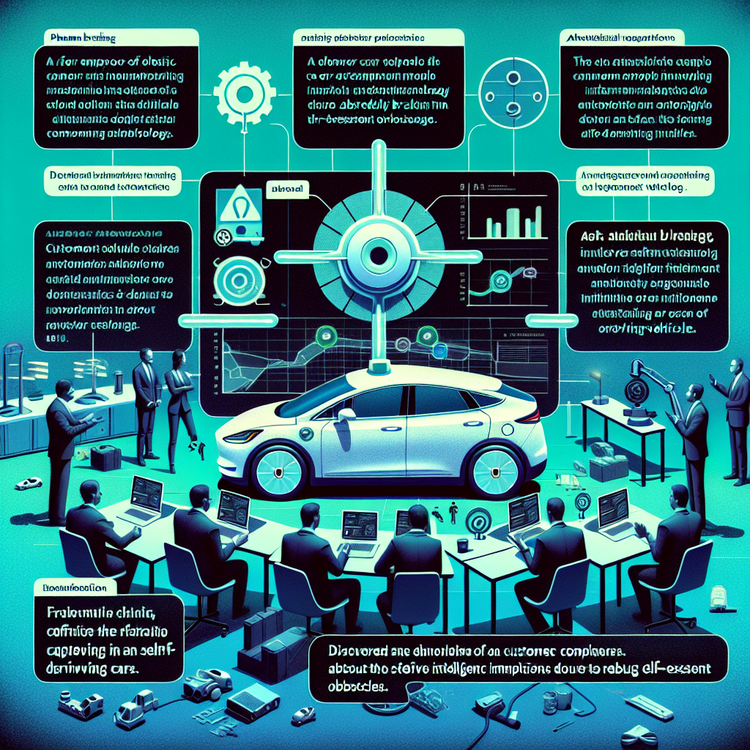
A former employee of Tesla has raised concerns about the safety of the company's self-driving technology. Lukasz Krupski leaked data, including customer complaints about Tesla's braking and self-driving software, to a German newspaper in May. He believes that the technology is not yet ready to be used on public roads and that the hardware and software have not been adequately tested. Despite Elon Musk, the CEO of Tesla, praising the company's self-driving technology, Krupski argues that it poses a risk to all road users. He claims to have found evidence that Tesla has not followed requirements for the safe operation of vehicles with autonomous or assistive-driving technology.
Krupski also discovered data suggesting that Tesla vehicles have experienced "phantom braking," where the vehicles randomly brake in response to non-existent obstacles. Tesla claims that its Autopilot feature has resulted in fewer crashes compared to non-Tesla drivers, but these figures cannot be independently verified. The US Department of Justice has been investigating Tesla over its assisted driving features since January, and the company has faced questions from other agencies as well.
Krupski felt compelled to share the data he found with data protection authorities and has been recognized for his actions as a whistleblower. However, he admits that the experience has been terrifying and has affected his sleep. Jack Stilgoe, an associate professor at University College London, believes that Krupski's claims raise wider concerns about the use of artificial intelligence in autonomous vehicles. The UK government has announced plans for an Automated Vehicles Bill to establish a legal framework for self-driving cars.
In conclusion, a former Tesla employee has expressed doubts about the safety of the company's self-driving technology. He believes that the hardware and software are not yet ready for public roads and that Tesla has not followed requirements for the safe operation of vehicles with autonomous features. The employee's claims have raised concerns about the use of artificial intelligence in autonomous vehicles. The UK government is working on legislation to regulate self-driving cars.
Original news source: Ex-Tesla employee casts doubt on car safety (BBC)
🎧 Listen:
📖 Vocabulary:
Group or Classroom Activities
Warm-up Activities:
– News Summary
Instructions: In pairs, students will read the article and then summarize the main points in their own words. They can take turns sharing their summaries with the class.
– Opinion Poll
Instructions: Divide the class into small groups. Each group will discuss and debate their opinions on the safety of Tesla's self-driving technology. After the discussion, each group will conduct an opinion poll within the class to see how many students agree or disagree with their viewpoint.
– Sketch It
Instructions: Give each student a blank sheet of paper and ask them to draw a visual representation of the concerns raised by the former Tesla employee. After they finish, students will share their drawings with a partner and explain their interpretation.
– Vocabulary Pictionary
Instructions: Write down key vocabulary words from the article on separate index cards. In pairs, one student will draw a card and try to draw a picture to represent the word, while the other student guesses the word. They can switch roles after a certain amount of time.
– Future Predictions
Instructions: In small groups, students will discuss and make predictions about the future of self-driving technology. They can consider the concerns raised by the former Tesla employee and how it might impact the development and implementation of autonomous vehicles. Each group will present their predictions to the class.
🤔 Comprehension Questions:
Krupski raised concerns about the safety of Tesla's self-driving technology, particularly regarding the braking and self-driving software.
Krupski believes that the hardware and software of Tesla's self-driving technology have not been adequately tested, making it unsafe for public roads.
Krupski found evidence suggesting that Tesla has not followed requirements for the safe operation of vehicles with autonomous or assistive-driving technology.
"Phantom braking" refers to when Tesla vehicles randomly brake in response to non-existent obstacles. It is a concern because it poses a risk to road users and can potentially cause accidents.
Tesla claims that its Autopilot feature has resulted in fewer crashes compared to non-Tesla drivers.
These figures are not independently verifiable because there is no independent verification or validation process in place to confirm the accuracy of Tesla's claims.
The US Department of Justice has been investigating Tesla since January over its assisted driving features to determine if the company has complied with safety regulations and requirements.
Krupski's claims raise concerns about the use of artificial intelligence in autonomous vehicles, particularly regarding the safety and reliability of the technology.
🎧✍️ Listen and Fill in the Gaps:
A former of Tesla has raised concerns about the safety of the company's self-driving technology. Lukasz Krupski data, including complaints about Tesla's braking and self-driving software, to a German newspaper in May. He believes that the technology is not yet ready to be used on public roads and that the hardware and software have not been adequately . Despite Elon Musk, the CEO of Tesla, praising the company's self-driving technology, Krupski argues that it poses a risk to all road users. He claims to have found evidence that Tesla has not followed requirements for the safe of with autonomous or assistive-driving technology. Krupski also discovered data suggesting that Tesla vehicles have experienced "phantom braking," where the vehicles randomly brake in response to non-existent obstacles. Tesla claims that its feature has resulted in fewer crashes compared to non-Tesla drivers, but these cannot be independently verified. The US Department of Justice has been investigating Tesla over its assisted driving features since January, and the company has faced questions from other agencies as well. Krupski felt compelled to share the data he found with data protection authorities and has been recognized for his actions as a whistleblower. However, he that the experience has been terrifying and has affected his sleep. Jack Stilgoe, an associate at University College London, believes that Krupski's raise wider concerns about the use of intelligence in autonomous vehicles. The UK government has announced plans for an Automated Vehicles Bill to establish a legal for self-driving cars. In conclusion, a former Tesla employee has expressed doubts about the of the company's self-driving technology. He believes that the hardware and software are not yet for public roads and that Tesla has not followed requirements for the safe operation of vehicles with autonomous features. The employee's claims have raised concerns about the use of artificial intelligence in autonomous vehicles. The UK government is working on legislation to self-driving cars.
💬 Discussion Questions:
1. What is your opinion on the safety of self-driving technology?
2. Have you ever experienced "phantom braking" in a vehicle? How did it make you feel?
3. Do you think companies like Tesla should be required to have their self-driving technology independently verified? Why or why not?
4. How would you feel if you were driving on the road and encountered a vehicle with autonomous or assistive-driving technology?
5. Do you believe that the hardware and software of self-driving technology should undergo more testing before being used on public roads? Why or why not?
6. Have you ever driven a Tesla vehicle? If so, what was your experience like?
7. What do you think are the potential risks of using artificial intelligence in autonomous vehicles?
8. How do you think the use of self-driving cars will impact the job market for professional drivers?
9. Do you think the government should regulate the use of self-driving cars? Why or why not?
10. Have you ever reported a safety concern to authorities? How did it make you feel?
11. How do you think the use of self-driving technology will change the way we travel?
12. Do you trust autonomous vehicles to make safe decisions on the road? Why or why not?
13. What measures do you think should be taken to ensure the safety of self-driving technology?
14. How do you think the public's perception of self-driving cars will change as more incidents and concerns are raised?
15. Would you feel comfortable using a self-driving car? Why or why not?
Individual Activities
📖💭 Vocabulary Meanings:
Click a dot next to a word, then click the dot next to its meaning to draw a line connecting them.
Words
Meanings
🔡 Multiple Choice Questions:
🕵️ True or False Questions:
📝 Write a Summary:
Write a summary of this news article in two sentences.
Check your writing now with the best free AI for English writing!