

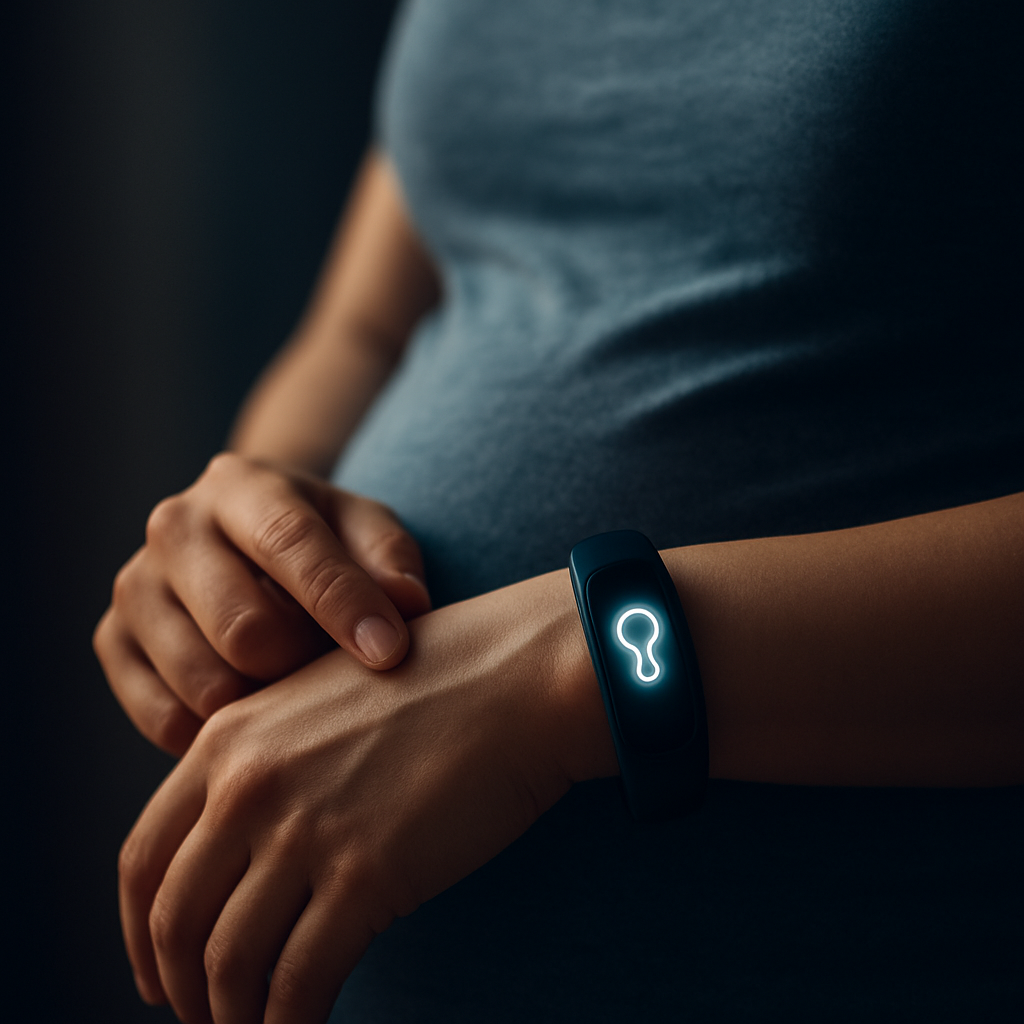
During a birthday trip, Ravika received a surprising notification from her Oura ring, a popular fitness tracker, signaling health irregularities she didn't feel. Her ring noted changes like elevated heart rate and body temperature, prompting her to research these signs online. There, she stumbled upon a broad online community noticing similar early pregnancy symptoms shown by their fitness trackers, which often reported elevated health metrics prior to taking any formal pregnancy tests.
To her surprise, a week later, Ravika confirmed her pregnancy with a home test. Despite this confirmation, the data from her fitness tracker became a source of constant vigilance and heightened anxiety. She found herself waking up at ungodly hours to reassess her metrics, thus illustrating the dual-edged nature of readily accessible health data. This personal ordeal is part of a broader trend where women utilize wearable technology to gain early insights into their reproductive health.
Wearable devices like smart rings and watches have increasingly facilitated early pregnancy detection owing to capabilities like body temperature monitoring. Yet, medical professionals remain cautious. Dr. Stuart Lavery, a reproductive medicine expert, highlights the nascent state of this technological integration in personal health, suggesting that it is premature to fully rely on these devices without comprehensive research to back their findings.
The potential of fitness trackers to predict significant experiences, such as pregnancies or miscarriages, is still under scrutiny. Dr. Chris Curry of Oura comments that while these technologies provide insights, they often complicate an already delicate period in an individual’s life by inducing additional anxiety. Users are advised to contextualize the data within broader medical advice rather than view it as a substitute for professional healthcare.
Ravika's story underlines a critical debate in contemporary health tech usage: the balance between empowering individuals with personal health data and the risk of inflating anxiety through potentially ambiguous or premature indicators. As fitness technology evolves, its role as a complement to traditional healthcare becomes more pronounced, emphasizing its use as a supportive, not definitive, tool.
Original news source: My fitness tracker knew I was pregnant before I did – BBC News (BBC)
🎧 Listen:
📖 Vocabulary:
Group or Classroom Activities
Warm-up Activities:
1. Discuss a time when technology gave you surprising information.
2. What health-related apps do you regularly use and why?
3. How do you balance between using technology and seeking medical advice?
4. Has technology ever caused you to feel anxious about your health? Share your experience.
5. In what ways can wearable tech improve or complicate your daily life?
🤔 Comprehension Questions:
Her Oura ring notification.
By sharing similar experiences with wearable devices.
She took a home pregnancy test.
It caused her anxiety and disrupted her sleep.
Because comprehensive research is lacking to support its findings.
It can predict significant health events but may also induce anxiety.
Balancing empowerment with the risk of anxiety from health data.
🎧✍️ Listen and Fill in the Gaps:
During a birthday trip, Ravika received a surprising notification from her Oura ring, a popular fitness , signaling she didn't feel. Her ring noted changes like elevated heart rate and body temperature, prompting her to these signs online. There, she stumbled upon a broad online community noticing similar early pregnancy symptoms shown by their fitness trackers, which often reported elevated health metrics prior to taking any formal pregnancy tests. To her surprise, a week later, Ravika confirmed her pregnancy with a home test. Despite this confirmation, the data from her fitness tracker became a source of constant vigilance and heightened anxiety. She found herself waking up at ungodly hours to reassess her metrics, thus illustrating the dual-edged nature of readily accessible health data. This personal is part of a broader trend where women utilize wearable technology to gain early insights into their reproductive health. like smart rings and watches have increasingly facilitated early pregnancy detection to capabilities like body temperature monitoring. Yet, medical professionals remain cautious. Dr. Stuart Lavery, a reproductive medicine expert, highlights the nascent state of this technological integration in personal health, suggesting that it is premature to fully rely on these devices without comprehensive research to back their findings. The potential of fitness trackers to significant experiences, such as pregnancies or miscarriages, is still under . Dr. Chris Curry of Oura comments that these technologies provide , they often complicate an already delicate period in an individual’s life by inducing additional anxiety. Users are advised to contextualize the data within broader medical advice rather than view it as a for professional healthcare. Ravika's story underlines a critical debate in contemporary health tech : the balance between empowering individuals with health data and the risk of inflating anxiety through potentially ambiguous or premature . As fitness technology evolves, its role as a complement to traditional healthcare becomes more pronounced, emphasizing its use as a supportive, not definitive, tool.
💬 Discussion Questions:
1. How do you evaluate the reliability of information from wearable devices?
2. What role should technology play in personal health management?
3. Discuss the pros and cons of self-monitoring health metrics with tech.
4. Can wearable technology replace traditional healthcare methods? Why or why not?
5. How might wearable tech evolve in the next decade?
6. What ethical concerns arise from relying on health technology?
7. Share your thoughts on data privacy in the context of health tech devices.
8. How do fitness trackers impact people with pre-existing health conditions?
9. In what ways can health tech create undue stress or anxiety?
10. Should there be regulations on the data produced by health wearables?
11. How might health tech affect doctor-patient relationships?
12. Do you think accessibility to such technologies is a privilege?
Individual Activities
📖💭 Vocabulary Meanings:
Click a dot next to a word, then click the dot next to its meaning to draw a line connecting them.