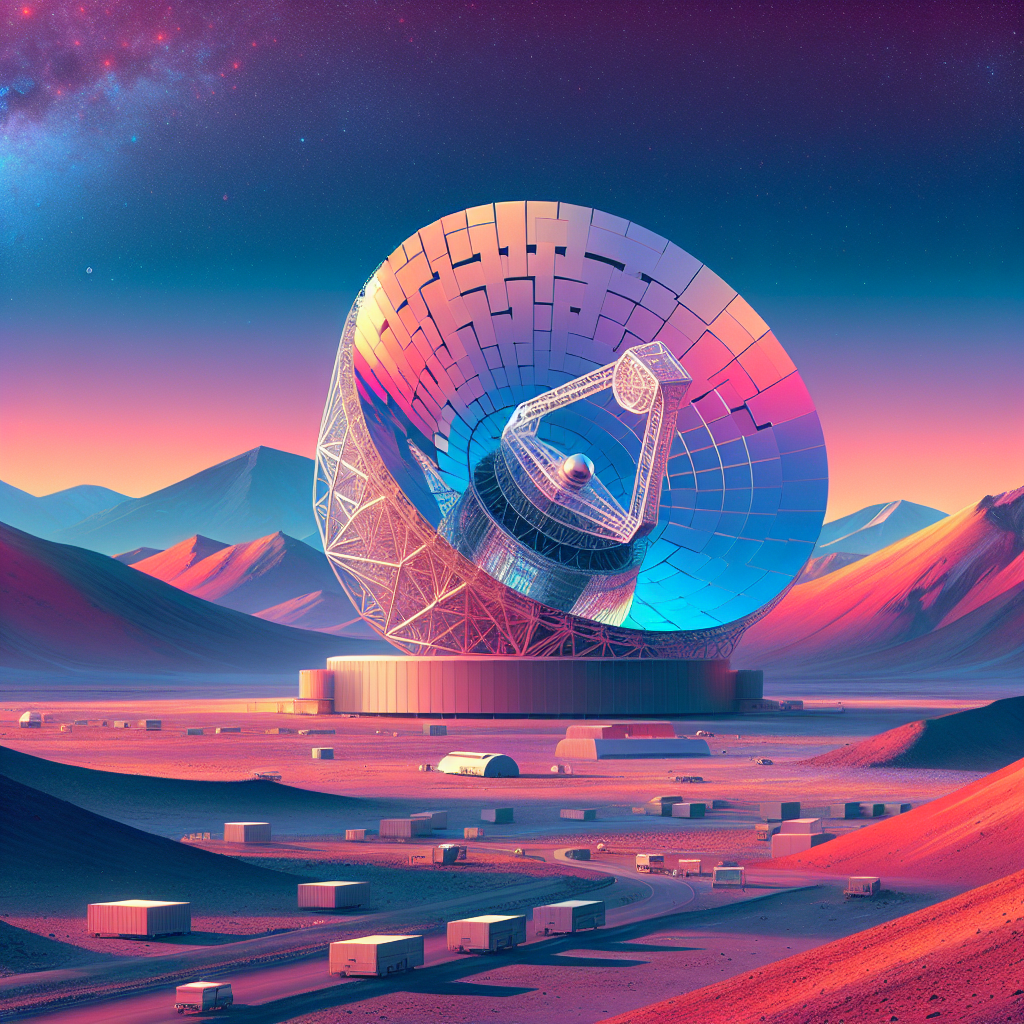
In the arid Atacama desert in Chile, the European Southern Observatory (ESO) is constructing the Extremely Large Telescope (ELT), set to be the world's largest optical telescope. Scheduled to commence operations in 2028, the ELT is expected to revolutionize our comprehension of the universe. Central to its design are five colossal mirrors, including the primary mirror, M1, which spans 39 meters in diameter and consists of 798 hexagonal segments meticulously aligned to function as a single mirror. These mirrors, crafted with unparalleled precision, will capture light from the cosmos and enhance our exploration of the universe.
Dr. Elise Vernet, an adaptive optics expert at ESO, oversees the development of the ELT's mirrors, each a marvel of optical engineering. Notably, the M4 mirror, the largest deformable mirror ever produced, can adjust its shape 1,000 times per second to counteract atmospheric disturbances and telescope vibrations. Additionally, the Max Planck Institute for Quantum Optics has developed a quantum mirror at the atomic level, showcasing the potential for quantum technologies in the future, such as secure quantum networks for data transmission.
Further advancements in mirror technology are taking place in Oberkochen, Germany, where Zeiss is creating ultra-flat mirrors crucial for extreme ultraviolet lithography machines used in semiconductor manufacturing. These mirrors enable the printing of minuscule transistors on silicon wafers, enhancing the efficiency of computer chip production. Zeiss's pursuit of further innovation aims to facilitate the development of microchips with one trillion transistors by 2030, a significant leap from the current technology.
The precision and capabilities of these advanced mirrors are pushing the boundaries of technology, enabling the creation of more powerful computer chips and facilitating groundbreaking discoveries in astronomy and quantum physics. The relentless pursuit of perfection in mirror design underscores the critical role mirrors play in driving technological progress and expanding our understanding of the universe. As we look ahead to the future, it is evident that mirrors will continue to be at the forefront of transformative technologies that shape our world.
Original news source: The mind-bending mirrors behind advanced technology (BBC)
🎧 Listen:
📖 Vocabulary:
Group or Classroom Activities
Warm-up Activities:
– Charades
Instructions: Divide the students into two teams. Write down key words related to the article on separate pieces of paper. One student from each team will come to the front of the class and choose a word without showing it to their team. They must then act out or mime the word while their team tries to guess. The team that guesses correctly gets a point.
– News Summary
Instructions: In pairs, have students summarize the main points of the article in their own words. Encourage them to focus on the key information such as the construction of the ELT, the innovative mirror technology, and the implications for astronomy and quantum physics. After they have discussed, ask a few pairs to share their summaries with the class.
– Opinion Poll
Instructions: Create a list of statements related to the article, such as "The construction of the ELT will significantly advance our understanding of the universe" or "Quantum mirror technology will revolutionize data transmission." Have students move around the classroom and express their level of agreement with each statement by standing in different areas – strongly agree, agree, neutral, disagree, strongly disagree. After each statement, allow a few students to explain their opinions.
– Vocabulary Pictionary
Instructions: Write down key vocabulary words from the article on separate pieces of paper. One student at a time will pick a word and without saying it, they must draw it on the board while their classmates try to guess the word. This activity will help reinforce their understanding of the vocabulary used in the article.
– Future Predictions
Instructions: In pairs or small groups, have students discuss and make predictions about the future of mirror technology based on the information in the article. They can consider questions such as "How might mirror technology further impact astronomy in the next decade?" or "What new applications could quantum mirror technology have in the future?" After they have discussed, ask a few groups to share their predictions with the class.
🤔 Comprehension Questions:
The primary purpose of the ELT is to revolutionize our comprehension of the universe by enhancing our exploration of the cosmos.
The primary mirror, M1, of the ELT consists of 798 hexagonal segments.
The M4 mirror in the ELT is the largest deformable mirror ever produced, capable of adjusting its shape 1,000 times per second to counteract atmospheric disturbances and telescope vibrations.
The quantum mirror developed by the Max Planck Institute for Quantum Optics showcases the potential for future quantum technologies, such as secure quantum networks for data transmission.
Zeiss is creating ultra-flat mirrors in Oberkochen, Germany, for extreme ultraviolet lithography machines used in semiconductor manufacturing. These mirrors enable the printing of minuscule transistors on silicon wafers.
The ultra-flat mirrors created by Zeiss contribute to the efficiency of computer chip production by enabling the printing of minuscule transistors on silicon wafers, enhancing the manufacturing process.
Zeiss aims to facilitate the development of microchips with one trillion transistors by 2030, a significant leap from current technology.
Advanced mirrors are pushing the boundaries of technology in astronomy by capturing light from the cosmos and enhancing our exploration of the universe. In quantum physics, mirrors like the quantum mirror developed by the Max Planck Institute showcase the potential for future quantum technologies, such as secure quantum networks for data transmission.
🎧✍️ Listen and Fill in the Gaps:
In the arid Atacama desert in Chile, the European Southern Observatory (ESO) is constructing the Extremely Large Telescope (ELT), set to be the world's largest telescope. Scheduled to commence operations in 2028, the ELT is expected to revolutionize our comprehension of the universe. Central to its design are five , including the primary , M1, which spans 39 meters in diameter and consists of 798 hexagonal segments meticulously aligned to function as a single mirror. These mirrors, crafted with unparalleled precision, will capture light from the cosmos and enhance our of the universe. Dr. Elise Vernet, an adaptive optics expert at ESO, oversees the development of the ELT's mirrors, each a marvel of optical engineering. Notably, the M4 mirror, the largest deformable mirror ever produced, can adjust its shape 1,000 times per second to counteract atmospheric disturbances and telescope . Additionally, the Max Planck Institute for Quantum has developed a mirror at the atomic level, showcasing the potential for quantum technologies in the future, such as secure quantum networks for data transmission. Further advancements in mirror technology are taking place in Oberkochen, Germany, where Zeiss is creating ultra-flat mirrors crucial for ultraviolet lithography machines used in manufacturing. These mirrors enable the printing of minuscule on silicon wafers, enhancing the efficiency of computer chip production. Zeiss's pursuit of further aims to facilitate the development of microchips with one trillion transistors by 2030, a significant leap from the current technology. The precision and of these advanced mirrors are pushing the boundaries of technology, the creation of more powerful computer chips and facilitating groundbreaking discoveries in astronomy and quantum physics. The relentless pursuit of perfection in mirror design underscores the critical role mirrors play in driving technological progress and expanding our understanding of the universe. As we look ahead to the , it is evident that mirrors will to be at the forefront of transformative technologies that shape our world.
💬 Discussion Questions:
1. What do you think about the idea of constructing such a massive telescope in the Atacama desert?
2. How would you feel if you had the opportunity to work on the development of the ELT's mirrors?
3. Do you believe that the ELT will truly revolutionize our comprehension of the universe? Why or why not?
4. What is your opinion on the potential use of quantum technologies in the future, such as secure quantum networks for data transmission?
5. How do you think the development of ultra-flat mirrors for extreme ultraviolet lithography machines will impact semiconductor manufacturing?
6. Do you like the idea of microchips with one trillion transistors being developed by 2030? Why or why not?
7. How important do you think mirror technology is in driving technological progress and expanding our understanding of the universe?
8. What advancements in mirror technology do you think will have the most significant impact on society in the future?
9. How do you think the relentless pursuit of perfection in mirror design contributes to technological innovation?
10. Do you think the role of mirrors in astronomy and quantum physics is often overlooked in discussions about technological advancements? Why or why not?
11. How do you think the development of the ELT's mirrors compares to other scientific advancements in recent years?
12. What challenges do you think scientists and engineers face when designing and constructing such advanced mirrors?
13. Why do you think it is important for companies like Zeiss to continue pursuing innovation in mirror technology?
14. What impact do you think the ELT and its advanced mirrors will have on future space exploration missions?
15. In your opinion, how will the use of mirrors in technology continue to evolve in the coming years?
Individual Activities
📖💭 Vocabulary Meanings:
Click a dot next to a word, then click the dot next to its meaning to draw a line connecting them.
Words
Meanings
🔡 Multiple Choice Questions:
🕵️ True or False Questions:
📝 Write a Summary:
Write a summary of this news article in two sentences.
Check your writing now with the best free AI for English writing!