

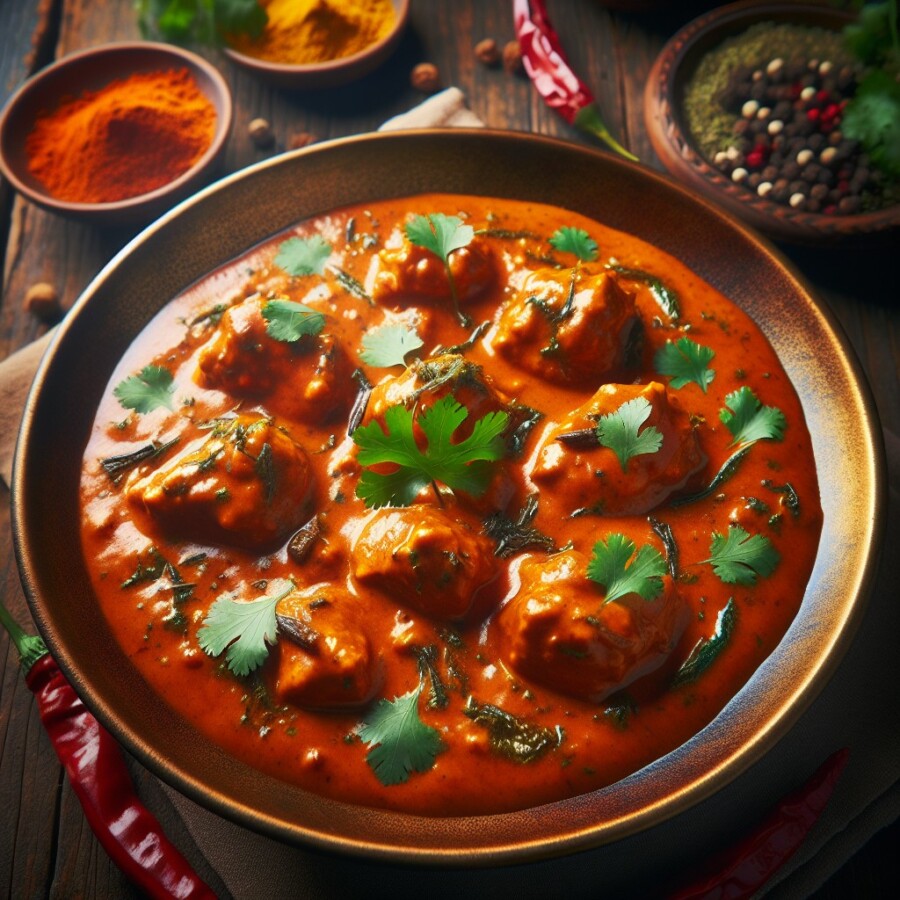
The origins of butter chicken, a beloved Indian dish, have sparked a legal battle between two rival restaurants in Delhi. The lawsuit, filed in the Delhi High Court, involves families claiming lineage with the renowned Moti Mahal restaurant, founded in 1947. The dispute centers around who truly invented the dish, with one family seeking damages and accusing the other of falsely taking credit for it.
The story of butter chicken's creation dates back to pre-Independent India, where a man named Mokha Singh and his employees from Peshawar opened a restaurant in Delhi. It was here, in a small open-air diner in Daryaganj, that butter chicken was born out of frugality, using leftover tikkas mixed in a tomato gravy with butter. The dish gained immense popularity, attracting notable figures like India's first prime minister, Jawaharlal Nehru, to the restaurant.
Kundan Lal Gujral, a key figure in the creation of butter chicken, was initially credited for the recipe and the restaurant's success. However, after his passing, disputes arose over ownership and credit for the dish. The legal battle between the Gujral family and the owners of the rival Daryaganj chain revolves around who had a greater role in the invention of butter chicken and other dishes.
While the fight for recognition and ownership of dishes is not uncommon in the culinary world, it often has little impact on customers who simply enjoy the food. The legacy of dishes can sometimes be clouded in history, with multiple claims to their invention. Ultimately, what matters most is the quality of the food served, rather than the disputes over who originally created it.
In the case of Moti Mahal and Daryaganj, the legal battle may prove challenging to resolve, as it involves determining the true origins of a dish created decades ago. The court will likely rely on circumstantial evidence and testimonies to settle the dispute. However, regardless of the outcome, both restaurants are likely to continue thriving, as the popularity of butter chicken transcends the ownership claims and remains a favorite among diners.
Original news source: Moti Mahal: India curry houses battle over butter chicken (BBC)
🎧 Listen:
📖 Vocabulary:
Group or Classroom Activities
Warm-up Activities:
– Charades
Instructions: Divide the class into two teams. One person from each team will come to the front of the class and act out a word or phrase related to the article, such as "butter chicken" or "restaurant". The rest of the team members have to guess what the word or phrase is. The team that guesses correctly gets a point. Continue until all team members have had a chance to act out a word or phrase.
– News Summary
Instructions: In pairs, students will take turns summarizing the article to their partner. They should focus on the main points and important details. After each summary, the partner should give feedback and ask any questions they have about the article.
– Opinion Poll
Instructions: In small groups, students will discuss their opinions on the legal battle over the origins of butter chicken. They should consider questions such as: Who do they think invented the dish? Should it matter who invented it? Should the restaurants be allowed to claim ownership? After the discussion, each group will present their opinions to the class and the class will vote on the most convincing argument.
– Vocabulary Pictionary
Instructions: Create a list of vocabulary words related to the article, such as "lawsuit", "lineage", and "frugality". Divide the class into pairs. One person from each pair will choose a word and draw a picture to represent it, while the other person tries to guess the word. The pair that guesses the most words correctly wins.
– Future Predictions
Instructions: In small groups, students will discuss and make predictions about the future of butter chicken and the legal battle. They should consider questions such as: Will the dispute ever be resolved? Will the popularity of butter chicken continue to grow? Will other restaurants claim to have invented the dish? Each group will present their predictions to the class and discuss their reasoning.
🤔 Comprehension Questions:
🎧✍️ Listen and Fill in the Gaps:
The origins of butter , a beloved n dish, have sparked a battle between two rival restaurants in Delhi. The lawsuit, filed in the Delhi High Court, involves claiming lineage with the renowned Moti Mahal restaurant, founded in 1947. The dispute centers around who truly invented the dish, with one family seeking damages and accusing the other of falsely taking credit for it. The story of butter chicken's creation dates back to pre-Independent India, where a man named Mokha Singh and his employees from Peshawar opened a restaurant in Delhi. It was here, in a small open-air diner in Daryaganj, that butter chicken was born out of , using leftover tikkas mixed in a tomato gravy with butter. The dish gained immense popularity, attracting figures like India's first minister, Jawaharlal Nehru, to the restaurant. Kundan Lal Gujral, a key figure in the creation of butter chicken, was initially credited for the recipe and the restaurant's success. However, after his passing, disputes over ownership and credit for the dish. The legal battle between the Gujral family and the owners of the rival Daryaganj chain revolves around who had a role in the of butter chicken and other dishes. While the fight for recognition and ownership of dishes is not in the culinary world, it often has little impact on customers who simply enjoy the food. The of dishes can sometimes be clouded in history, with multiple claims to their invention. Ultimately, what matters most is the quality of the food served, rather than the over who originally created it. In the case of Moti Mahal and Daryaganj, the legal battle may prove to resolve, as it involves determining the true origins of a dish created decades ago. The court will likely rely on evidence and testimonies to settle the dispute. However, regardless of the , both restaurants are likely to continue thriving, as the popularity of butter chicken transcends the ownership claims and remains a favorite among diners.
💬 Discussion Questions:
1. What is your favorite Indian dish and why?
2. Have you ever been involved in a dispute over ownership or credit? How did it make you feel?
3. How important do you think it is for a restaurant to have a clear and accurate history of its dishes?
4. Do you think it's fair for one family to seek damages from another over the invention of a dish? Why or why not?
5. How would you feel if someone claimed credit for a dish that you had created?
6. Do you think the true origins of a dish are important to its enjoyment? Why or why not?
7. Have you ever had a dish that you thought was invented by one person, but later found out it was actually created by someone else? How did that change your perception of the dish?
8. What do you think is the most important factor in the success of a restaurant: the quality of the food or the reputation of the owners?
9. How do you think the court should determine the true origins of butter chicken? What evidence should they consider?
10. Do you think it's possible for multiple people to independently invent the same dish? Why or why not?
11. How important is it for a restaurant to have a famous person associated with its dishes? Why or why not?
12. Have you ever eaten at a restaurant that claimed to have a famous dish, but you didn't think it lived up to the hype? How did that make you feel?
13. Do you think the legal battle between Moti Mahal and Daryaganj will have any impact on the popularity of butter chicken? Why or why not?
14. How would you feel if you discovered that your favorite dish was actually invented by someone you didn't like? Would it change your opinion of the dish?
15. Do you think it's possible for a dish to be so popular that it becomes a cultural icon? Why or why not?
Individual Activities
📖💭 Vocabulary Meanings:
Click a dot next to a word, then click the dot next to its meaning to draw a line connecting them.
Words
Meanings
🔡 Multiple Choice Questions:
🕵️ True or False Questions:
📝 Write a Summary:
Write a summary of this news article in two sentences.
Check your writing now with the best free AI for English writing!