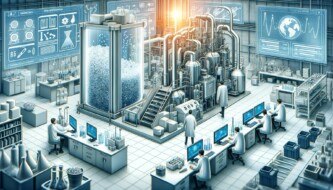
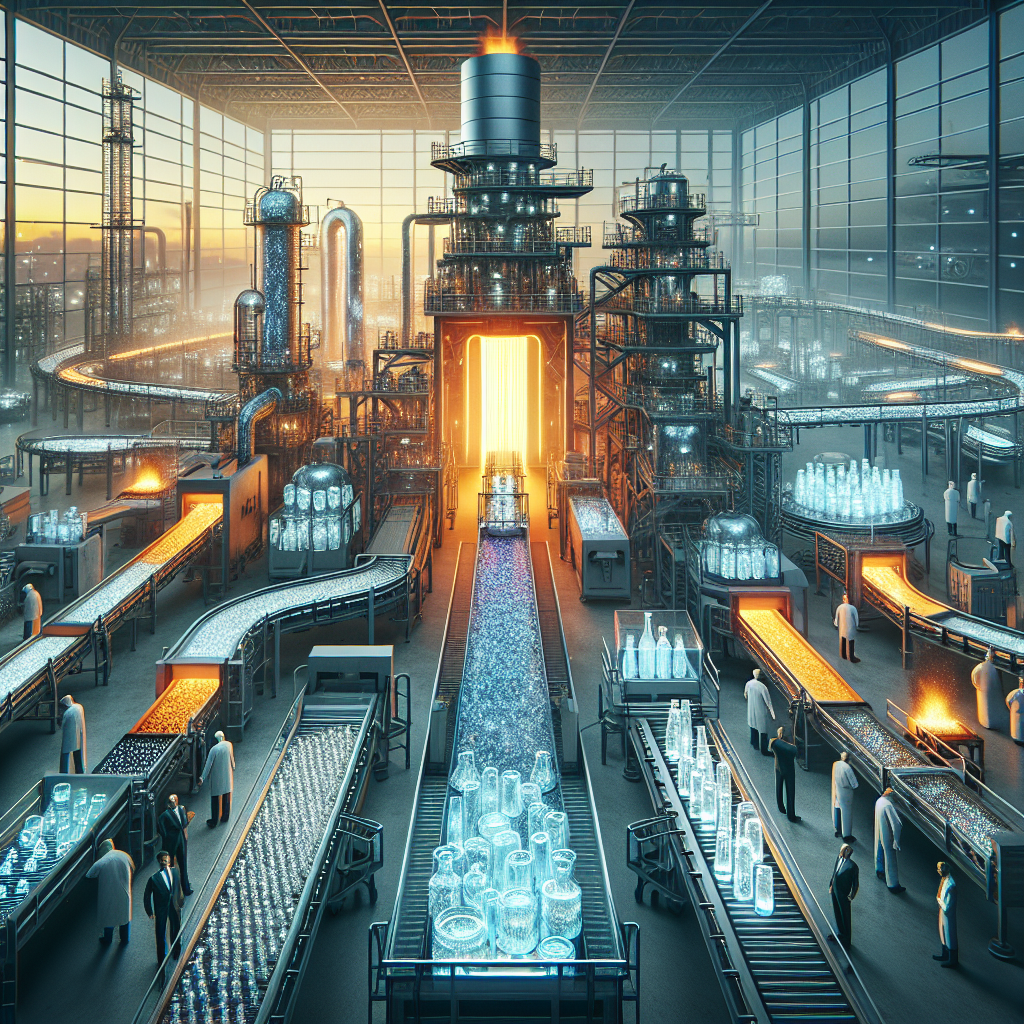
The glass container industry is undergoing a revolution due to new regulations and the need to reduce its environmental impact. The European Union is implementing the Packaging & Packaging Waste Regulation (PPWR), which aims to reduce packaging weight and promote sustainability. Glass containers, although 100% recyclable, are relatively heavy compared to plastic or aluminum, leading to concerns that the industry will be unfairly targeted. However, glass recycling itself is energy-intensive, as it requires heating raw materials in a furnace to extremely high temperatures. This process produces CO2 emissions.
To address these challenges, glassmakers are considering switching from gas-fired furnaces to electricity. Electric furnaces, if powered by sustainable sources, can significantly reduce the carbon footprint of glass production. While electric furnaces were previously considered too expensive, the decreasing cost of electricity has made them a viable option. Stoelzle Flaconnage, a glass manufacturer in West Yorkshire, plans to have an electric furnace running by 2026. However, electric furnaces may not be suitable for mass production due to the higher cost of electricity.
Another hurdle for electric furnaces is the need to upgrade electricity grid connections to accommodate the increased demand. Despite these challenges, the glass industry is making progress in developing electric and hybrid furnaces. Ardagh Glass Packaging in Germany is testing a hybrid furnace that runs on 80% sustainable electricity and 20% gas. This furnace has the potential to save 45,000 tonnes of CO2 per year. The industry is also exploring the possibility of replacing natural gas with hydrogen in the future.
In addition to transitioning to more sustainable furnaces, the glass industry is looking to reduce its carbon emissions by using more recycled glass in production. However, obtaining enough recycled glass is a challenge. Some experts suggest that reducing the overall amount of glass packaging may be the most effective solution. A study comparing the environmental impact of glass, plastic, and aluminum containers found that glass had the highest environmental impact, even when recycled.
Overall, the glass container industry is facing pressure to reduce its environmental impact and meet sustainability goals. Switching to electric or hybrid furnaces, increasing the use of recycled glass, and exploring alternative materials may be key strategies in achieving these goals.
Original news source: Why there's a revolution on the way in glass making (BBC)
🎧 Listen:
📖 Vocabulary:
Group or Classroom Activities
Warm-up Activities:
– News Summary
Instructions: Divide the class into small groups. Provide each group with a copy of the article. Instruct them to read the article and write a summary of the main points in 3-4 sentences. After a designated time, have each group share their summaries with the class.
– Opinion Poll
Instructions: Create a list of questions related to the article and the topic of glass container industry and sustainability. Have the students answer the questions individually. Then, divide them into pairs or small groups to discuss their answers and reach a consensus. Finally, conduct a class discussion where students can share their opinions and debate different perspectives.
– Vocabulary Pictionary
Instructions: Select 10-15 key vocabulary words from the article. Divide the class into teams and give each team a whiteboard or a large sheet of paper. One student from each team will come to the front of the class and you will give them a vocabulary word. They will have to draw a picture on the board or paper to represent the word, while their team members try to guess the word. The team that guesses correctly gets a point. Repeat the process with different students and words until all the vocabulary words have been used.
– Headline Creation
Instructions: Divide the class into small groups. Instruct each group to create a catchy headline for the article that captures the main idea or focus. Give them a few minutes to brainstorm and come up with their headlines. Then, have each group share their headline with the class and explain why they chose it.
– Future Predictions
Instructions: Ask the students to imagine they are experts in the glass container industry. In pairs or small groups, have them discuss and make predictions about the future of the industry based on the information in the article. They should consider factors such as the use of electric furnaces, increased recycling, and alternative materials. After the discussion, each group should present their predictions to the class and explain the reasoning behind them.
🤔 Comprehension Questions:
🎧✍️ Listen and Fill in the Gaps:
The glass container industry is undergoing a revolution due to new regulations and the need to reduce its environmental impact. The European Union is implementing the Packaging & Packaging Waste Regulation (PPWR), which aims to reduce packaging weight and promote sustainability. containers, although 100% recyclable, are relatively heavy compared to plastic or aluminum, leading to concerns that the industry will be unfairly targeted. However, glass recycling itself is energy-intensive, as it requires heating raw materials in a to extremely high temperatures. This process CO2 . To address these challenges, are considering switching from gas-fired furnaces to electricity. Electric furnaces, if powered by sources, can significantly reduce the carbon of glass production. While electric furnaces were previously considered too expensive, the decreasing cost of electricity has made them a viable option. Flaconnage, a glass manufacturer in West Yorkshire, plans to have an electric furnace running by 2026. However, electric furnaces may not be suitable for mass production due to the higher cost of electricity. Another hurdle for electric furnaces is the need to upgrade electricity grid connections to accommodate the increased demand. Despite these challenges, the glass industry is making in developing electric and hybrid furnaces. Glass Packaging in Germany is testing a hybrid furnace that runs on 80% sustainable electricity and 20% gas. This furnace has the potential to save 45,000 of CO2 per year. The industry is also exploring the possibility of replacing natural gas with hydrogen in the future. In addition to transitioning to more sustainable furnaces, the glass industry is looking to reduce its carbon emissions by using more glass in production. However, enough recycled glass is a challenge. Some experts suggest that the overall amount of glass packaging may be the most effective solution. A study the environmental impact of glass, plastic, and aluminum containers found that glass had the highest environmental impact, even when recycled. Overall, the glass container industry is facing to reduce its environmental impact and meet sustainability goals. Switching to electric or hybrid furnaces, increasing the use of recycled glass, and exploring alternative materials may be key strategies in achieving these goals.
💬 Discussion Questions:
1. What is the Packaging & Packaging Waste Regulation (PPWR) and why is it important?
2. How would you feel if you had to pay extra for products packaged in glass containers due to the higher cost of electricity?
3. Do you think it is fair for the glass container industry to be targeted for its environmental impact? Why or why not?
4. What is your opinion on using more recycled glass in production to reduce carbon emissions?
5. How do you think the glass industry can obtain enough recycled glass to meet its sustainability goals?
6. Do you think reducing the overall amount of glass packaging is the most effective solution? Why or why not?
7. What other alternative materials do you think the glass industry could explore to reduce its environmental impact?
8. How would you feel if the glass industry transitioned completely to electric furnaces, even if it meant higher costs for consumers?
9. What is your opinion on the idea of replacing natural gas with hydrogen in glass production?
10. Do you think the glass industry should prioritize reducing its carbon emissions over other sustainability goals? Why or why not?
11. How do you think the glass industry can encourage consumers to choose glass packaging over plastic or aluminum?
12. What is your perception of the environmental impact of glass, plastic, and aluminum containers?
13. How do you think the glass industry can address the challenge of upgrading electricity grid connections for electric furnaces?
14. What is your opinion on the use of hybrid furnaces that run on both sustainable electricity and gas?
15. How would you feel if the glass industry was unable to meet its sustainability goals? Why?
Individual Activities
📖💭 Vocabulary Meanings:
Click a dot next to a word, then click the dot next to its meaning to draw a line connecting them.
Words
Meanings
🔡 Multiple Choice Questions:
🕵️ True or False Questions:
📝 Write a Summary:
Write a summary of this news article in two sentences.
Check your writing now with the best free AI for English writing!