
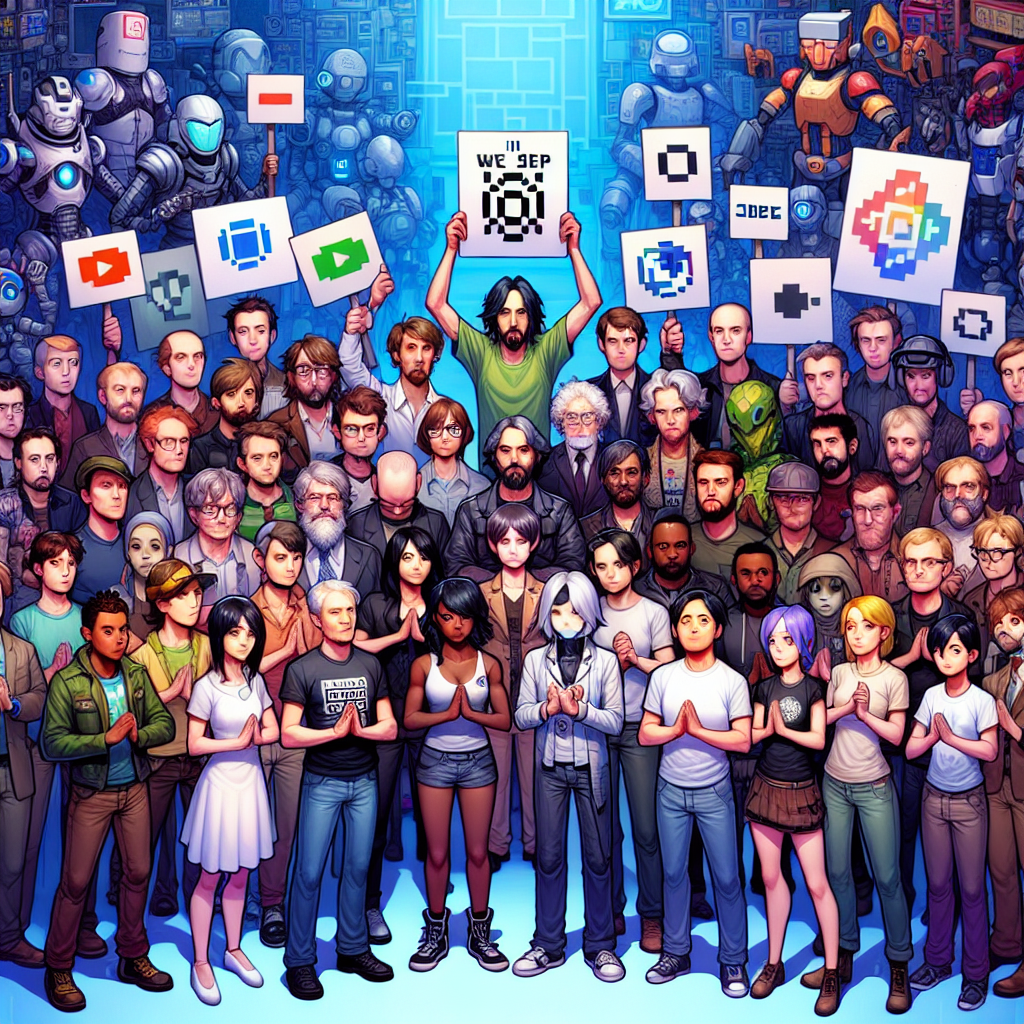
Hollywood actors are currently on strike against major video game companies, including Activision, Warner Bros, and Walt Disney, due to concerns regarding the use of artificial intelligence (AI) in the gaming industry. This industrial action follows a year and a half of negotiations between the companies and the Screen Actors Guild-American Federation of Television and Radio Artists (Sag-Aftra), which represents over 2,500 video game performers. While both parties have reached agreements on various issues such as wages and job safety, the use of AI technology remains a significant point of contention.
The performers are particularly worried that generative AI could be employed to replicate their voices and physical appearances, allowing studios to animate video game characters without providing fair compensation. Sag-Aftra has expressed that, despite progress on other matters, the employers have not clearly committed to protecting performers in relation to AI usage. The union stated, “We’re not going to consent to a contract that allows companies to abuse AI to the detriment of our members,” highlighting their determination to secure adequate protections.
In response, the video game studios have argued that they have already made substantial concessions to address the union's concerns. Audrey Cooling, a spokesperson for the negotiating companies, expressed disappointment over the union's decision to walk away from negotiations, asserting that their offer includes meaningful AI protections. This proposal requires consent and fair compensation for all performers involved in the Interactive Media Agreement, which governs voiceover and on-camera work for video game characters.
The Interactive Media Agreement has been in place since before November 2022, when the previous contract expired without AI protections. It has since been extended on a month-to-month basis while discussions continue. Last year, Sag-Aftra successfully negotiated significant gains for TV and film actors, including $1 billion in new pay and benefits, alongside safeguards against the misuse of AI. This historic strike lasted 118 days, marking the longest shutdown in the union's 90-year history.
The combined impact of the actors' strike and a separate writers' strike severely disrupted film and television production, resulting in an estimated economic loss of over $6.5 billion for California. As the gaming industry faces similar challenges, the outcome of the current strike could have lasting implications for the future of performers in both the gaming and entertainment sectors.
Original news source: Actors go on strike over video games AI threat (BBC)
🎧 Listen:
📖 Vocabulary:
Group or Classroom Activities
Warm-up Activities:
– CHARADES
Instructions: Students will act out key terms related to the article without speaking, while their classmates guess what they are. Terms may include "strike," "AI," "video game," "negotiation," and "union."
– OPINION POLL
Instructions: Students will be divided into groups and given statements related to AI in the gaming industry (e.g., "AI is beneficial for video game development"). They will discuss and vote on their opinions, then share the results with the class.
– MIND MAP
Instructions: Students will create a mind map on the board that visually represents the main ideas and themes of the article, including the concerns of the actors, the role of AI, and the implications of the strike.
– HEADLINE CREATION
Instructions: Students will work in pairs to create catchy headlines summarizing the article's content. They will then share their headlines with the class and discuss the impact of different word choices.
– FUTURE PREDICTIONS
Instructions: In small groups, students will discuss and predict the future implications of the actors' strike and the use of AI in the gaming industry. They will present their predictions to the class, supporting them with reasons based on the article.
🤔 Comprehension Questions:
The main concerns are that generative AI could be used to replicate their voices and physical appearances, allowing studios to animate video game characters without providing fair compensation.
Sag-Aftra represents over 2,500 video game performers.
Agreements have been reached on various issues such as wages and job safety.
Sag-Aftra seeks clear commitments from employers to protect performers in relation to AI usage, ensuring that companies do not abuse AI to the detriment of their members.
The studios argued that they have made substantial concessions, including a proposal that requires consent and fair compensation for all performers involved in the Interactive Media Agreement.
The Interactive Media Agreement governs voiceover and on-camera work for video game characters. Since November 2022, it has been extended on a month-to-month basis while discussions continue, as the previous contract expired without AI protections.
The previous strike resulted in an estimated economic loss of over $6.5 billion for California due to severe disruptions in film and television production.
The outcome of the current strike could have lasting implications for the future of performers in both sectors, particularly regarding protections against the misuse of AI technology.
🎧✍️ Listen and Fill in the Gaps:
Hollywood actors are currently on strike against major video game companies, including Activision, Warner Bros, and Walt Disney, due to regarding the use of artificial (AI) in the industry. This industrial action follows a year and a half of negotiations between the companies and the Screen Actors Guild-American Federation of Television and Radio Artists (Sag-Aftra), which represents over 2,500 video game . While both parties have reached agreements on various issues such as wages and job safety, the use of AI technology remains a significant point of contention. The performers are particularly worried that AI could be to replicate their and physical appearances, allowing studios to animate video game characters without providing fair compensation. Sag-Aftra has expressed that, despite progress on other matters, the employers have not clearly committed to protecting performers in relation to AI usage. The union stated, “We’re not going to consent to a contract that allows companies to abuse AI to the detriment of our members,” highlighting their determination to secure adequate protections. In response, the video game studios have that they have already made substantial concessions to address the union's concerns. Audrey Cooling, a spokesperson for the negotiating companies, expressed disappointment over the union's decision to walk away from negotiations, asserting that their offer includes meaningful AI protections. This proposal requires and fair compensation for all performers involved in the Interactive Media Agreement, which governs and on-camera work for video game characters. The Interactive Media Agreement has been in place since before November 2022, when the previous expired without AI protections. It has since been extended on a month-to-month while discussions continue. Last year, Sag-Aftra successfully negotiated significant gains for TV and film actors, including $1 billion in new pay and benefits, alongside safeguards against the of AI. This historic strike lasted 118 days, marking the longest shutdown in the union's 90-year history. The combined impact of the actors' strike and a separate writers' strike severely disrupted film and television production, resulting in an estimated economic loss of over $6.5 billion for California. As the gaming industry similar , the outcome of the current strike could have lasting implications for the future of performers in both the gaming and sectors.
💬 Discussion Questions:
1. What is your opinion on the use of artificial intelligence in creative industries like gaming and film?
2. How would you feel if your voice or likeness was used in a video game without your consent?
3. Do you think performers should have more rights when it comes to the use of AI technology in their work? Why or why not?
4. What is a fair way to compensate performers whose voices or images are used in AI-generated content?
5. Have you ever participated in a strike or protest for something you believe in? How did it feel?
6. Do you think the concerns raised by the Screen Actors Guild regarding AI are valid? Why or why not?
7. How would you react if a company used AI to replicate your work without giving you credit or compensation?
8. What is a potential benefit of using AI in the gaming industry, despite the concerns of performers?
9. Do you like the idea of AI creating characters and stories in video games? Why or why not?
10. How do you think the outcome of this strike could affect the future of video games and entertainment as a whole?
11. What is your perspective on the balance between technological advancement and the rights of individual creators?
12. How would you feel if you were a performer in the gaming industry and your job was threatened by AI?
13. Do you think that unions like Sag-Aftra play a crucial role in protecting workers' rights in the age of AI? Why or why not?
14. What is a possible solution to the conflict between video game companies and performers regarding AI usage?
15. How do you envision the future of work in creative industries with the increasing presence of AI technology?
Individual Activities
📖💭 Vocabulary Meanings:
Click a dot next to a word, then click the dot next to its meaning to draw a line connecting them.
Words
Meanings
🔡 Multiple Choice Questions:
🕵️ True or False Questions:
📝 Write a Summary:
Write a summary of this news article in two sentences.
Check your writing now with the best free AI for English writing!