
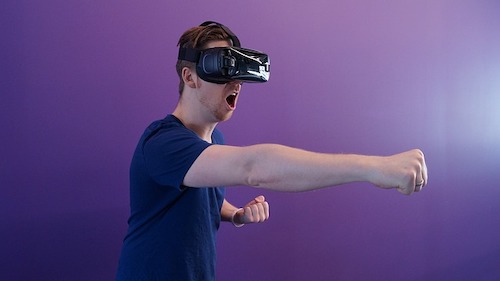
During a test of the Quest 3, the author tried different games and found that the mixed reality feature helped prevent motion sickness. In one game, the virtual world was revealed as the walls of the room crumbled, and the author could see both the virtual and real surroundings. Another game, based on the Netflix series Stranger Things, also did not induce any sickness. Chris Cox, the chief product officer at Meta, explained that mixed reality significantly improves the comfort of the VR experience. However, the author questions whether avoiding full VR is a true solution to motion sickness.
Mark Zuckerberg, the CEO of Meta, believes that motion sickness can be reduced with better graphics and less latency in VR headsets. He hopes that as the technology improves, fewer people will experience problems. However, the author points out that part of feeling ill in VR is due to the disconnect between what the eyes see and what the rest of the body experiences. The author tried a completely virtual reality boxing game and, although the graphics were impressive, they still experienced dizziness and discomfort.
It is important to note that people experience motion sickness differently, and some may not be affected at all. While mixed reality is still a new concept with limited game options, it may be a suitable solution for those who want to enjoy virtual gaming but struggle with motion sickness. As VR technology continues to evolve, it is hoped that advancements in graphics and latency will further reduce the occurrence of motion sickness and make the VR experience more enjoyable for everyone.
Original news source: Meta: Can the firm's new headset stop virtual reality sickness? (BBC)
📖 Vocabulary:
Group or Classroom Activities
Warm-up Activities:
– News Summary
Instructions: Have students read the article individually and then write a summary of the main points. They should focus on capturing the key information and condensing it into a concise paragraph.
– Opinion Poll
Instructions: Divide the class into pairs or small groups. Have them discuss their opinions on the topic of virtual reality and motion sickness. Then, have them create a poll with a few questions related to the article. Each group should survey the rest of the class and collect data. Finally, they can present their findings and discuss the results as a class.
– Vocabulary Pictionary
Instructions: Prepare a list of vocabulary words from the article. Divide the class into teams and give each team a word. Teams must take turns drawing the word on the board while their teammates try to guess what it is. The first team to guess the word correctly gets a point. Repeat with different words from the article.
– Headline Creation
Instructions: In pairs or small groups, have students create catchy headlines for the article. They should aim to capture the main idea and intrigue the reader. After the groups have finished, have them share their headlines and discuss the different approaches they took.
– Future Predictions
Instructions: Ask students to imagine what virtual reality technology will be like in the future. In pairs or small groups, have them discuss and write down their predictions. They should consider advancements in graphics, motion sickness prevention, and overall user experience. Afterward, have them present their predictions to the class and engage in a discussion about the possibilities.
🤔 Comprehension Questions:
🎧✍️ Listen and Fill in the Gaps:
Meta, the company that owns Facebook and Instagram, is set to launch its latest virtual reality (VR) headset, the Quest 3. This new headset aims to address the of motion sickness that many people experience when using VR technology. The Quest 3 features cameras that allow to see the real world in full color while games virtually. This "mixed reality" experience can help reduce the disconnect between what the eyes see and what the body , making the VR experience more comfortable and less nauseating. During a test of the Quest 3, the author tried different games and found that the feature helped prevent motion sickness. In one game, the virtual world was revealed as the walls of the room , and the author could see both the virtual and real surroundings. Another game, based on the Netflix series Stranger Things, also did not induce any sickness. Chris Cox, the product officer at Meta, explained that mixed reality significantly improves the comfort of the VR experience. However, the author questions whether avoiding full VR is a true solution to motion sickness. Mark Zuckerberg, the CEO of Meta, believes that motion sickness can be reduced with better graphics and less latency in VR . He hopes that as the technology improves, people will experience . However, the author points out that part of feeling ill in VR is due to the disconnect between what the eyes see and what the rest of the body . The author tried a completely virtual reality boxing game and, although the graphics were impressive, they still experienced dizziness and discomfort. It is important to note that experience motion sickness differently, and some may not be affected at all. While mixed reality is still a new concept with limited game options, it may be a suitable solution for those who want to enjoy gaming but struggle with motion sickness. As VR technology continues to evolve, it is hoped that advancements in graphics and latency will further the occurrence of motion sickness and make the VR experience more for everyone.
💬 Discussion Questions:
1. What is motion sickness and have you ever experienced it?
2. How would you feel if you could play virtual reality games without getting motion sickness?
3. Do you think mixed reality is a good solution for reducing motion sickness in VR? Why or why not?
4. What do you think are the main factors that contribute to motion sickness in VR?
5. Have you ever tried a virtual reality headset? If so, did you experience motion sickness?
6. Do you think better graphics and less latency in VR headsets will eliminate motion sickness? Why or why not?
7. How important is it for you to have a comfortable and enjoyable VR experience?
8. What are some other potential solutions for reducing motion sickness in VR?
9. Would you be willing to try a mixed reality headset to see if it reduces motion sickness? Why or why not?
10. How do you think advancements in VR technology will impact the gaming industry?
11. Do you think VR technology will become more popular in the future? Why or why not?
12. What are some potential drawbacks or concerns about using VR technology?
13. How do you think mixed reality could be used in other areas besides gaming?
14. Do you think VR technology has the potential to replace traditional forms of entertainment, such as movies or video games? Why or why not?
15. How do you think VR technology could be used in education or professional settings?
Individual Activities
📖💭 Vocabulary Meanings:
Click a dot next to a word, then click the dot next to its meaning to draw a line connecting them.
Words
Meanings
🔡 Multiple Choice Questions:
🕵️ True or False Questions:
📝 Write a Summary:
Write a summary of this news article in two sentences.
Check your writing now with the best free AI for English writing!