
Political action in Brazil and Colombia has led to a significant decline in tree loss in tropical forests, according to a new analysis. The Brazilian Amazon saw a 39% reduction in tree losses, while Colombia experienced a nearly 50% decline in primary forest loss. These countries have prioritized the environment under new leadership, resulting in positive outcomes. However, the gains made in Brazil and Colombia were offset by increased tree felling and fires in Bolivia, Laos, and Nicaragua. Overall, global tree losses increased by 25%, largely due to forest fires in Canada.
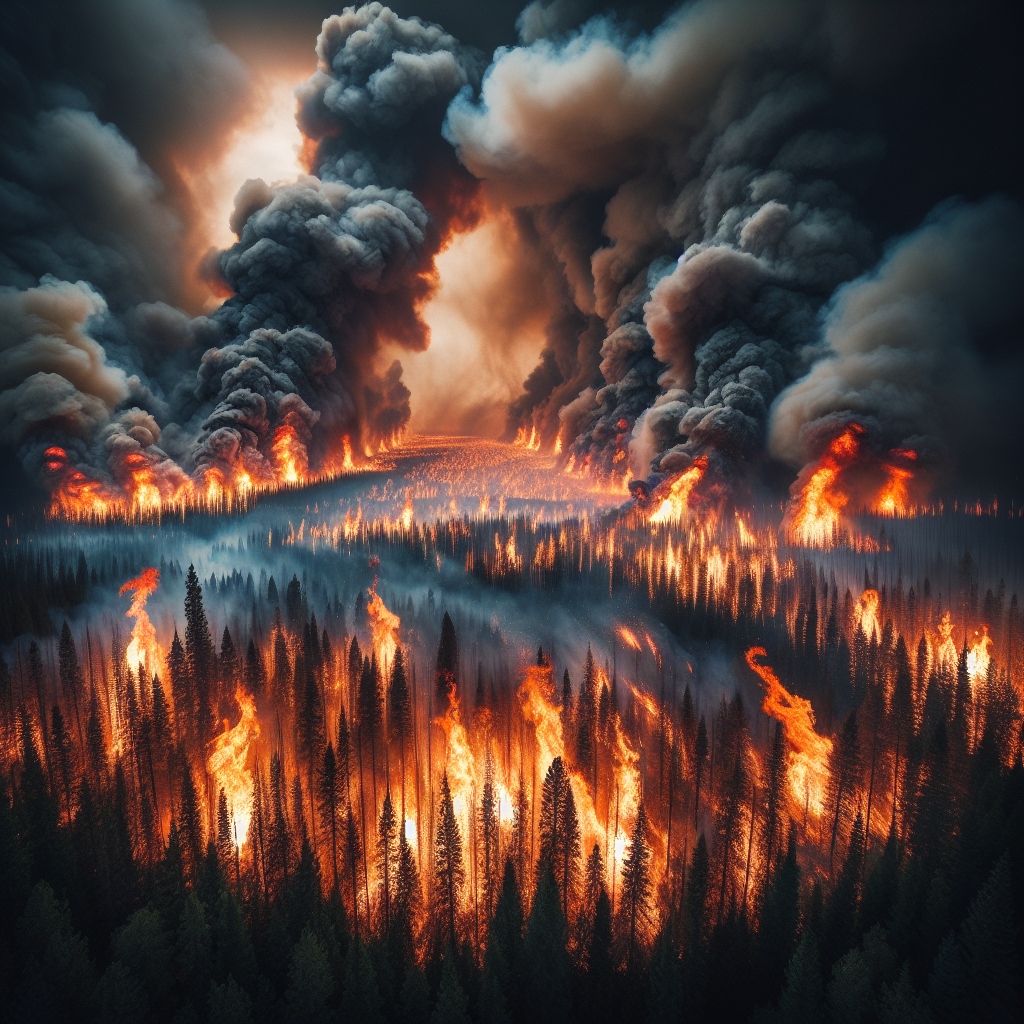
The wildfires in Canada had a significant impact on global tree cover loss, driving a fivefold increase in tree losses compared to the previous year. However, researchers argue that intentional clearing of mature rainforests in tropical regions is the most critical factor in addressing climate change. These primary forests store large amounts of carbon, which is crucial for limiting global temperature rise. Tropical regions have been the primary focus of human-driven deforestation over the past five decades.
In 2023, the tropics lost 3.7 million hectares of forest, equivalent to 10 football fields per minute. However, the losses would have been much higher if not for the efforts of Brazil and Colombia. President Luiz Inacio Lula da Silva's government in Brazil has seen a 36% reduction in primary forest losses compared to the previous year. Similarly, President Gustavo Petro Urrego's actions in Colombia have led to a nearly 50% decline in primary forest loss.
While the reductions in tree losses in Brazil and Colombia are significant, they still remain higher than in the early 2010s. Not all regions in Brazil saw reductions, with the Cerrado experiencing a 6% increase in tree loss. Bolivia, Laos, and Nicaragua also saw notable increases in tree losses, mainly due to fires and agricultural expansion. Indonesia saw an increase in losses, although the rate remains historically low compared to a decade ago.
Overall, the analysis highlights the mixed picture of tree loss globally. The world has just six years left to fulfill the promise made at COP26 in 2021 to halt deforestation. Researchers emphasize the need for urgent action to address the climate and nature crises, as the high rates of deforestation indicate that progress is off track.
Original news source: Dramatic drop in logging in key Amazon countries (BBC)
🎧 Listen:
📖 Vocabulary:
Group or Classroom Activities
Warm-up Activities:
– News Summary
Instructions: Have students read the article individually or in pairs. Instruct them to write a summary of the main points of the article in their own words. Afterward, have students share their summaries with the class and discuss any differences or similarities.
– Opinion Poll
Instructions: Divide the class into small groups. Assign each group a country mentioned in the article (Brazil, Colombia, Bolivia, Laos, Nicaragua, or Canada). Instruct each group to discuss and come up with their opinions on the actions taken by the government of their assigned country to reduce tree loss. Afterward, have each group present their opinions to the class and facilitate a class discussion.
– Vocabulary Pictionary
Instructions: Provide students with a list of key vocabulary words from the article (e.g., tree loss, primary forest, deforestation, climate change, etc.). Divide the class into pairs or small groups. Instruct each group to choose a word from the list and draw a picture that represents the word. The other groups must guess the word based on the drawing. Encourage students to explain the meaning of the word after it has been guessed.
– Pros and Cons
Instructions: Divide the class into two groups. Assign one group to discuss the positive aspects of the actions taken by Brazil and Colombia to reduce tree loss, and assign the other group to discuss the negative aspects. Give each group time to brainstorm their arguments and then have a debate-style discussion, with each group presenting their points and responding to the opposing group's arguments.
– Future Predictions
Instructions: Instruct students to imagine they are environmental activists in the year 2030. Ask them to write a short paragraph predicting the state of global tree loss and deforestation based on the current trends described in the article. Have students share their predictions with the class and discuss any common themes or differences in their predictions.
🤔 Comprehension Questions:
🎧✍️ Listen and Fill in the Gaps:
Political action in Brazil and Colombia has led to a decline in tree loss in tropical forests, according to a new analysis. The Brazilian Amazon saw a 39% reduction in tree losses, while Colombia experienced a nearly 50% decline in primary forest loss. These countries have prioritized the environment under new leadership, in positive outcomes. However, the made in Brazil and Colombia were offset by increased tree felling and in Bolivia, Laos, and Nicaragua. Overall, global tree losses increased by 25%, largely due to forest fires in Canada. The wildfires in Canada had a significant on global tree loss, driving a fivefold increase in tree losses to the previous year. However, researchers argue that intentional clearing of mature rainforests in tropical regions is the most critical factor in addressing climate change. These primary forests store large amounts of , which is crucial for limiting global temperature rise. Tropical regions have been the primary focus of human-driven deforestation over the past five decades. In 2023, the tropics lost 3.7 million hectares of forest, equivalent to 10 football fields per minute. However, the losses would have been much higher if not for the efforts of and Colombia. President Luiz Lula da Silva's government in Brazil has seen a 36% reduction in primary forest losses compared to the previous year. Similarly, President Gustavo Urrego's actions in Colombia have led to a nearly 50% decline in primary forest loss. While the in tree losses in Brazil and Colombia are significant, they still remain higher than in the early 2010s. Not all regions in Brazil saw reductions, with the Cerrado experiencing a 6% increase in tree loss. Bolivia, Laos, and also saw notable in tree losses, mainly due to fires and expansion. Indonesia saw an increase in losses, although the rate remains historically low compared to a decade ago. Overall, the analysis highlights the mixed picture of tree loss globally. The world has just six years left to fulfill the promise made at COP26 in 2021 to halt deforestation. emphasize the need for urgent action to address the climate and nature crises, as the high rates of deforestation indicate that progress is off track.
💬 Discussion Questions:
1. What is the significance of political action in reducing tree loss in Brazil and Colombia?
2. How would you feel if your country prioritized the environment and saw a significant reduction in tree losses?
3. Do you think intentional clearing of mature rainforests is the most critical factor in addressing climate change? Why or why not?
4. Why do you think tree losses increased globally despite the reductions in Brazil and Colombia?
5. Do you think the wildfires in Canada had a significant impact on global tree cover loss? Why or why not?
6. How do primary forests store large amounts of carbon and why is it crucial for limiting global temperature rise?
7. What actions have President Luiz Inacio Lula da Silva's government and President Gustavo Petro Urrego taken to reduce primary forest loss in Brazil and Colombia?
8. How do the reductions in tree losses in Brazil and Colombia compare to the early 2010s?
9. Why do you think not all regions in Brazil saw reductions in tree losses?
10. What factors contributed to the notable increases in tree losses in Bolivia, Laos, and Nicaragua?
11. How does the increase in tree losses in Indonesia compare to a decade ago?
12. Why is it important for the world to fulfill the promise made at COP26 to halt deforestation?
13. How do the high rates of deforestation indicate that progress is off track in addressing the climate and nature crises?
14. What urgent actions do you think should be taken to address the climate and nature crises?
15. How do you personally feel about the mixed picture of tree loss globally?
Individual Activities
📖💭 Vocabulary Meanings:
Click a dot next to a word, then click the dot next to its meaning to draw a line connecting them.
Words
Meanings
🔡 Multiple Choice Questions:
🕵️ True or False Questions:
📝 Write a Summary:
Write a summary of this news article in two sentences.
Check your writing now with the best free AI for English writing!