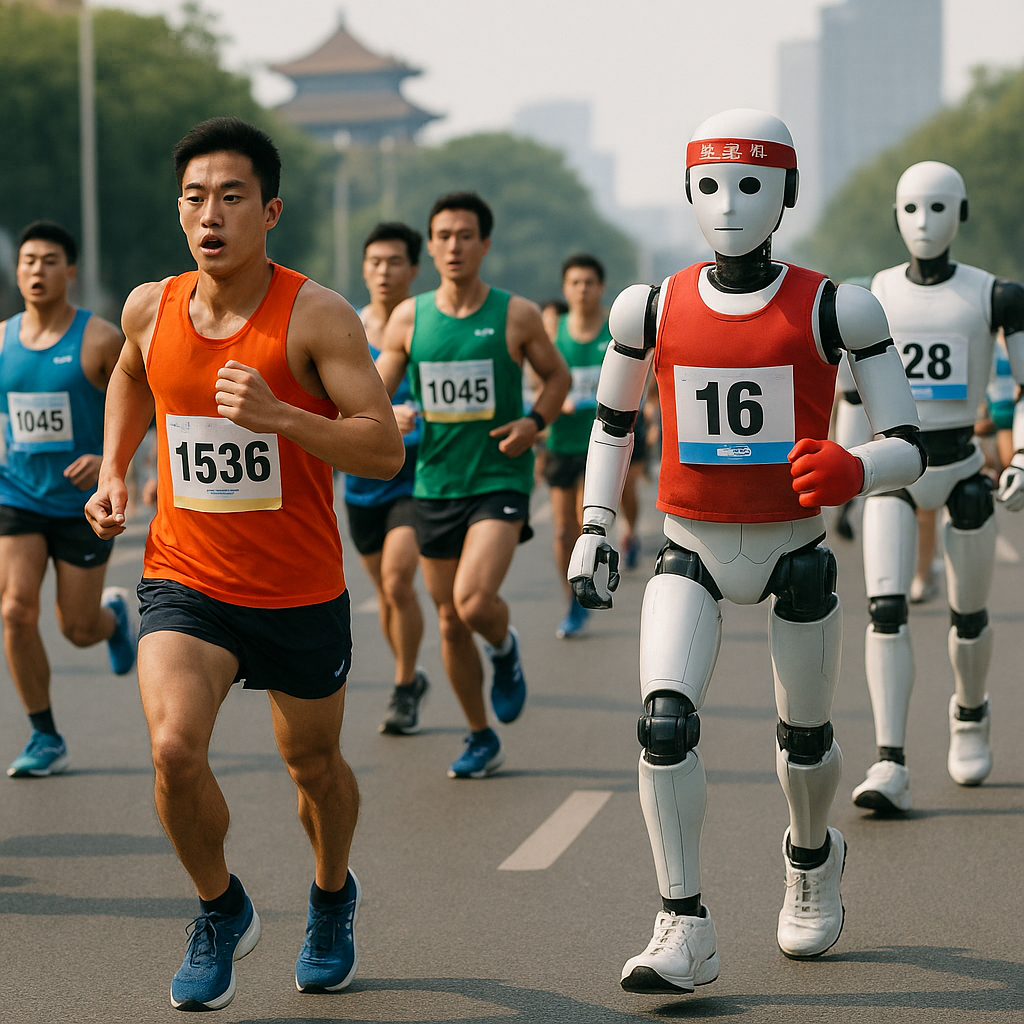
On April 19, 2025, Beijing, China, made history by hosting the world's first half-marathon race featuring both humans and humanoid robots. This unique event attracted thousands of runners who competed alongside 21 humanoid robots on a challenging 21-kilometer (13-mile) course. The robots varied in height, with some measuring as short as 3 feet 9 inches and others reaching up to 5 feet 9 inches, all designed to resemble humans and capable of running or walking without the use of wheels.
The standout performer among the robots was Tiangong Ultra, which completed the race in an impressive time of two hours and 40 minutes. In comparison, the fastest human runner finished the race in just one hour and two minutes. Tang Jian, the chief technology officer at the Beijing Innovation Centre of Human Robotics, credited Tiangong's success to its long legs and a sophisticated algorithm that mimicked human running techniques. He expressed pride in the robot's achievements, claiming that no other robotics companies in the West have reached similar milestones.
Throughout the race, the robots faced various challenges. One robot stumbled at the starting line and required a few moments to regain its footing before continuing. Another robot collided with a railing, which caused its human operator to fall. These incidents highlighted the complexities of robotic performance in a competitive environment, where even minor errors can lead to setbacks.
Human trainers accompanied the robots during the race, providing physical support when necessary. Some of the robots were outfitted with running shoes, while others sported unique accessories, such as boxing gloves and a red headband emblazoned with the phrase "Bound to Win" in Chinese. These additions not only enhanced the robots' appearance but also added a playful element to the competition.
China is home to numerous robotics companies, some of which specialize in creating humanoid robots, while others focus on developing robotic dogs. The nation's advancements in robotics have been showcased in various contexts, including military applications, such as the People's Liberation Army utilizing robotic dogs equipped with weaponry during training exercises. This half-marathon event marks a significant milestone in the ongoing integration of robotics into everyday life and highlights China's leadership in the field.
Original news source: China hosts world's first half-marathon race between humans and robots (Sky News)
🎧 Listen:
📖 Vocabulary:
Group or Classroom Activities
Warm-up Activities:
– CHARADES
Instructions: Divide the class into small groups. Each group will take turns acting out different words or phrases related to the article, such as "humanoid robot," "marathon," "robotic dogs," and "Chinese technology." The other groups will guess the word or phrase being acted out.
– OPINION POLL
Instructions: Create a list of statements based on the article, such as "Robots should compete with humans in sports." Students will walk around the classroom and ask their classmates for their opinions on each statement, tallying the responses. Afterward, discuss the results as a class.
– THINK-PAIR-SHARE
Instructions: Pose the question, "What are the potential benefits and drawbacks of robots participating in sports?" Students will think individually for a minute, then pair up to discuss their thoughts before sharing with the whole class.
– HEADLINE CREATION
Instructions: Have students work in pairs to create catchy headlines for the article. They should focus on summarizing the main points in a creative and engaging way. Afterward, pairs can share their headlines with the class, and a discussion can follow about the impact of headlines on news stories.
– FUTURE PREDICTIONS
Instructions: Ask students to predict how the integration of robots in competitive sports might evolve in the next decade. They should consider advancements in technology and societal reactions. After writing down their predictions, students can share their thoughts in small groups and discuss the implications.
🤔 Comprehension Questions:
The significance of the half-marathon race was that it was the world's first race featuring both humans and humanoid robots, marking a historic milestone in the integration of robotics into competitive sports.
Tiangong Ultra completed the race in two hours and 40 minutes, while the fastest human runner finished in just one hour and two minutes, demonstrating a notable difference in performance.
Tiangong Ultra's success was attributed to its long legs and a sophisticated algorithm that mimicked human running techniques, as noted by Tang Jian.
The humanoid robots faced challenges such as stumbling at the starting line, requiring time to regain their footing, and one robot colliding with a railing, which caused its human operator to fall.
Human trainers accompanied the robots during the race, providing physical support when necessary to assist the robots in completing the course.
The accessories, such as running shoes, boxing gloves, and a red headband with the phrase "Bound to Win," enhanced the robots' appearance and added a playful element to the competition.
China's robotics companies are also developing robotic dogs and have showcased advancements in military applications, such as the People's Liberation Army using robotic dogs equipped with weaponry during training exercises.
The half-marathon event indicates a significant milestone in the ongoing integration of robotics into everyday life in China, highlighting the country's leadership in the field of robotics.
🎧✍️ Listen and Fill in the Gaps:
On April 19, 2025, Beijing, China, made history by hosting the world's first half-marathon race featuring both humans and . This event attracted thousands of runners who competed alongside 21 humanoid robots on a challenging 21-kilometer (13-mile) course. The robots varied in height, with some measuring as short as 3 feet 9 inches and others reaching up to 5 feet 9 inches, all designed to resemble humans and capable of running or walking without the use of wheels. The standout performer among the robots was Tiangong Ultra, which the race in an impressive time of two hours and 40 minutes. In comparison, the fastest human finished the race in just one hour and two minutes. Tang Jian, the technology officer at the Beijing Centre of Human , credited Tiangong's success to its long legs and a sophisticated algorithm that mimicked human running techniques. He expressed pride in the robot's achievements, claiming that no other robotics companies in the West have reached similar milestones. Throughout the race, the robots faced various challenges. One robot stumbled at the starting line and required a few moments to regain its footing before continuing. Another robot collided with a railing, which caused its human operator to fall. These incidents highlighted the complexities of robotic performance in a competitive environment, where even errors can lead to setbacks. trainers the robots during the race, providing physical support when necessary. Some of the robots were outfitted with running shoes, while others sported unique accessories, such as boxing gloves and a red headband emblazoned with the phrase "Bound to Win" in Chinese. These not only enhanced the robots' appearance but also added a playful element to the competition. is home to numerous robotics companies, some of which specialize in creating humanoid robots, while others on robotic dogs. The nation's advancements in robotics have been showcased in various contexts, including military applications, such as the People's Liberation Army utilizing robotic dogs equipped with weaponry during training exercises. This half-marathon marks a significant milestone in the ongoing integration of robotics into everyday life and highlights China's leadership in the field.
💬 Discussion Questions:
1. What is your opinion on the integration of robots into sports events?
2. How would you feel if you had the opportunity to compete alongside robots in a race?
3. Do you think humanoid robots could ever surpass human athletes in performance? Why or why not?
4. What is a significant technological advancement you believe will change our lives in the next decade?
5. How do you think the presence of robots in competitive sports will affect human athletes’ motivation and training?
6. Do you like the idea of robots having personalities or accessories, like the ones described in the article? Why or why not?
7. What is a challenge you think robots might face in adapting to unpredictable environments, such as a race?
8. How would you feel if robots became commonplace in everyday activities, such as running errands or exercising?
9. Do you think the advancements in robotics could lead to job losses in certain industries? Why or why not?
10. What is a sport you believe could benefit from the inclusion of robots, and how would that change the game?
11. How do you think society should address ethical concerns regarding the use of robots in various fields, including sports?
12. Do you think the excitement generated by events like the half-marathon will encourage more people to participate in sports? Why?
13. What is a personal experience you have had with technology that changed your perspective on its role in daily life?
14. How would you feel if you were to train a robot to compete in a sport? What challenges do you think you would face?
15. Do you think the advancements in robotics will lead to a better quality of life for people? Why or why not?
Individual Activities
📖💭 Vocabulary Meanings:
Click a dot next to a word, then click the dot next to its meaning to draw a line connecting them.
Words
Meanings
🔡 Multiple Choice Questions:
🕵️ True or False Questions:
📝 Write a Summary:
Write a summary of this news article in two sentences.
Check your writing now with the best free AI for English writing!