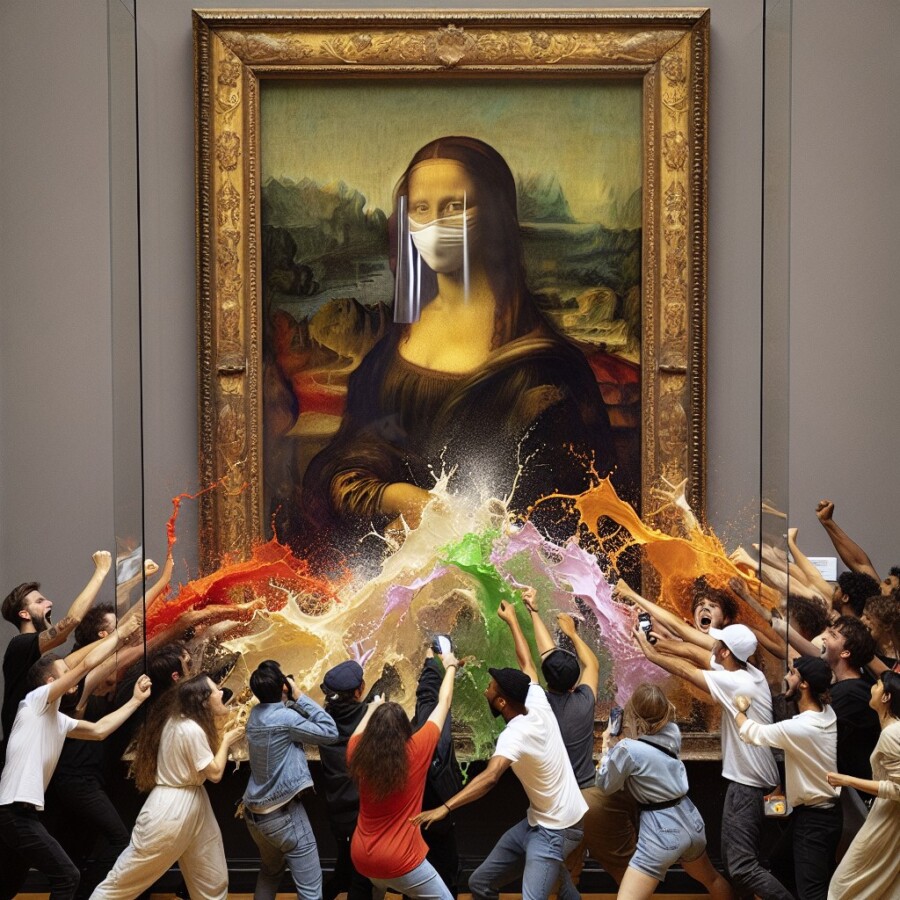
Protesters recently caused a stir by throwing soup at the famous Mona Lisa painting in Paris. The 16th-century masterpiece by Leonardo da Vinci is housed in the Louvre, one of the world's most renowned art museums. Despite the attack, the painting is shielded by bulletproof glass, ensuring its protection from any significant damage.
The demonstrators behind the soup-throwing incident stated that their actions were a call for better access to "healthy and sustainable food," criticizing the current state of the agricultural system. The protest aimed to draw attention to issues related to food production and distribution, highlighting concerns about the quality and sustainability of the food supply chain.
The Mona Lisa, known for her enigmatic smile, is a symbol of artistic excellence and cultural heritage. The painting's significance transcends borders and generations, making it a target for those seeking to make a statement through unconventional means. Despite the shock caused by the incident, the painting remains intact and continues to captivate visitors from around the world.
The event underscores the power of art to provoke reactions and spark discussions on important social issues. While the act of throwing soup at a revered artwork may seem extreme, it serves as a reminder of the role art plays in reflecting and challenging societal norms. The incident has sparked debates on the boundaries of protest and the appropriate channels for advocating for change.
As authorities investigate the incident and assess security measures, the Mona Lisa stands as a resilient symbol of artistic expression. The painting's enduring allure and the controversy surrounding the protest serve as a testament to the enduring impact of art on society and the ongoing dialogue it inspires.
Original news source: Watch: Soup thrown at Mona Lisa painting (BBC)
🎧 Listen:
📖 Vocabulary:
Group or Classroom Activities
Warm-up Activities:
– News Summary
Instructions: In pairs, students will read the article and then summarize the main points in their own words. They should focus on the protest, the reasons behind it, and the impact it had on the painting and society.
– Word Association
Instructions: In groups, students will take turns saying a word that comes to mind when they think of the Mona Lisa and the protest incident. They should try to make connections between the words and discuss their associations.
– Sketch It
Instructions: In pairs, students will take turns describing the Mona Lisa painting to each other. One student will describe the painting while the other tries to sketch it based on the description. Afterward, they can compare the sketch to the actual painting and discuss any differences.
– Opinion Poll
Instructions: In groups, students will create a list of questions related to the protest and the issues it raises about food production and distribution. They will then interview each other and record their classmates' opinions. Finally, they will present their findings to the class and engage in a discussion.
– Think-Pair-Share
Instructions: Students will individually think about and write down their personal opinions on the protest incident and the role of art in society. They will then pair up with a partner and share their thoughts. Finally, they will share their partner's thoughts with the rest of the class and engage in a group discussion.
🤔 Comprehension Questions:
🎧✍️ Listen and Fill in the Gaps:
Protesters recently caused a stir by soup at the famous Mona Lisa painting in Paris. The 16th-century masterpiece by Leonardo da Vinci is housed in the Louvre, one of the world's most renowned art . Despite the attack, the painting is shielded by bulletproof glass, ensuring its protection from any significant . The demonstrators behind the soup-throwing incident stated that their actions were a call for better to "healthy and sustainable food," criticizing the current of the agricultural system. The protest aimed to draw attention to issues to food production and distribution, highlighting concerns about the quality and sustainability of the food supply chain. The Mona Lisa, known for her enigmatic smile, is a symbol of artistic excellence and cultural heritage. The painting's transcends and generations, making it a target for those seeking to make a statement through unconventional . Despite the shock caused by the incident, the painting intact and continues to captivate visitors from around the world. The underscores the power of art to provoke reactions and spark discussions on important issues. While the act of throwing soup at a revered artwork may seem extreme, it serves as a reminder of the role art plays in reflecting and challenging societal . The incident has sparked on the boundaries of protest and the appropriate channels for advocating for change. As authorities investigate the incident and assess security measures, the Mona Lisa stands as a resilient symbol of artistic expression. The painting's enduring allure and the controversy surrounding the protest serve as a to the enduring of art on society and the ongoing dialogue it inspires.
💬 Discussion Questions:
1. What do you think about the protesters throwing soup at the Mona Lisa painting?
2. How would you feel if someone vandalized a famous artwork that you love?
3. Do you think it is acceptable to use art as a means of protest? Why or why not?
4. What is the role of art in reflecting and challenging societal norms?
5. How do you think the incident with the Mona Lisa has sparked debates on the boundaries of protest?
6. Do you believe that art has the power to provoke reactions and spark discussions on important social issues? Why or why not?
7. Have you ever participated in a protest or demonstration? If so, what was it about and what was your experience like?
8. How important do you think it is for art museums to have security measures in place to protect valuable artworks?
9. What are some other unconventional ways that people have used art to make a statement?
10. Do you think the protesters' message about "healthy and sustainable food" was effectively communicated through their action of throwing soup at the Mona Lisa? Why or why not?
11. How do you think the incident with the Mona Lisa has impacted the perception of the protesters' cause?
12. Have you ever felt strongly enough about an issue to take action or participate in a protest? If so, what was the issue and what did you do?
13. What do you think is the appropriate way to advocate for change in society?
14. Do you think the soup-throwing incident will have any long-term effects on the Mona Lisa's status as a symbol of artistic excellence and cultural heritage? Why or why not?
15. How do you think the incident with the Mona Lisa has affected the ongoing dialogue about the impact of art on society?
Individual Activities
📖💭 Vocabulary Meanings:
Click a dot next to a word, then click the dot next to its meaning to draw a line connecting them.
Words
Meanings
🔡 Multiple Choice Questions:
🕵️ True or False Questions:
📝 Write a Summary:
Write a summary of this news article in two sentences.
Check your writing now with the best free AI for English writing!