
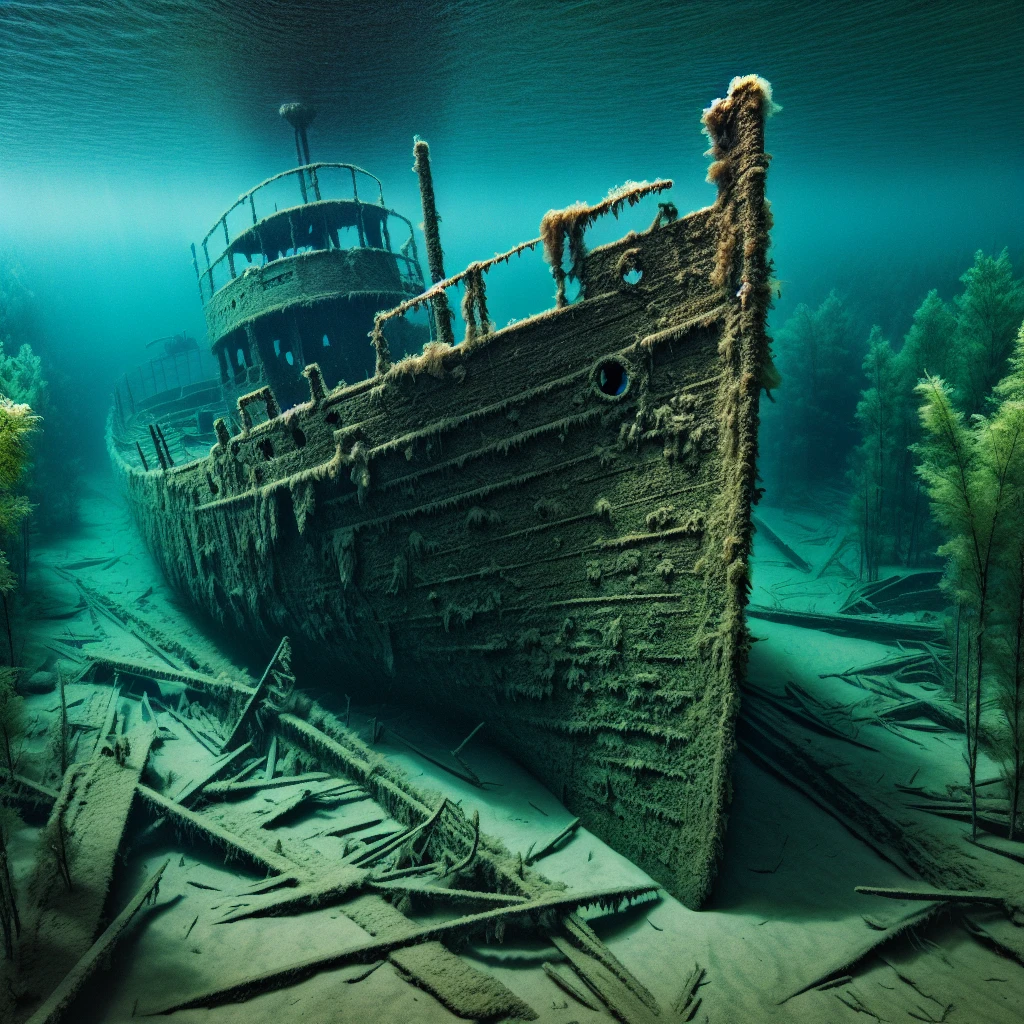
The discovery of the shipwreck was made by accident while the filmmakers were conducting their research. The 'Africa' is a significant find, as it provides a glimpse into the past and offers valuable historical information about maritime trade in the late 19th century.
The filmmakers were exploring the bed of Lake Huron, which is known for its numerous shipwrecks. They were specifically looking for invasive mussels, but instead, they found the well-preserved remains of the 'Africa.' The shipwreck is a reminder of the dangers and challenges faced by sailors in the past.
The 'Africa' is now being studied by experts to learn more about its history and the circumstances surrounding its sinking. It serves as a reminder of the rich maritime heritage of the Great Lakes region and the stories that lie beneath the surface of the water.
The discovery of the 'Africa' shipwreck is a testament to the importance of exploration and the potential for unexpected discoveries. It highlights the significance of preserving and studying historical artifacts to gain a deeper understanding of our past.
Original news source: Filmmakers discover 128-year-old shipwreck (BBC)
📖 Vocabulary:
Group or Classroom Activities
Warm-up Activities:
– News Summary
Instructions:
1. Have students read the article individually or in pairs.
2. Ask students to write a summary of the article in their own words, focusing on the key points and main ideas.
3. After a designated amount of time, have students share their summaries with a partner or in small groups.
4. Encourage discussion and ask students to compare their summaries, noting any differences or similarities.
– Opinion Poll
Instructions:
1. Divide the class into small groups.
2. Assign each group a specific topic related to the article (e.g. the importance of exploring shipwrecks, the preservation of historical artifacts, the significance of maritime trade in the past).
3. In their groups, students should discuss their opinions on the topic and come up with at least three reasons to support their stance.
4. After the discussion, have each group present their opinions and reasons to the class.
5. Encourage respectful debate and allow students to ask questions or counter arguments.
– Vocabulary Pictionary
Instructions:
1. Select a list of 10-15 vocabulary words from the article (e.g. invasive, glimpse, maritime, artifacts).
2. Divide the class into small teams.
3. Give each team a set of index cards or whiteboards.
4. Call out a vocabulary word and give the teams a set amount of time (e.g. 30 seconds) to draw a visual representation of the word.
5. After the time is up, have each team hold up their drawings and explain what word it represents.
6. Award points to teams who guess correctly and keep track of the scores throughout the game.
– Pros and Cons
Instructions:
1. Divide the class into two groups: the pros and the cons.
2. Assign each group a stance to take on a specific topic related to the article (e.g. the benefits and drawbacks of exploring shipwrecks).
3. Give students some time to brainstorm and discuss their arguments within their groups.
4. Have each group present their arguments to the class, taking turns presenting one pro and one con at a time.
5. After each group has presented, encourage a class discussion where students can ask questions, counter arguments, and provide additional points.
– Future Predictions
Instructions:
1. Ask students to imagine themselves as historians in the future, studying the 'Africa' shipwreck.
2. Have students write a short paragraph or give a brief presentation where they make predictions about what they might discover or learn from the shipwreck.
3. Encourage creativity and critical thinking, and remind students to base their predictions on the information provided in the article.
4. After students have finished, allow them to share their predictions with the class.
5. Facilitate a discussion where students can compare and discuss their predictions, and reflect on the potential impact of the shipwreck's discovery.
🤔 Comprehension Questions:
They stumbled upon the shipwreck while they were searching for invasive mussels in Lake Huron, Canada.
The ship was carrying coal from Ohio to Ontario when it sank.
The discovery of the 'Africa' shipwreck is significant because it provides valuable historical information about maritime trade in the late 19th century and offers a glimpse into the past.
The filmmakers were originally searching for invasive mussels in Lake Huron.
The discovery of the 'Africa' shipwreck reminds us of the dangers and challenges faced by sailors in the past.
Experts are currently studying the 'Africa' shipwreck to learn more about its history and the circumstances surrounding its sinking.
The discovery of the 'Africa' shipwreck highlights the importance of exploration and the potential for unexpected discoveries.
It is important to preserve and study historical artifacts to gain a deeper understanding of our past and to preserve our cultural heritage.
🎧✍️ Listen and Fill in the Gaps:
Filmmakers Yvonne and Zach Melnick were searching for invasive mussels in Lake Huron, Canada when they upon a 128-year-old called the 'Africa.' The ship, which was carrying coal from Ohio to Ontario, sank on October 4, 1895 and had remained until now. The discovery of the shipwreck was made by accident while the filmmakers were conducting their research. The 'Africa' is a significant find, as it a glimpse into the past and offers valuable historical information about trade in the late 19th . The filmmakers were the bed of Lake Huron, which is known for its numerous shipwrecks. They were specifically looking for invasive mussels, but instead, they found the well-preserved of the 'Africa.' The shipwreck is a reminder of the and challenges faced by sailors in the past. The 'Africa' is now being studied by to more about its history and the circumstances surrounding its sinking. It serves as a reminder of the rich maritime heritage of the Great Lakes region and the stories that lie beneath the surface of the . The of the 'Africa' shipwreck is a testament to the of and the potential for unexpected discoveries. It highlights the significance of preserving and studying historical artifacts to gain a deeper understanding of our past.
💬 Discussion Questions:
1. What is the significance of discovering a 128-year-old shipwreck like the 'Africa'?
2. How would you feel if you stumbled upon a hidden shipwreck while conducting research?
3. Do you think it is important to preserve and study historical artifacts like the 'Africa'? Why or why not?
4. Have you ever explored an area known for its historical significance? If so, what did you discover?
5. What challenges do you think sailors faced in the late 19th century?
6. How do you think the discovery of the 'Africa' will contribute to our understanding of maritime trade in the 19th century?
7. Do you think exploration is important for making unexpected discoveries? Why or why not?
8. Have you ever had an unexpected discovery while conducting research or exploring? If so, what was it?
9. What do you think can be learned from studying shipwrecks like the 'Africa'?
10. How do you think the discovery of the 'Africa' shipwreck will impact the Great Lakes region?
11. What other historical artifacts do you think could be hidden beneath bodies of water?
12. Do you think there are other significant shipwrecks waiting to be discovered? Why or why not?
13. How do you think the 'Africa' shipwreck will be studied by experts?
14. What other ways can we gain a deeper understanding of our past?
15. Do you think the discovery of the 'Africa' shipwreck will lead to more exploration in Lake Huron? Why or why not?
Individual Activities
📖💭 Vocabulary Meanings:
Click a dot next to a word, then click the dot next to its meaning to draw a line connecting them.
Words
Meanings
🔡 Multiple Choice Questions:
🕵️ True or False Questions:
📝 Write a Summary:
Write a summary of this news article in two sentences.
Check your writing now with the best free AI for English writing!