
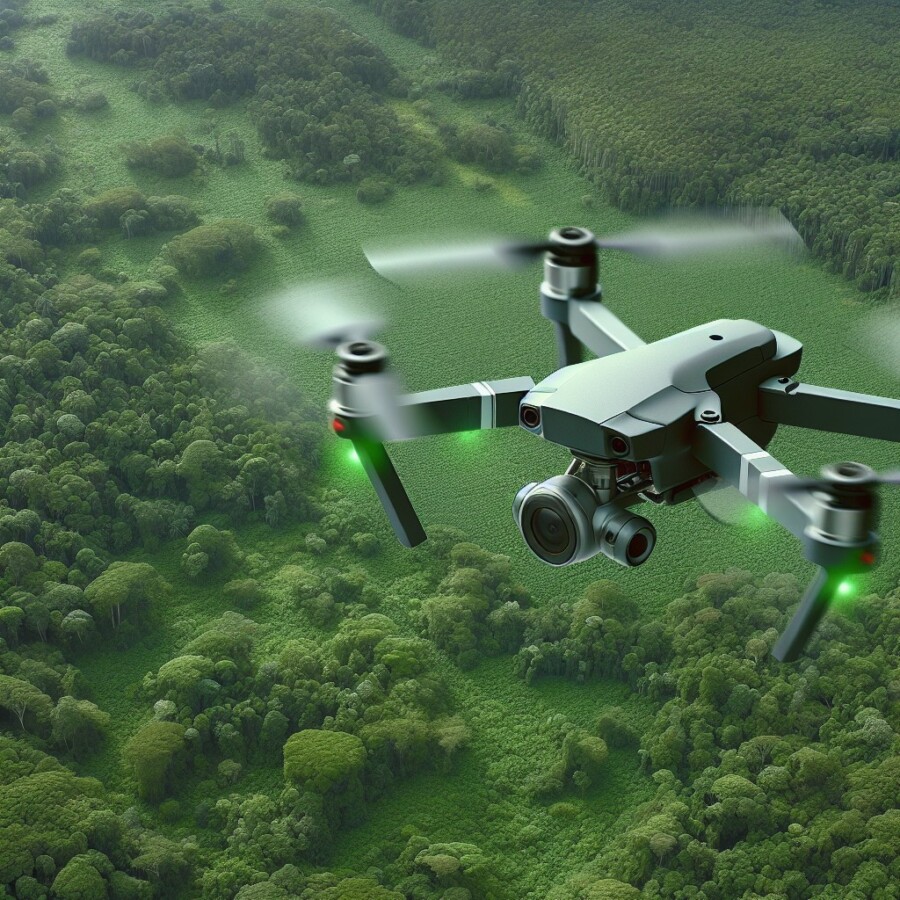
A missing dog in Bedfordshire, England, was successfully found and reunited with its family after 12 days, thanks to the use of a thermal camera attached to a drone. The dog, named Ulysse, was located hiding in a hedge, and the rescue operation was carried out by the charity Drone to Home. The thermal camera captured Ulysse as a bright white blob in the video footage. The owner, Sam Boyle, is now raising funds for the charity to purchase another drone to assist in finding more lost animals.
The heartwarming story of Ulysse's rescue highlights the effectiveness of using advanced technology, such as thermal drones, in locating missing pets. The thermal camera was able to detect Ulysse's body heat, making it easier to spot him even in dense vegetation. This innovative approach to search and rescue operations has proven to be successful in reuniting lost animals with their families.
The use of drones equipped with thermal cameras has become increasingly popular in recent years, not only for finding missing pets but also for various other applications. These include search and rescue missions, monitoring wildlife, and even assisting in firefighting operations. The ability of thermal cameras to detect heat signatures makes them invaluable tools in situations where visibility may be limited or when searching for individuals or animals in challenging environments.
The success of Ulysse's rescue serves as a reminder of the importance of supporting charities and organizations that utilize advanced technology for the benefit of both humans and animals. By contributing to these causes, we can help ensure that more lost pets are found and reunited with their families. The use of thermal drones in search and rescue operations continues to be a promising and effective method, providing hope and relief to those who have lost their beloved pets.
Original news source: Missing dog found using thermal drone in Bedfordshire (BBC)
🎧 Listen:
📖 Vocabulary:
Group or Classroom Activities
Warm-up Activities:
– Charades
Instructions: Divide the class into two teams. Each team will take turns acting out a word or phrase related to the article using only gestures and body movements. The other team must guess the word or phrase within a time limit. The team with the most correct guesses wins.
– News Summary
Instructions: In pairs, students will take turns summarizing the key points of the article to their partner. After each summary, the partner will provide feedback and ask follow-up questions. Then, they will switch roles. Encourage students to use their own words and express their opinions about the story.
– Vocabulary Pictionary
Instructions: Divide the class into small groups. Each group will be given a list of vocabulary words from the article. One student from each group will come to the front and draw a picture to represent one of the words. The other group members must guess the word based on the drawing. The first group to correctly guess all the words wins.
– Pros and Cons
Instructions: Divide the class into two groups. One group will brainstorm the pros (advantages) of using thermal drones to find missing pets, while the other group will brainstorm the cons (disadvantages). After a given time, each group will present their ideas to the class. Encourage students to provide reasons and examples to support their arguments.
– Future Predictions
Instructions: In pairs, students will discuss and make predictions about the future of using advanced technology, such as thermal drones, in search and rescue operations. They should consider the potential benefits, challenges, and ethical implications. After the discussion, each pair will share their predictions with the class and engage in a group discussion about the topic.
🤔 Comprehension Questions:
🎧✍️ Listen and Fill in the Gaps:
A missing dog in Bedfordshire, , was successfully and reunited with its family after 12 days, thanks to the use of a thermal camera to a drone. The dog, named Ulysse, was hiding in a hedge, and the rescue operation was carried out by the charity Drone to Home. The thermal camera captured Ulysse as a bright white blob in the video footage. The owner, Sam Boyle, is now raising funds for the charity to purchase another drone to assist in finding more lost animals. The heartwarming story of Ulysse's rescue highlights the effectiveness of using advanced technology, such as thermal , in locating pets. The thermal camera was able to detect Ulysse's body heat, making it easier to spot him even in dense vegetation. This innovative approach to and rescue operations has proven to be successful in lost animals with their families. The use of drones equipped with thermal cameras has become increasingly popular in recent years, not only for finding missing pets but also for various applications. These include search and rescue missions, monitoring wildlife, and even assisting in firefighting operations. The ability of thermal cameras to detect heat signatures makes them invaluable tools in situations where visibility may be limited or when for or in challenging environments. The success of Ulysse's rescue serves as a reminder of the of charities and organizations that utilize advanced technology for the benefit of both humans and animals. By to these causes, we can help ensure that more lost pets are found and reunited with their families. The use of thermal drones in search and rescue operations continues to be a promising and effective , providing hope and relief to those who have lost their beloved pets.
💬 Discussion Questions:
1. What do you think about using drones with thermal cameras to find missing pets?
2. Have you ever lost a pet? How did you feel during that time?
3. How do you think the use of thermal drones can benefit search and rescue missions?
4. Do you think using advanced technology like thermal drones is worth the cost? Why or why not?
5. Have you ever donated to a charity or organization that uses advanced technology for a good cause? If so, which one and why?
6. How would you feel if you lost your pet and someone used a thermal drone to find them?
7. Do you think using thermal drones to find missing pets is a more effective method than traditional search methods? Why or why not?
8. What other applications do you think thermal drones could be used for, besides finding missing pets?
9. Have you ever used a drone before? If so, what was your experience like?
10. What do you think are the advantages and disadvantages of using thermal drones in search and rescue operations?
11. How important do you think it is to support charities and organizations that use advanced technology for the benefit of humans and animals?
12. Do you like the idea of using drones for search and rescue missions? Why or why not?
13. What would you do if you found a lost pet? Would you try to find its owner or keep it for yourself? Why?
14. How do you think the use of thermal drones could impact the future of search and rescue operations?
15. Do you think using advanced technology like thermal drones takes away from the human element of search and rescue missions? Why or why not?
Individual Activities
📖💭 Vocabulary Meanings:
Click a dot next to a word, then click the dot next to its meaning to draw a line connecting them.
Words
Meanings
🔡 Multiple Choice Questions:
🕵️ True or False Questions:
📝 Write a Summary:
Write a summary of this news article in two sentences.
Check your writing now with the best free AI for English writing!