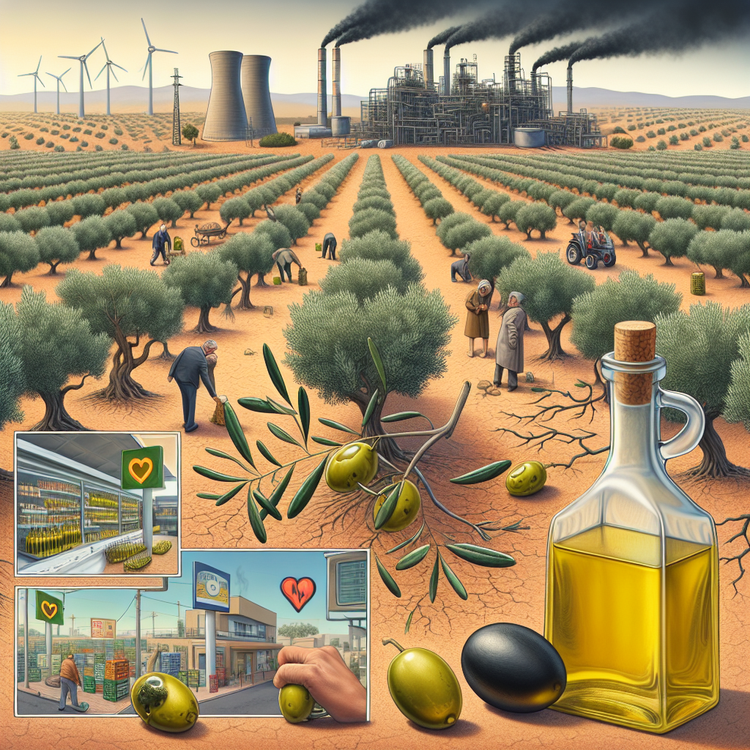
The price of olive oil in Spain has skyrocketed due to a severe drought that has affected olive production. Spain is the largest producer of olive oil in the world, accounting for 70% of European Union consumption and 45% of global consumption. The lack of rain in olive-producing areas has significantly reduced the amount of oil being produced, leading to an increase in prices. In fact, olive oil prices have risen by more than 70% this year alone. The Nuestra Señora del Pilar cooperative, the largest olive oil factory in the world, has experienced one of the worst harvests on record. The rise in prices can be attributed to increased production costs, such as fuel, electricity, and fertilizers, as well as the lack of rain.
Climate change is exacerbating the effects of the drought, as temperatures in the Mediterranean region are rising 20% faster than the global average. Traditional assumptions that a poor harvest would be followed by a good one are no longer reliable. Some parts of Spain, including Andalusia, have implemented measures to reduce water usage, but more needs to be done. The president of the cooperative calls for investment in irrigation systems to mitigate the impact of drought.
The increase in olive oil prices in Spain has also been observed in other European countries, although the rise has not been as sharp. Some Spaniards living near Portugal have started crossing the border to buy slightly cheaper oil. Prices in the UK and Ireland have been lower than in Spain, but this is likely due to the fact that they purchased the oil when the price was lower. The demand for olive oil in Spain is high, leading to a quicker turnover of stock. However, domestic sales have decreased by 10% as consumers opt for cheaper alternatives like sunflower oil.
Experts warn against substituting olive oil with cheaper alternatives, as olive oil is a key component of the Mediterranean diet and has numerous health benefits, particularly for cardiovascular health. The quantity of oil recommended for consumption is small, but the health benefits are significant. However, the amount of olive oil consumed is currently being determined by rainfall rather than health concerns.
In conclusion, the severe drought in Spain has led to a significant increase in the price of olive oil. The lack of rain has affected olive production, resulting in lower quantities of oil being produced. Climate change is exacerbating the effects of the drought, and measures need to be implemented to mitigate its impact. While the increase in prices has been observed in other European countries, the rise has not been as sharp. Consumers are urged not to substitute olive oil with cheaper alternatives, as olive oil is an essential component of the Mediterranean diet and has numerous health benefits.
Original news source: Olive oil price skyrockets as Spanish drought bites (BBC)
🎧 Listen:
📖 Vocabulary:
Group or Classroom Activities
Warm-up Activities:
– News Summary
Instructions: Divide the class into small groups. Give each group a few minutes to read the article silently. Then, ask each group to summarize the main points of the article in a news summary format. They should focus on the key information and try to condense it into a few sentences. Afterward, have each group share their summaries with the rest of the class.
– Opinion Poll
Instructions: Ask the class to form pairs or small groups. Give each group a list of questions related to the article, such as "Do you think the increase in olive oil prices will continue?" or "Should the government invest in irrigation systems?" Instruct the groups to discuss the questions and share their opinions. Afterward, have a class discussion where each group shares their opinions and the reasons behind them.
– Vocabulary Pictionary
Instructions: Write a list of vocabulary words from the article on the board, such as "drought," "exacerbate," and "mitigate." Divide the class into small teams. Each team takes turns selecting a word from the list and drawing a picture on the board to represent the word. The rest of the class must guess the word based on the drawing. Encourage the use of English to describe the drawings and guess the words.
– Pros and Cons
Instructions: Divide the class into two groups. Assign one group to come up with a list of pros for the increase in olive oil prices and the other group to come up with a list of cons. Give them a few minutes to brainstorm and write down their ideas. Then, have each group share their lists with the rest of the class. Encourage a respectful debate and discussion about the different perspectives.
– Future Predictions
Instructions: Ask each student to individually write down their predictions for the future of olive oil prices in Spain and its impact on the Mediterranean diet. They can consider factors such as climate change, production costs, and consumer behavior. Afterward, have a class discussion where students share their predictions and explain the reasons behind them. Encourage students to respond to each other's predictions and engage in a thoughtful discussion.
🤔 Comprehension Questions:
🎧✍️ Listen and Fill in the Gaps:
The price of olive oil in Spain has skyrocketed due to a severe drought that has affected olive . Spain is the largest producer of olive oil in the , accounting for 70% of European Union consumption and 45% of global consumption. The lack of rain in olive-producing areas has significantly reduced the amount of oil being , leading to an increase in prices. In fact, olive oil prices have risen by more than 70% this year alone. The Nuestra Señora del Pilar cooperative, the largest olive oil factory in the world, has experienced one of the worst harvests on . The rise in prices can be attributed to increased production costs, such as fuel, electricity, and fertilizers, as well as the lack of rain. Climate change is exacerbating the effects of the drought, as temperatures in the region are rising 20% faster than the global average. Traditional assumptions that a poor harvest would be followed by a good one are no longer reliable. Some parts of Spain, including , have implemented measures to reduce water usage, but more needs to be done. The of the cooperative calls for investment in irrigation systems to mitigate the impact of drought. The increase in olive oil prices in Spain has also been observed in other European countries, although the rise has not been as sharp. Some Spaniards near Portugal have started crossing the border to buy slightly oil. Prices in the UK and Ireland have been lower than in Spain, but this is likely due to the fact that they the oil when the price was lower. The demand for olive oil in Spain is high, leading to a turnover of stock. However, domestic sales have decreased by 10% as consumers opt for cheaper alternatives like sunflower oil. Experts warn against substituting olive oil with cheaper alternatives, as olive oil is a key component of the Mediterranean diet and has numerous health benefits, particularly for health. The quantity of oil recommended for consumption is small, but the health benefits are significant. However, the amount of olive oil consumed is currently being determined by rainfall rather than health concerns. In conclusion, the severe drought in Spain has led to a significant increase in the price of olive oil. The lack of rain has affected olive production, resulting in lower quantities of oil being produced. Climate change is exacerbating the effects of the drought, and measures need to be implemented to mitigate its impact. While the increase in prices has been observed in European countries, the rise has not been as sharp. are urged not to substitute olive oil with cheaper , as olive oil is an essential of the Mediterranean diet and has numerous health benefits.
💬 Discussion Questions:
1. How would you feel if the price of a staple food item in your country increased by 70% in one year?
2. Do you think climate change is a significant factor in the severe drought in Spain? Why or why not?
3. What is the importance of irrigation systems in mitigating the impact of drought?
4. How do you think the rise in olive oil prices in Spain will affect the Mediterranean diet?
5. Do you think it is worth paying more for olive oil, considering its health benefits? Why or why not?
6. What alternatives to olive oil do people in your country use for cooking?
7. How do you think the decrease in domestic sales of olive oil will impact the Spanish economy?
8. What measures do you think should be implemented to reduce water usage in olive-producing areas?
9. How do you think the rise in olive oil prices will affect the tourism industry in Spain?
10. How would you feel if you had to cross the border to a neighboring country to buy a cheaper version of a staple food item?
11. What are some other examples of food items that have increased in price due to climate-related issues in your country?
12. How do you think the rise in olive oil prices will impact the global market for olive oil?
13. Do you think the rise in olive oil prices will lead to an increase in the production of alternative oils, such as sunflower oil? Why or why not?
14. How would you feel if the price of a food item that is essential to your cultural cuisine increased significantly?
15. What measures do you think individuals can take to support the olive oil industry in Spain during this difficult time?
Individual Activities
📖💭 Vocabulary Meanings:
Click a dot next to a word, then click the dot next to its meaning to draw a line connecting them.
Words
Meanings
🔡 Multiple Choice Questions:
🕵️ True or False Questions:
📝 Write a Summary:
Write a summary of this news article in two sentences.
Check your writing now with the best free AI for English writing!