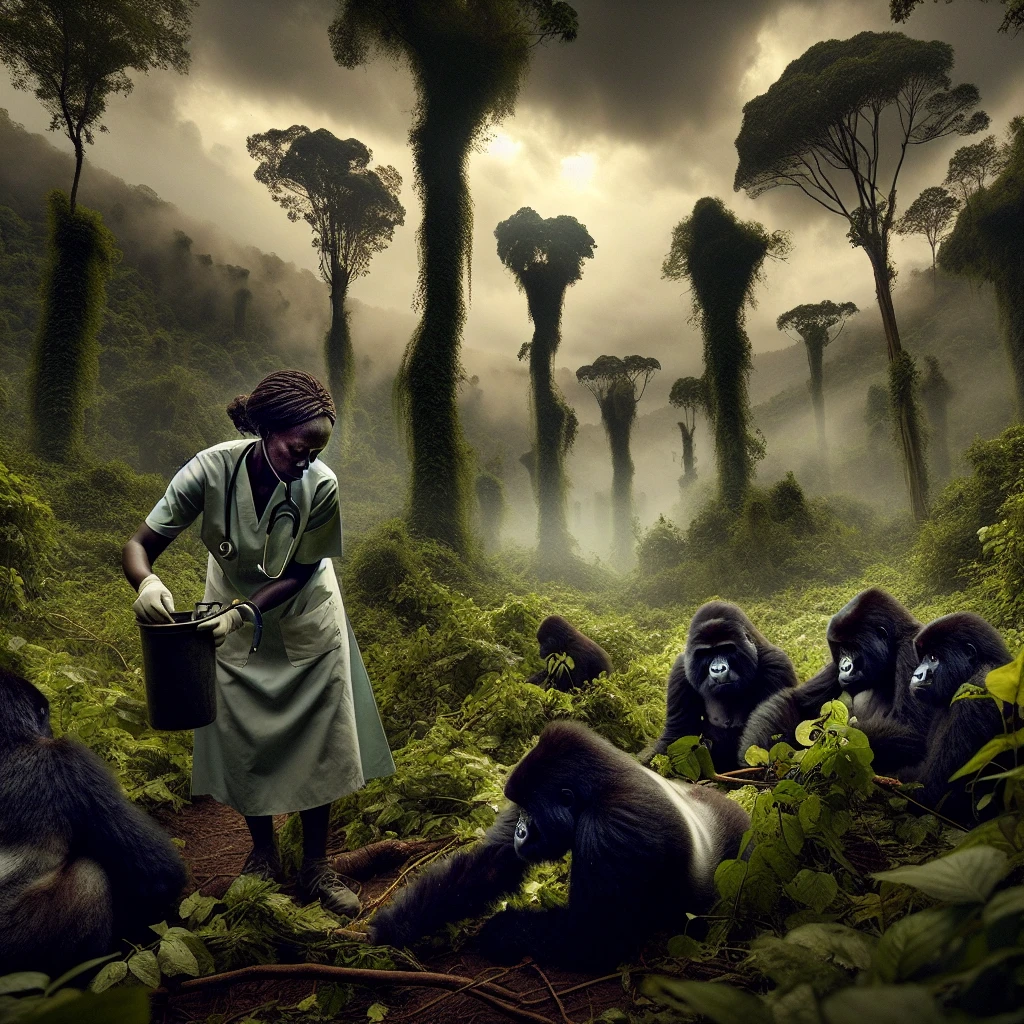
Dr. Kalema-Zikusoka's efforts have been successful in increasing the population of mountain gorillas from 300 to approximately 500. This achievement has led to their reclassification from critically endangered to endangered. Her work spans over three decades of fieldwork and has made a significant impact on the conservation of these magnificent creatures.
Recognizing her remarkable contributions, Dr. Kalema-Zikusoka has been included in the BBC 100 Women list this year. This list showcases women who are making a difference in various fields, including wildlife conservation in the face of climate change. To learn more about her and other women working towards this cause, you can read the full story on the BBC website.
To stay updated on the work of Dr. Kalema-Zikusoka and other inspiring women, you can follow BBC 100 Women on Facebook and Instagram. Join the conversation using the hashtag #BBC100Women. The video accompanying this article, produced and edited by Rebecca Thorn and filmed by Godfrey Badebye, provides further insight into the efforts to save Uganda's gorillas from the impacts of climate change.
In conclusion, the work of Dr. Gladys Kalema-Zikusoka and her organization Conservation Through Public Health is crucial in safeguarding Uganda's mountain gorillas from the threats posed by climate change. Through her dedication and expertise, she has been able to increase their population and improve their conservation status. Her inclusion in the BBC 100 Women list is a testament to her significant contributions to wildlife conservation.
Original news source: Climate change: Saving Uganda's mountain gorillas (BBC)
📖 Vocabulary:
Group or Classroom Activities
Warm-up Activities:
– News Summary
Instructions:
1. Divide the class into pairs or small groups.
2. Give each group a copy of the article.
3. Instruct the students to read the article and summarize the main points in a few sentences.
4. After they have finished, have each group share their summaries with the class.
– Opinion Poll
Instructions:
1. Divide the class into pairs or small groups.
2. Ask the students to read the article and form an opinion on the importance of Dr. Kalema-Zikusoka's work.
3. Provide them with a list of statements related to the article, such as "Dr. Kalema-Zikusoka's efforts are essential for the survival of mountain gorillas."
4. Instruct the students to discuss their opinions and vote whether they agree or disagree with each statement.
5. After the discussion, have each group share their opinions and reasoning with the class.
– Keyword Hangman
Instructions:
1. Write the title of the article, "Uganda's mountain gorillas face threat from climate change," on the board, leaving out some of the keywords.
2. Divide the class into two teams.
3. One student from each team will come up to the board, take turns guessing letters to complete the missing keywords.
4. If a team guesses a correct letter, write it in the appropriate position. If they guess incorrectly, draw a part of the hangman.
5. The first team to correctly guess all the missing keywords wins.
– Pros and Cons
Instructions:
1. Divide the class into pairs or small groups.
2. Assign each group the task of discussing the pros and cons of Dr. Kalema-Zikusoka's work.
3. Instruct them to list the positive and negative aspects of her efforts in a T-chart or similar format.
4. After the discussion, have each group share their lists with the class and facilitate a class discussion on the topic.
– Future Predictions
Instructions:
1. Instruct the students to imagine they are environmentalists in the year 2050.
2. Ask them to write a short paragraph predicting the state of Uganda's mountain gorillas and their conservation efforts.
3. Encourage them to consider the potential effects of climate change and other factors on the population and conservation efforts.
4. After they have finished writing, have a few volunteers share their predictions with the class.
🤔 Comprehension Questions:
🎧✍️ Listen and Fill in the Gaps:
Uganda's mountain gorillas are facing a threat to their health due to the effects of change. Gladys Kalema-Zikusoka, the country's first wildlife vet and founder of Conservation Through Public Health, is working tirelessly to save these endangered animals. Her organization aims to promote biodiversity conservation by fostering between , gorillas, and other wildlife while their overall health. Dr. Kalema-Zikusoka's efforts have been successful in increasing the population of mountain gorillas from 300 to approximately 500. This achievement has led to their reclassification from critically to endangered. Her work spans over three decades of fieldwork and has made a impact on the conservation of these magnificent . Recognizing her remarkable , Dr. Kalema-Zikusoka has been included in the BBC 100 Women list this year. This list showcases women who are making a difference in various fields, including wildlife conservation in the face of climate change. To learn more about her and other women working towards this cause, you can read the full story on the BBC website. To stay on the work of Dr. Kalema-Zikusoka and other inspiring women, you can follow BBC 100 Women on Facebook and Instagram. Join the conversation using the #BBC100Women. The video accompanying this article, produced and edited by Thorn and filmed by Godfrey Badebye, further insight into the efforts to save Uganda's gorillas from the impacts of climate change. In conclusion, the work of Dr. Gladys Kalema-Zikusoka and her organization Conservation Through Public Health is crucial in safeguarding Uganda's mountain gorillas from the threats posed by climate change. Through her dedication and , she has been able to increase their population and improve their conservation . Her inclusion in the BBC 100 Women list is a to her significant contributions to conservation.
💬 Discussion Questions:
1. What do you think are the biggest threats to wildlife conservation today?
2. How do you feel about the efforts of Dr. Gladys Kalema-Zikusoka to save Uganda's mountain gorillas?
3. Do you think it is important for humans and wildlife to coexist? Why or why not?
4. Have you ever witnessed the effects of climate change in your own country? How did it make you feel?
5. What do you think can be done to raise awareness about the importance of biodiversity conservation?
6. How would you feel if you were able to make a significant impact on the conservation of an endangered species?
7. Do you think it is the responsibility of individuals or governments to take action against climate change? Why or why not?
8. What is your opinion on including more women in the field of wildlife conservation?
9. Have you ever visited a wildlife conservation organization or participated in any conservation activities? If so, what was your experience like?
10. How do you think climate change affects the overall health of animals?
11. Do you think the reclassification of the mountain gorillas from critically endangered to endangered is a significant achievement? Why or why not?
12. What is your opinion on using social media platforms to raise awareness about wildlife conservation?
13. How would you feel if you were recognized for your contributions to a cause you are passionate about?
14. Do you think it is possible to completely reverse the effects of climate change on wildlife populations? Why or why not?
15. What actions can individuals take in their daily lives to help mitigate the effects of climate change on wildlife?
Individual Activities
📖💭 Vocabulary Meanings:
Click a dot next to a word, then click the dot next to its meaning to draw a line connecting them.
Words
Meanings
🔡 Multiple Choice Questions:
🕵️ True or False Questions:
📝 Write a Summary:
Write a summary of this news article in two sentences.
Check your writing now with the best free AI for English writing!