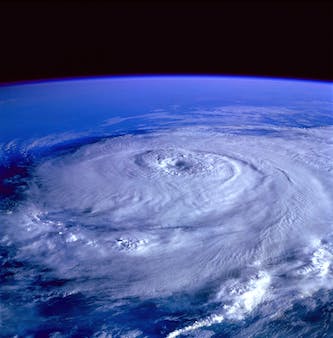
Traditional weather forecasting involves collecting real-time atmospheric data from various sources worldwide and processing it through supercomputers to simulate weather changes. This method has been successful, but it requires significant computing resources and takes hours to produce forecasts. AI takes a different approach by using machine learning to analyze historical data, including output from existing models, to predict weather patterns. GraphCast's advantage lies in its accuracy, as it learns from decades of data and can make forecasts quickly and with less computing power. While its forecasts may not be as detailed as traditional models, it excels in predicting severe events and tracking the path of major storms.
However, the success of AI does not mean that traditional forecasting methods will be replaced. AI models complement traditional approaches, as they are trained using data generated by those approaches. GraphCast is open source, allowing anyone to use the technology, and many technology companies and weather organizations are developing their own AI weather prediction tools. The UK's Met Office is working with the Turing Institute to explore the potential of AI in weather forecasting. However, climate change may limit the predictive power of AI-based tools, as new climate-related extremes emerge that may not have been captured in previous weather conditions.
In conclusion, AI has the potential to revolutionize hurricane forecasting by providing more accurate and timely predictions. GraphCast, developed by Google DeepMind, outperforms traditional models in predicting severe weather events. However, AI models should be seen as complementary to traditional approaches, as they rely on data generated by those approaches. While AI-based systems are advancing rapidly, climate change may present challenges in predicting new extremes. Nonetheless, the development of AI in weather forecasting is a significant step forward in improving our ability to prepare for and respond to extreme weather events.
Original news source: AI could predict hurricane landfall sooner – report (BBC)
📖 Vocabulary:
Group or Classroom Activities
Warm-up Activities:
– News Summary
Instructions: Students will work in small groups to summarize the key points of the article. Each group will have 5 minutes to prepare a brief news report, ensuring they touch on the main aspects: AI in hurricane forecasting, comparison with traditional methods, the success of GraphCast, the role of AI as complementary technology, and the challenges posed by climate change. After preparation, each group will present their summary to the class.
– Opinion Poll
Instructions: Conduct an opinion poll within the class regarding the use of AI in weather forecasting. Prepare a list of statements about AI's impact on weather prediction, such as "AI will completely replace traditional forecasting methods in the future" or "AI's inability to predict new climate extremes limits its usefulness." Students will move around the room and place a mark on a spectrum from "strongly agree" to "strongly disagree" for each statement. Discuss the results as a class and encourage students to explain their positions.
– Keyword Taboo
Instructions: Write down key terms from the article (e.g., AI, hurricane, forecasting, GraphCast, machine learning, climate change) on individual cards. In pairs or small groups, one student must describe the word on the card without using the word itself or any other words listed on the card. The other students must guess the keyword. This activity helps to reinforce vocabulary while encouraging students to use descriptive language.
– Future Predictions
Instructions: Have students work in pairs to discuss and write down their predictions about the future of AI in weather forecasting and how it might affect society. Encourage them to consider different scenarios and make both short-term and long-term predictions. Afterward, pairs will share their predictions with the class, and a discussion can be facilitated about the plausibility and implications of these forecasts.
– Synonym Challenge
Instructions: Select challenging vocabulary from the article (e.g., predict, analyze, complement, revolutionize, emerge) and write them on the board. Students must come up with as many synonyms as possible for each word within a set time limit. This can be done individually or in teams. After time is up, discuss the synonyms, their nuances, and their appropriate usage in different contexts.
🤔 Comprehension Questions:
GraphCast is the new AI tool developed by Google DeepMind for predicting hurricane landfall.
GraphCast successfully predicted the landfall of Hurricane Lee in Canada three days in advance.
GraphCast outperforms the European Medium Range Weather Forecasting model on more than 90% of factors.
Traditional weather forecasting involves collecting real-time atmospheric data and processing it through supercomputers, which requires significant computing resources and takes hours to produce forecasts. AI-based weather forecasting uses machine learning to analyze historical data and can make forecasts quickly and with less computing power.
GraphCast's forecasting advantage lies in its accuracy, speed, and the ability to learn from decades of data, making it particularly good at predicting severe events and tracking the path of major storms.
AI models won't replace traditional forecasting methods because they complement traditional approaches and are trained using data generated by those approaches.
The UK's Met Office is collaborating with the Turing Institute to explore the potential of AI in weather forecasting.
Climate change may limit the predictive power of AI-based tools, as new climate-related extremes emerge that may not have been captured in previous weather conditions.
🎧✍️ Listen and Fill in the Gaps:
Artificial Intelligence (AI) has the potential to save lives by predicting hurricane landfall more accurately and sooner than traditional forecasting systems, according to . Google DeepMind's new AI tool, called , successfully predicted the landfall of September's Hurricane Lee in Canada three days in advance. While traditional weather forecasts have improved over time, AI's speed and ability to analyze past events make it a game-changer. GraphCast outperforms the European Medium Weather Forecasting model on more than 90% of , producing forecasts in less than a minute using less computing power. Traditional weather forecasting involves collecting real-time atmospheric data from sources worldwide and processing it through supercomputers to simulate weather changes. This method has been successful, but it requires significant computing resources and takes hours to produce forecasts. AI takes a different by machine learning to analyze historical data, including output from existing models, to predict weather patterns. GraphCast's advantage lies in its accuracy, as it learns from decades of data and can make forecasts quickly and with less computing power. While its forecasts may not be as detailed as traditional models, it excels in predicting severe and tracking the path of major storms. However, the success of AI does not mean that traditional forecasting methods will be replaced. AI complement traditional approaches, as they are trained using data generated by those approaches. GraphCast is open source, allowing anyone to use the technology, and many technology companies and weather organizations are developing their own AI weather prediction . The UK's Met is working with the Turing Institute to explore the potential of AI in weather forecasting. However, climate change may the predictive power of AI-based tools, as new climate-related extremes emerge that may not have been captured in previous weather conditions. In conclusion, AI has the potential to revolutionize hurricane forecasting by providing more accurate and timely predictions. GraphCast, by DeepMind, outperforms traditional models in predicting weather events. However, AI models should be seen as complementary to traditional approaches, as they rely on data generated by those approaches. While AI-based systems are advancing rapidly, change may present challenges in predicting new extremes. Nonetheless, the development of AI in weather forecasting is a significant step forward in improving our ability to prepare for and respond to extreme weather events.
💬 Discussion Questions:
1. What do you think are the potential benefits of using AI in weather forecasting?
2. How would you feel if your local weather service started using AI for its predictions?
3. Do you think that AI could eventually replace human meteorologists? Why or why not?
4. Have you ever been directly affected by a hurricane or severe weather event? How might more accurate predictions have changed your experience?
5. What is your opinion on the importance of speed versus detail in weather forecasting?
6. How do you think AI's ability to quickly process large amounts of data can impact other fields besides weather forecasting?
7. Do you think that the open-source nature of GraphCast will significantly impact its adoption? Why or why not?
8. What are some ethical considerations that might arise from relying on AI for critical predictions like hurricane landfall?
9. How do you think climate change might affect the reliability of AI weather predictions in the future?
10. Do you like the idea of integrating AI with traditional forecasting methods? Why or why not?
11. What is your opinion on the role of big tech companies like Google in advancing weather prediction technology?
12. How do you feel about the use of less computing power for AI weather forecasting compared to traditional methods?
13. Do you think that the advancements in AI weather forecasting will lead to significant changes in how people prepare for extreme weather? Why or why not?
14. What do you believe could be the biggest challenges in developing AI tools for weather prediction?
15. How do you think weather forecasting AI could be improved to better handle the unpredictability of climate change-related weather events?
Individual Activities
📖💭 Vocabulary Meanings:
Click a dot next to a word, then click the dot next to its meaning to draw a line connecting them.
Words
Meanings
🔡 Multiple Choice Questions:
🕵️ True or False Questions:
📝 Write a Summary:
Write a summary of this news article in two sentences.
Check your writing now with the best free AI for English writing!