

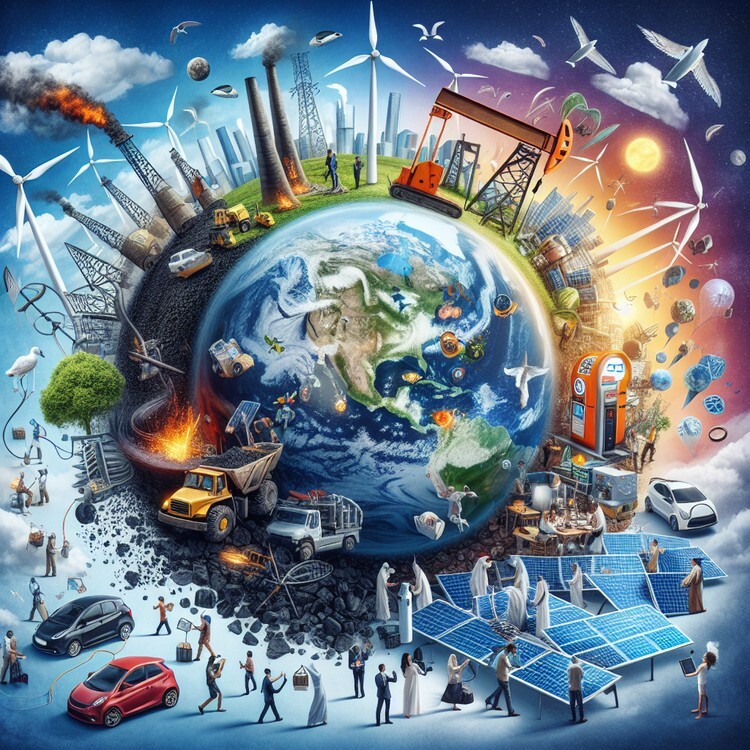
The world is approaching a significant milestone in its use of fossil fuels. Experts predict that we are nearing 'peak' fossil fuels, meaning that global demand for coal, oil, and gas will start to decline. This is a remarkable achievement, but it also raises important questions about how quickly we can transition to a clean energy system and avoid further damage to the planet. The UN climate conference in Dubai is focused on addressing these challenges.
The International Energy Agency (IEA) forecasts that global fossil fuel use will peak in 2025, even without new climate policies. This is considered a historic turning point by the IEA Executive Director. However, transitioning away from fossil fuels will not be easy. Energy is not just another input in the global economy; it is the economy itself. We have become a fossil fuel society, relying on massive amounts of energy for steel production, cement manufacturing, and liquid fuels. The scale of our energy consumption is staggering.
For most of human history, we lived in poverty and drudgery. However, the industrial revolution, fueled by coal, oil, and gas, brought about explosive economic growth and improved living standards. Today, energy is central to everything we do. The challenge now is to switch to renewable energy sources. Wind and solar power have been growing rapidly, but they still only account for around 2% of global energy supply. The majority of our energy still comes from fossil fuels.
The key to reducing our reliance on fossil fuels lies in electrifying everything. Electric devices tend to be more efficient than those powered by fossil fuels, resulting in reduced energy demand. Renewable electricity is becoming cheaper than fossil fuels, which will save us money in the long run. Private investment, rather than government subsidies, should drive the transition to renewable energy. However, upfront costs remain a challenge, particularly for poorer countries. Efforts are being made to facilitate financing for renewables in these countries, which could unlock significant investment.
The transition to clean energy is happening worldwide and is unstoppable. However, the scale of the challenge is immense. We need to electrify everything for everyone on the planet within a couple of decades. This urgency explains why we have had 28 COP conferences and still haven't solved the climate problem. It is crucial that we continue to work towards a sustainable future and accelerate the transition to renewable energy sources.
Original news source: Fossil fuels: Can humanity really kick its addiction? (BBC)
🎧 Listen:
📖 Vocabulary:
Group or Classroom Activities
Warm-up Activities:
– News Summary
Instructions:
1. Divide the class into pairs or small groups.
2. Give each group a copy of the article.
3. Ask each group to read the article and write a summary of the key points.
4. After a designated time, have each group share their summary with the class.
– Word Association
Instructions:
1. Write the words "fossil fuels" on the board.
2. Ask one student to say a word that is associated with "fossil fuels" (e.g. "coal").
3. The next student must say a word associated with the previous word (e.g. "mining").
4. Continue the game, with each student saying a word associated with the previous word.
5. If a student cannot think of a word or repeats a word, they are out.
6. The game continues until there is only one student left.
– Sketch It
Instructions:
1. Divide the class into pairs.
2. Give each pair a piece of paper and a pen or pencil.
3. Ask one student in each pair to describe a scene or concept related to the article (e.g. "a wind turbine").
4. The other student must then draw what they think the scene or concept looks like based on the description.
5. After a designated time, have each pair share their drawing with the class.
– Headline Creation
Instructions:
1. Divide the class into small groups.
2. Ask each group to create a headline for an article about the transition to renewable energy.
3. Encourage students to be creative and catchy with their headlines.
4. After a designated time, have each group share their headline with the class.
5. Discuss the different headlines and why they are effective or not.
– Future Predictions
Instructions:
1. Ask each student to think about what the world will look like in 50 years in terms of energy use.
2. In pairs or small groups, have students discuss and write down their predictions.
3. After a designated time, have each group share their predictions with the class.
4. Discuss the different predictions and the reasons behind them.
🤔 Comprehension Questions:
The significance of reaching 'peak' fossil fuels is that it marks the point where global demand for coal, oil, and gas will start to decline.
The International Energy Agency predicts that global fossil fuel use will peak in 2025, even without new climate policies.
Transitioning away from fossil fuels is challenging because energy is deeply embedded in the global economy and society. We rely on massive amounts of energy for various industries and daily activities.
The industrial revolution, fueled by coal, oil, and gas, brought about explosive economic growth and improved living standards. As a result, we have become heavily reliant on fossil fuels for our energy needs.
Wind and solar power currently account for around 2% of global energy supply.
Electrifying everything can help reduce our reliance on fossil fuels because electric devices tend to be more efficient than those powered by fossil fuels, resulting in reduced energy demand.
Private investment should drive the transition to renewable energy. It is believed that private investment, rather than government subsidies, will be the key driver in accelerating the adoption of renewable energy sources.
Financing for renewables is a challenge for poorer countries because upfront costs for renewable energy infrastructure can be high. These countries may lack the financial resources to invest in renewable energy projects without external support or financing mechanisms.
🎧✍️ Listen and Fill in the Gaps:
The world is approaching a significant milestone in its use of fossil fuels. Experts predict that we are nearing 'peak' fossil fuels, meaning that global demand for coal, oil, and gas will start to . This is a remarkable , but it also raises important questions about how quickly we can transition to a energy system and avoid further damage to the planet. The UN climate conference in Dubai is focused on addressing these challenges. The International Energy Agency (IEA) that global fossil fuel use will peak in 2025, even without new climate policies. This is considered a historic turning point by the IEA Director. However, transitioning away from fossil fuels will not be easy. Energy is not just another input in the global economy; it is the economy itself. We have a fossil fuel society, on massive amounts of energy for steel production, cement manufacturing, and liquid fuels. The scale of our energy consumption is staggering. For most of human history, we lived in poverty and drudgery. However, the industrial revolution, fueled by coal, oil, and gas, brought about explosive economic growth and improved living standards. Today, energy is central to everything we do. The now is to switch to energy sources. Wind and solar have been growing rapidly, but they still only account for around 2% of global energy supply. The majority of our energy still comes from fossil . The key to reducing our reliance on fossil fuels lies in electrifying everything. Electric devices tend to be more efficient than those powered by fossil fuels, resulting in reduced energy demand. Renewable electricity is becoming cheaper than fossil fuels, which will save us money in the long run. Private investment, rather than government subsidies, should the transition to renewable energy. However, upfront costs a challenge, particularly for poorer countries. Efforts are being made to financing for renewables in these countries, which could unlock significant investment. The transition to clean energy is happening worldwide and is unstoppable. However, the scale of the challenge is immense. We need to electrify everything for everyone on the planet within a couple of decades. This explains why we have had 28 COP conferences and still haven't solved the climate problem. It is crucial that we continue to work towards a future and accelerate the transition to renewable energy sources.
💬 Discussion Questions:
1. What is your opinion on the prediction that global demand for fossil fuels will start to decline?
2. How would you feel if the world transitioned to a clean energy system quickly and avoided further damage to the planet?
3. Do you like the idea of relying more on renewable energy sources like wind and solar power? Why or why not?
4. Do you think it is possible for private investment to drive the transition to renewable energy, rather than government subsidies? Why or why not?
5. How do you think upfront costs for transitioning to renewable energy could be overcome, especially in poorer countries?
6. What is your opinion on the statement that the transition to clean energy is happening worldwide and is unstoppable?
7. How do you think electrifying everything could help reduce our reliance on fossil fuels?
8. Do you think renewable electricity becoming cheaper than fossil fuels will truly save us money in the long run? Why or why not?
9. How do you think efforts to facilitate financing for renewables in poorer countries could unlock significant investment?
10. What challenges do you think the world will face in electrifying everything for everyone on the planet within a couple of decades?
11. How do you feel about the fact that we have had 28 COP conferences and still haven't solved the climate problem?
12. What do you think needs to be done in order to accelerate the transition to renewable energy sources?
13. How do you think a sustainable future can be achieved?
14. Do you think it is important for individuals to take action in their own lives to reduce reliance on fossil fuels? Why or why not?
15. How do you think the transition to clean energy will impact the global economy?
Individual Activities
📖💭 Vocabulary Meanings:
Click a dot next to a word, then click the dot next to its meaning to draw a line connecting them.
Words
Meanings
🔡 Multiple Choice Questions:
🕵️ True or False Questions:
📝 Write a Summary:
Write a summary of this news article in two sentences.
Check your writing now with the best free AI for English writing!