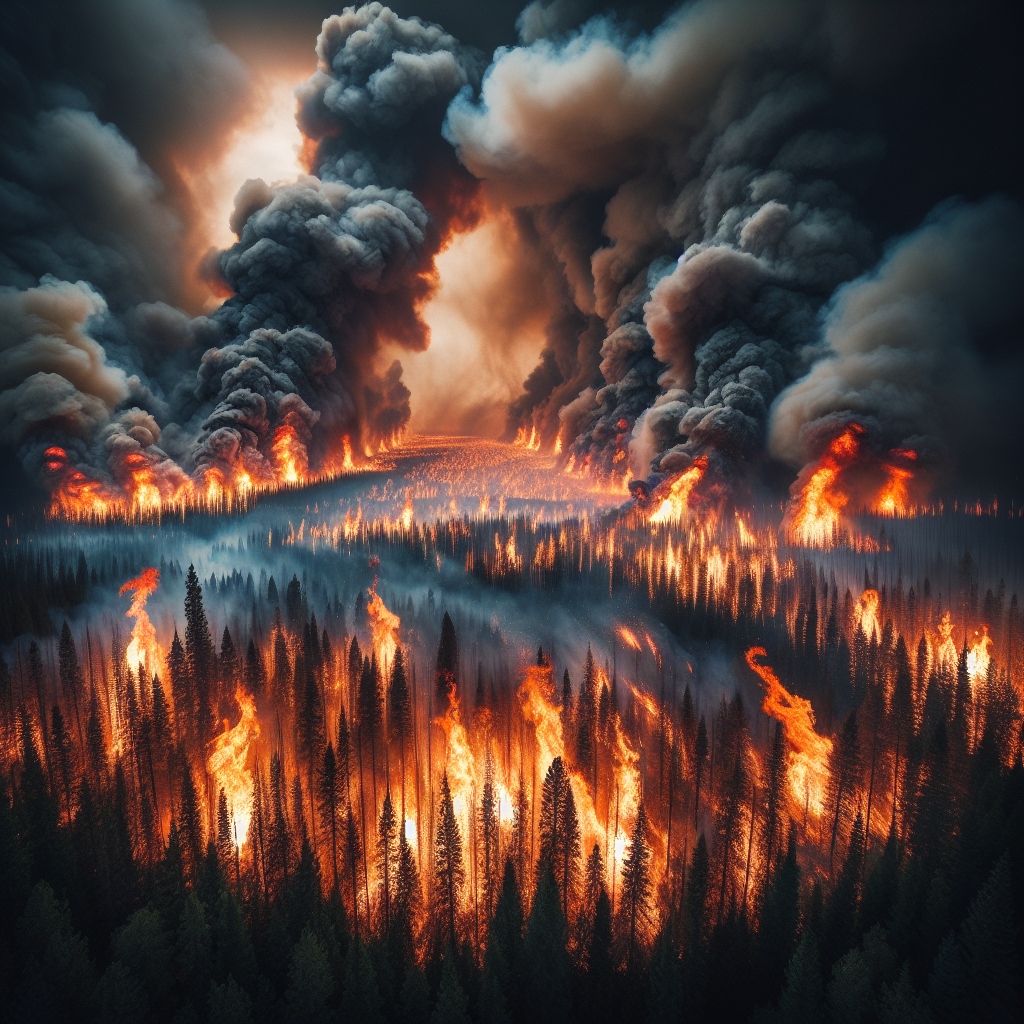
Canada is currently experiencing a high number of wildfires, particularly in the western regions of the country. Severe drought conditions have contributed to the spread of these fires, leading to the evacuation of thousands of people. The town of Fort McMurray in Alberta, which was devastated by wildfires in 2016, has once again been affected, with residents being forced to evacuate. Other areas, such as Fort Nelson in British Columbia and Cranberry Portage in Manitoba, have also been impacted by fires.
The fires have been caused by a combination of factors. In some cases, high winds have knocked over trees, causing them to crash onto power lines and ignite fires. Lightning strikes have also been a common cause of wildfires. Additionally, human activity, such as careless behavior or arson, can contribute to the start of fires. Climate change and warming temperatures are also playing a role in the increasing frequency of wildfires in Canada. Dry regions, particularly in the northwest provinces, are becoming more susceptible to fires due to the warming climate.
The wildfire season in Canada has been starting earlier and earlier in recent years. Traditionally, the season began in July or August, but now it is starting as early as May. Last year, Canada experienced its worst fire season on record, with approximately 18.5 million hectares of land burned. This year, while the season has started early again, experts predict that it may not be as severe as last year. The severity of the wildfire season is dependent on weather conditions throughout the summer.
The Canadian government has warned of the possibility of another "catastrophic" wildfire season due to warmer-than-usual weather. However, it is important to note that the extent of the season will ultimately be determined by weather patterns as the summer progresses. Efforts are being made to combat and control the fires, but it may take weeks to fully extinguish them. In the meantime, air quality alerts have been issued due to the smoke from the fires, affecting both Canada and the United States.
Original news source: Why is Canada having so many wildfires this season? (BBC)
🎧 Listen:
📖 Vocabulary:
Group or Classroom Activities
Warm-up Activities:
– News Summary
Instructions: Divide the class into pairs or small groups. Give each group a few minutes to read the article. Then, ask them to summarize the main points of the article in a few sentences. After they have completed their summaries, have each group share their summary with the class.
– Opinion Poll
Instructions: Have the students form pairs or small groups. Ask them to discuss their opinions on the following question: "Do you think climate change is the main cause of the increasing frequency of wildfires in Canada?" After they have discussed their opinions, have each group share their thoughts with the class. Then, conduct a class-wide poll by having students raise their hands to indicate whether they agree or disagree with the statement. Encourage students to explain their reasoning.
– Vocabulary Pictionary
Instructions: Write a selection of vocabulary words from the article on the board. Divide the class into teams. Each team will take turns sending one member to the front of the class. The teacher will whisper a vocabulary word to that student, who will then have to draw a picture to represent that word. The student's team members must guess the word based on the drawing. The team with the most correct guesses wins.
– Pros and Cons
Instructions: Divide the class into two groups. Assign one group to argue the pros of early wildfire seasons in Canada, and assign the other group to argue the cons. Give the groups a few minutes to brainstorm their points. Then, have each group take turns presenting their arguments to the class. Encourage students to use persuasive language and support their arguments with evidence from the article.
– Future Predictions
Instructions: Ask the students to imagine that they are experts on climate change and wildfires. In pairs or small groups, have them discuss and make predictions about the future of wildfires in Canada. What do they think will happen in the coming years? Will the frequency and severity of wildfires continue to increase? After they have discussed their predictions, have each group share their thoughts with the class.
🤔 Comprehension Questions:
Western regions of the country, including Alberta, British Columbia, and Manitoba.
Severe drought conditions, high winds knocking over trees onto power lines, lightning strikes, human activity (careless behavior or arson), and climate change.
Fort McMurray.
Climate change and warming temperatures have made dry regions, particularly in the northwest provinces, more susceptible to fires.
Traditionally, the season began in July or August. Now, it is starting as early as May.
Canada experienced its worst fire season on record, with approximately 18.5 million hectares of land burned.
The severity of the wildfire season is dependent on weather conditions throughout the summer.
Efforts are being made to combat and control the fires, but it may take weeks to fully extinguish them.
🎧✍️ Listen and Fill in the Gaps:
Canada is currently experiencing a high number of wildfires, particularly in the western of the country. Severe conditions have contributed to the spread of these fires, leading to the evacuation of thousands of people. The town of Fort McMurray in , which was devastated by wildfires in 2016, has once again been affected, with residents being forced to evacuate. Other areas, such as Fort Nelson in British and Cranberry Portage in Manitoba, have also been impacted by fires. The fires have been caused by a combination of factors. In some cases, high winds have knocked over , causing them to crash onto power and ignite fires. Lightning strikes have also been a common cause of wildfires. Additionally, human activity, such as careless behavior or arson, can contribute to the start of fires. Climate change and warming temperatures are also playing a role in the frequency of wildfires in Canada. Dry regions, particularly in the northwest , are becoming more susceptible to fires due to the warming climate. The wildfire season in Canada has been starting earlier and earlier in recent years. Traditionally, the season began in July or , but now it is starting as early as May. Last year, Canada its worst fire season on record, with approximately 18.5 million hectares of land burned. This year, while the season has early again, predict that it may not be as severe as last year. The severity of the wildfire season is dependent on weather conditions throughout the summer. The government has warned of the possibility of another "catastrophic" season due to warmer-than-usual weather. However, it is important to note that the extent of the season will ultimately be determined by weather as the summer progresses. Efforts are being made to combat and control the fires, but it may take weeks to fully extinguish them. In the meantime, air alerts have been issued due to the smoke from the fires, affecting both Canada and the United States.
💬 Discussion Questions:
1. What is your opinion on the increasing frequency of wildfires in Canada?
2. How would you feel if you had to evacuate your home due to a wildfire?
3. Do you think climate change is the main cause of the increasing severity of wildfire seasons in Canada? Why or why not?
4. What measures do you think the Canadian government should take to prevent wildfires?
5. Have you ever experienced a wildfire or natural disaster? If so, how did it impact you?
6. Do you think the media accurately portrays the severity of wildfires in Canada? Why or why not?
7. What steps can individuals take to reduce the risk of wildfires in their communities?
8. How do you think the increasing frequency of wildfires in Canada will impact the country's economy?
9. Do you think the government should provide financial assistance to individuals affected by wildfires? Why or why not?
10. How do you think the smoke from wildfires affects the health of residents in affected areas?
11. Have you ever been affected by poor air quality due to smoke or pollution? How did it impact you?
12. Do you think enough is being done to educate the public about the causes and prevention of wildfires? Why or why not?
13. What is the role of the international community in assisting countries like Canada in managing and preventing wildfires?
14. Do you think the severity of wildfire seasons will continue to increase in the future? Why or why not?
15. What impact do you think wildfires have on wildlife and the natural environment?
Individual Activities
📖💭 Vocabulary Meanings:
Click a dot next to a word, then click the dot next to its meaning to draw a line connecting them.
Words
Meanings
🔡 Multiple Choice Questions:
🕵️ True or False Questions:
📝 Write a Summary:
Write a summary of this news article in two sentences.
Check your writing now with the best free AI for English writing!