

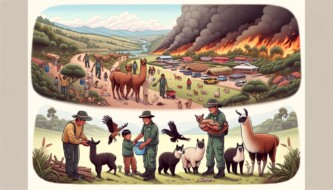
One region that has been particularly affected is San Buenaventura, located in the mountainous northwest of the country. The wildfires have caused destruction to crops, animals, and forests, according to local farmer Rilvert Salinas Pariamo. The rising temperatures have exacerbated the situation, leading to a trail of devastation.
Despite the challenges, some locals in San Buenaventura have gone above and beyond to care for the affected creatures. Heartwarming images shared by Reuters show a mother and son caring for a coati (raccoon), two men preparing water and fruit for animals, and a coati enjoying the food left out by the locals. Additionally, park ranger Radamir Sevillanos of the Madidi National Park has been searching for injured or trapped animals.
The efforts of these individuals highlight the resilience and compassion of the community in the face of adversity. They serve as a reminder of the importance of coming together to protect and care for the environment and its inhabitants. The wildfires in Bolivia are a stark reminder of the impact of climate change and the urgent need for global action to address this issue.
In conclusion, wildfires in Bolivia have caused significant damage to the land and have left animals in need of assistance. Despite the challenges, locals in San Buenaventura have shown great compassion by caring for the affected creatures. These efforts highlight the importance of community and global action in addressing the impact of climate change.
Original news source: Bolivia wildfires: Locals care for animals affected by blazes (BBC)
📖 Vocabulary:
Group or Classroom Activities
Warm-up Activities:
– News Summary
Instructions: In pairs, students will read the article and then summarize the main points in their own words. They should focus on key details such as the extent of the damage, the impact on animals, and the efforts of the locals. Afterward, they can share their summaries with the class and discuss any differences or similarities.
– Opinion Poll
Instructions: Divide the class into small groups. Each group will come up with three questions related to the article, such as "Do you think the international community should provide aid to Bolivia?" or "What can individuals do to address climate change?" Each group will then take turns asking their questions to the other groups and recording their responses. Afterward, they can share their findings with the class and engage in a discussion about the different perspectives.
– Sketch It
Instructions: In pairs, students will take turns describing a scene from the article while their partner tries to sketch it based on their description. They should focus on capturing the key elements and details of the scene, such as the wildfires, the animals, or the efforts of the locals. Afterward, they can compare their sketches and discuss the challenges and successes of their communication.
– Vocabulary Pictionary
Instructions: Create a list of key vocabulary words from the article, such as "wildfires," "devastating," "resilience," or "global action." Divide the class into two teams. Each team will take turns choosing a word from the list and drawing it on the board without using any letters or numbers. The other team will then try to guess the word based on the drawing. The team with the most correct guesses wins.
– Pros and Cons
Instructions: In small groups, students will discuss the pros and cons of providing aid to Bolivia in response to the wildfires. They should consider factors such as the impact on the environment, the potential effectiveness of the aid, and the ethical responsibility of the international community. Afterward, each group will share their thoughts with the class and engage in a debate on the topic.
🤔 Comprehension Questions:
Around 3 million hectares have been affected by wildfires in Bolivia.
San Buenaventura, located in the mountainous northwest of the country, has been particularly affected by the wildfires.
The wildfires have caused destruction to crops, animals, and forests in San Buenaventura.
President Luis Arce has called on the international community to provide aid to Bolivia.
Some locals in San Buenaventura have cared for the affected animals by providing water, fruit, and food for them.
The rising temperatures have exacerbated the situation in Bolivia, leading to a trail of devastation.
Park ranger Radamir Sevillanos of the Madidi National Park has been searching for injured or trapped animals.
The wildfires in Bolivia are a stark reminder of the impact of climate change and the urgent need for global action to address this issue.
🎧✍️ Listen and Fill in the Gaps:
In Bolivia, wildfires have caused damage to the land, with around 3 million affected. This has had a devastating impact on the country's animals, leaving them exposed and in need of help. President Luis Arce has on the international community to provide aid to Bolivia, as a portion of the Amazon rainforest is located there. One region that has been particularly affected is San , located in the mountainous northwest of the country. The wildfires have caused destruction to crops, animals, and forests, to local farmer Rilvert Salinas Pariamo. The rising have exacerbated the situation, to a trail of devastation. Despite the challenges, some locals in San Buenaventura have gone above and beyond to care for the creatures. Heartwarming images shared by Reuters show a mother and son caring for a coati (raccoon), two men preparing water and fruit for animals, and a coati enjoying the food left out by the locals. Additionally, park ranger Sevillanos of the Madidi National Park has been searching for injured or trapped animals. The of these individuals highlight the resilience and of the community in the face of adversity. They serve as a of the importance of coming together to protect and care for the environment and its inhabitants. The wildfires in Bolivia are a stark reminder of the of and the urgent need for global action to address this issue. In conclusion, wildfires in Bolivia have caused significant damage to the land and have left animals in need of assistance. Despite the , locals in San Buenaventura have shown great compassion by caring for the affected creatures. These efforts highlight the importance of community and global action in addressing the impact of climate change.
💬 Discussion Questions:
1. What is your opinion on the international community providing aid to Bolivia in response to the wildfires?
2. How would you feel if you were a farmer in San Buenaventura and your crops were destroyed by the wildfires?
3. Do you think the efforts of the locals in San Buenaventura to care for the affected animals will make a significant difference? Why or why not?
4. How do you think climate change has contributed to the wildfires in Bolivia?
5. What actions do you believe should be taken to address the impact of climate change globally?
6. How would you feel if you were a park ranger like Radamir Sevillanos and had to search for injured or trapped animals in the aftermath of the wildfires?
7. Do you think the images of locals caring for animals in Bolivia will inspire others to take action to protect the environment? Why or why not?
8. What is your opinion on the resilience and compassion shown by the community in San Buenaventura in the face of adversity?
9. How do you think the wildfires in Bolivia will impact the local economy?
10. Do you think the international community has a responsibility to provide aid to countries affected by natural disasters? Why or why not?
11. How would you feel if you were an animal living in the affected areas of Bolivia during the wildfires?
12. What steps do you believe should be taken to prevent future wildfires in Bolivia and other at-risk areas?
13. Do you think the wildfires in Bolivia will have long-lasting effects on the environment? Why or why not?
14. How do you think the wildfires in Bolivia will impact the country's tourism industry?
15. What actions can individuals take in their own communities to address the impact of climate change?
Individual Activities
📖💭 Vocabulary Meanings:
Click a dot next to a word, then click the dot next to its meaning to draw a line connecting them.
Words
Meanings
🔡 Multiple Choice Questions:
🕵️ True or False Questions:
📝 Write a Summary:
Write a summary of this news article in two sentences.
Check your writing now with the best free AI for English writing!