

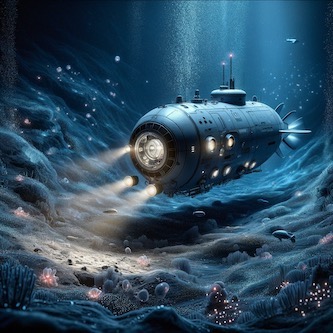
Walsh's first reaction to the mission was surprise, as he had only been 100 meters deep in a submarine before. However, he believed that the submersible, called the bathyscaphe Trieste, could handle the immense pressure of the Mariana Trench. On January 23, 1960, Walsh and Swiss oceanographer Jacques Piccard began their descent. Inside the small submersible, they experienced extreme cold and increasing pressure as they descended into the darkness.
After hours of descent, they finally reached the bottom of the Mariana Trench. However, due to the sediment stirred up by their landing, they were unable to capture a photograph of the deepest place in the ocean. Despite this, Walsh and Piccard made history and received recognition for their achievement. Walsh went on to advocate for ocean exploration and safety within the industry.
In 2012, filmmaker James Cameron repeated the dive, and Walsh was there to congratulate him. In 2019, Walsh's son, Kelly Walsh, also made the dive, going 8 meters deeper than his father. Walsh's focus on the ocean, once considered the "wrong direction" compared to space exploration, is now recognized as crucial. Recent technological advancements have revealed the importance of the deep sea in understanding Earth's systems, including its role in the carbon cycle and climate change. Walsh's dive paved the way for further research and exploration of the ocean's depths.
Original news source: Don Walsh: The man who made the deepest ever dive (BBC)
📖 Vocabulary:
Group or Classroom Activities
Warm-up Activities:
– News Reporter Role-play
Instructions: Students pair up and one plays the role of a reporter while the other is Captain Don Walsh. The 'reporter' interviews 'Walsh' about his historic descent into the Mariana Trench, his feelings about the mission, and the importance of ocean exploration. Encourage students to use past tenses for the historical event and future tenses for discussing the implications of ocean exploration.
– Opinion Poll
Instructions: Pose a question to the class such as "Do you believe deep-sea exploration is as important as space exploration?" Have students move to different areas of the room based on their opinion (strongly agree, agree, neutral, disagree, strongly disagree). Allow students to discuss their reasons with peers and then share with the class, using persuasive language and referencing the article.
– Article Timeline
Instructions: On the board, draw a simple timeline starting from the historic dive in 1960 to the recent achievements and technological advancements in ocean exploration. Ask students to fill in the timeline with key events mentioned in the article, using the correct tenses and dates. They can work in small groups and present their timelines to the class afterward.
– Vocabulary Pictionary
Instructions: Write down key vocabulary from the article on slips of paper (e.g., 'submersible', 'Mariana Trench', 'sediment', 'carbon cycle'). Students take turns drawing a slip and illustrating the word on the board without speaking or writing any letters. The rest of the class tries to guess the word. This activity focuses on reinforcing new vocabulary while engaging students in a fun and interactive way.
– Future Predictions
Instructions: Ask students to imagine the future of ocean exploration based on the progress and technological advancements mentioned in the article. Each student writes down one or two predictions for the next 50 years. Then, they share their predictions with a partner, discussing the potential outcomes and challenges of such explorations. Encourage them to use future tense constructions and modals for speculation (e.g., "might", "could", "will likely").
🤔 Comprehension Questions:
Captain Don Walsh passed away at the age of 92.
Walsh made history over 60 years ago by descending to the deepest point in the ocean.
The name of the submersible used by Walsh and Jacques Piccard was the bathyscaphe Trieste.
Walsh and Piccard began their historic descent on January 23, 1960.
Walsh and Piccard were unable to capture a photograph of the deepest place in the ocean because the sediment stirred up by their landing obscured their view.
Filmmaker James Cameron repeated the dive to the bottom of the Mariana Trench in 2012.
Kelly Walsh, Don Walsh's son, dove 8 meters deeper than his father.
Recent technological advancements have revealed the importance of the deep sea in understanding Earth's systems, including its role in the carbon cycle and climate change.
🎧✍️ Listen and Fill in the Gaps:
Captain Don Walsh, an ocean explorer, has passed away at the age of 92. Over 60 years ago, he made by descending to the deepest in the ocean, the Trench, which is nearly 11 kilometers (seven miles) deep. At the time, space exploration was capturing the world's attention, but Walsh had his sights set on exploring the depths of the ocean. He volunteered to join a with the US Navy, diving deeper than any human had gone before. Walsh's first reaction to the mission was , as he had only been 100 meters deep in a before. However, he that the submersible, called the bathyscaphe Trieste, could handle the immense of the Mariana Trench. On January 23, 1960, Walsh and Swiss oceanographer Jacques Piccard began their descent. Inside the small submersible, they experienced extreme cold and increasing pressure as they descended into the darkness. After hours of descent, they finally the bottom of the Mariana Trench. However, due to the sediment up by their landing, they were unable to capture a photograph of the deepest place in the . Despite this, Walsh and Piccard made history and received recognition for their achievement. Walsh went on to advocate for ocean exploration and safety within the industry. In 2012, James Cameron repeated the dive, and Walsh was there to congratulate him. In 2019, Walsh's son, Kelly Walsh, also made the dive, going 8 meters deeper than his father. Walsh's focus on the ocean, once considered the "wrong direction" compared to exploration, is now recognized as crucial. Recent advancements have revealed the importance of the deep sea in understanding Earth's systems, including its role in the carbon and climate change. Walsh's dive the way for further research and exploration of the ocean's depths.
💬 Discussion Questions:
1. What is your opinion on the importance of ocean exploration compared to space exploration? Why?
2. How would you feel if you had the opportunity to explore an unknown part of our planet, like the deep sea or outer space?
3. Do you think there is enough recognition given to explorers of the Earth's oceans? Why or why not?
4. What do you imagine are the biggest challenges faced by deep-sea explorers like Captain Don Walsh?
5. How do you think technological advancements have changed the way we explore and understand the ocean's depths since Walsh's historic dive?
6. Do you believe that exploring the deepest parts of the ocean is a valuable endeavor? Why or why not?
7. What is your perception of the risks involved in deep-sea exploration, and would you personally take those risks?
8. How do you feel about the fact that the deepest point in the ocean was reached over 60 years ago, yet much of the ocean remains unexplored?
9. Do you think the excitement and attention around space exploration overshadow the achievements made in ocean exploration?
10. How would you compare the legacies of ocean explorers like Don Walsh to that of astronauts?
11. Do you like the idea of following in a parent's footsteps to achieve a similar feat, as Kelly Walsh did by diving deeper than his father? Why or why not?
12. What is your opinion on the role of the deep sea in understanding Earth's climate and environmental systems?
13. How do you think the experience of being in a small submersible, like the Trieste, under extreme pressure and cold, would affect a person?
14. Do you think that the advancements in deep-sea exploration technology could lead to new industries or resources being developed from the ocean floor?
15. How do you think Captain Don Walsh's view of the ocean as a frontier for exploration influenced future generations of scientists and explorers?
Individual Activities
📖💭 Vocabulary Meanings:
Click a dot next to a word, then click the dot next to its meaning to draw a line connecting them.
Words
Meanings
🔡 Multiple Choice Questions:
🕵️ True or False Questions:
📝 Write a Summary:
Write a summary of this news article in two sentences.
Check your writing now with the best free AI for English writing!