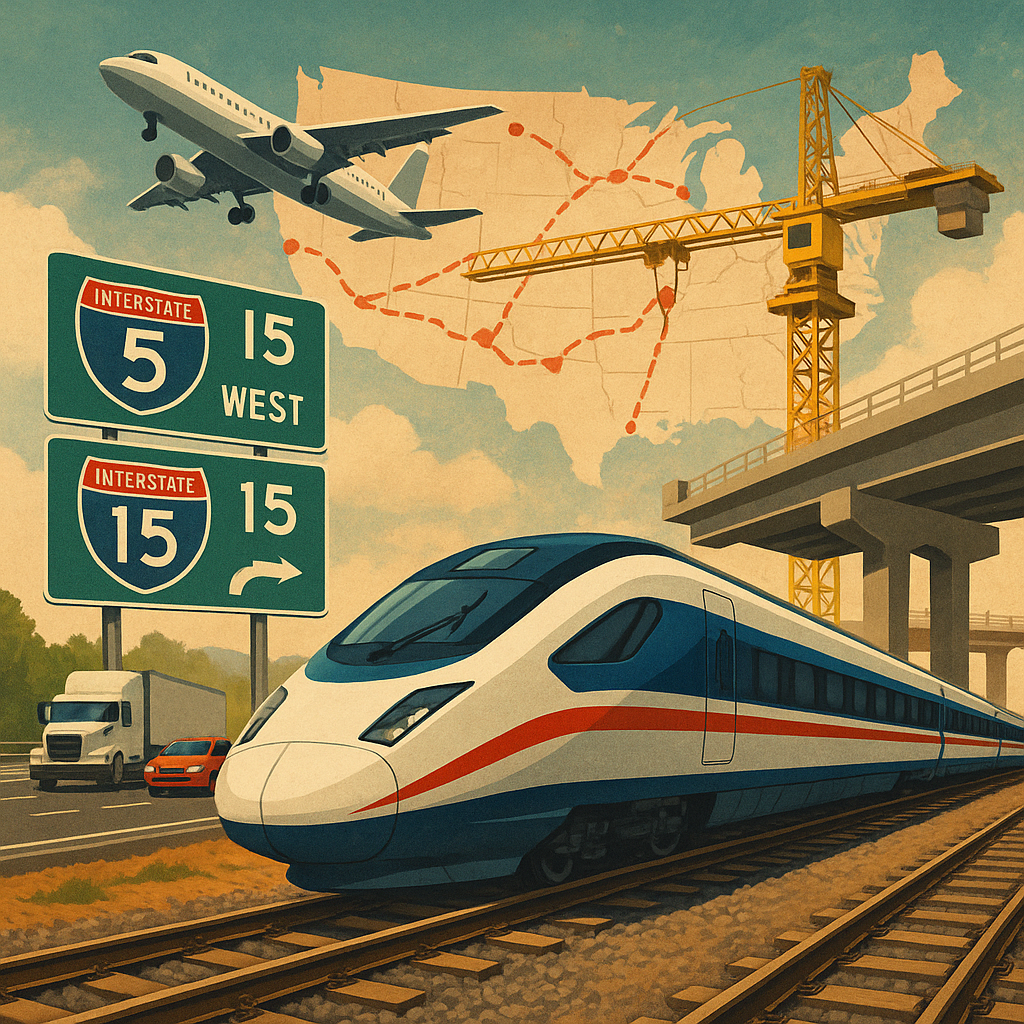
The United States, a nation of 340 million people, boasts an extensive network of interstate highways and public airports, yet it currently lacks a high-speed rail (HSR) system. However, recent developments indicate that the country may be on the verge of establishing its first high-speed rail lines. Two projects are currently under construction: the ambitious San Francisco to Los Angeles route, which faces significant geographical challenges, and the more straightforward Las Vegas to Los Angeles line. Additionally, plans for further connections, such as a line from Portland to Seattle and another between Dallas and Houston, are in the works. Despite these advancements, experts caution that progress is slow and uncertain.
Rick Harnish, a representative from the High Speed Rail Alliance, highlights the importance of these projects as a step towards modernizing the U.S. rail system. However, he also notes that the planning for the Portland-Seattle line is progressing at a sluggish pace, and the future of the Texas line appears uncertain following the cancellation of a substantial federal grant. In stark contrast, China’s high-speed rail network is set to exceed 50,000 kilometers this year, while Europe has developed over 8,500 kilometers of HSR lines, demonstrating a significant gap in infrastructure investment between these regions and the U.S.
The lack of a high-speed rail system in the U.S. can be attributed to a cultural preference for automobiles and a general skepticism about the necessity of such projects. Will Doig, an American rail industry journalist, emphasizes that many Americans are resistant to the idea of high-speed rail, particularly if it impacts their local communities. Furthermore, the U.S. government has shown a tendency to withdraw funding from rail initiatives, which complicates the establishment of a robust high-speed rail network.
Amtrak, the government-owned passenger train service, currently does not operate any high-speed trains, although it plans to introduce new Acela trains later this year. These trains will run on the Northeast Corridor, but only a small portion of the route allows for speeds exceeding 150 mph. The California High-Speed Rail project, expected to be completed by 2033, is being managed by the state of California, while the Brightline West line from Los Angeles to Las Vegas is a privately funded endeavor anticipated to open in 2028.
Experts argue that for high-speed rail to succeed in the U.S., a cultural shift towards public transportation is essential. The federal government must play a crucial role in supporting these initiatives. However, political challenges persist, as evidenced by recent federal decisions to withdraw funding from proposed projects. Scott Sherin from Alstom, a French train manufacturer, raises concerns about the political will to invest in rail infrastructure compared to other transportation modes. The densely built environments of major cities further complicate the feasibility of high-speed rail lines, indicating that significant changes are necessary for the U.S. to catch up with global standards in rail travel.
Original news source: Is the US finally on track to build a high-speed rail network? (BBC)
🎧 Listen:
📖 Vocabulary:
Group or Classroom Activities
Warm-up Activities:
– CHARADES
Instructions: Students will take turns acting out key terms related to high-speed rail without speaking, while the rest of the class guesses the word or phrase. Terms can include "high-speed rail," "interstate highways," "Amtrak," and "infrastructure."
– OPINION POLL
Instructions: Students will create a list of questions to gauge their peers' opinions on high-speed rail in the U.S., such as "Do you think high-speed rail is necessary?" and "What are the main benefits of having high-speed rail?" They will then conduct a quick survey in pairs and share their findings with the class.
– MIND MAP
Instructions: In small groups, students will create a mind map on a large sheet of paper, highlighting the pros and cons of establishing a high-speed rail system in the U.S. They will present their mind maps to the class in a brief discussion.
– SPEED SUMMARIZING
Instructions: Students will pair up and take turns summarizing the main points of the article in under one minute. After each summary, the listener must ask one clarifying question about the content to ensure understanding.
– FUTURE PREDICTIONS
Instructions: Students will write down their predictions for the future of high-speed rail in the U.S. on sticky notes. They will then share their thoughts with a partner, discussing what factors could influence the development of high-speed rail over the next decade.
🤔 Comprehension Questions:
The two high-speed rail projects currently under construction are the San Francisco to Los Angeles route and the Las Vegas to Los Angeles line.
The United States lacks a high-speed rail system, while China’s high-speed rail network is set to exceed 50,000 kilometers, and Europe has developed over 8,500 kilometers of HSR lines, demonstrating a significant gap in infrastructure investment.
Cultural factors include a preference for automobiles and skepticism about the necessity of high-speed rail projects, with many Americans resistant to the idea, especially if it impacts their local communities.
The San Francisco to Los Angeles high-speed rail project faces significant geographical challenges.
The future of the Texas high-speed rail line is uncertain following the cancellation of a substantial federal grant.
Amtrak currently does not operate any high-speed trains but plans to introduce new Acela trains later this year that will run on the Northeast Corridor.
Experts argue that a cultural shift towards public transportation is essential, along with increased federal government support for rail initiatives.
Political decisions, such as the federal government's tendency to withdraw funding from proposed projects, complicate the establishment and development of high-speed rail initiatives in the U.S.
🎧✍️ Listen and Fill in the Gaps:
The United States, a nation of 340 million people, boasts an extensive of interstate highways and public airports, yet it currently lacks a high-speed rail (HSR) system. However, recent developments indicate that the country may be on the verge of establishing its first high-speed rail lines. Two projects are currently under construction: the ambitious San Francisco to Los Angeles route, which faces significant geographical challenges, and the more straightforward Las to Los Angeles line. Additionally, for further connections, such as a line from Portland to Seattle and another between Dallas and , are in the works. Despite these advancements, experts caution that progress is slow and uncertain. Rick Harnish, a representative from the High Speed Rail Alliance, highlights the importance of these projects as a step towards modernizing the U.S. rail system. However, he also notes that the for the Portland-Seattle line is progressing at a sluggish pace, and the future of the Texas line appears uncertain following the cancellation of a substantial federal . In stark contrast, China’s high-speed rail network is set to 50,000 kilometers this year, while Europe has developed over 8,500 kilometers of HSR lines, demonstrating a significant gap in investment between these regions and the U.S. The lack of a high-speed rail system in the U.S. can be attributed to a cultural preference for automobiles and a general skepticism about the necessity of such projects. Will Doig, an American rail industry journalist, emphasizes that many Americans are resistant to the idea of high-speed rail, particularly if it impacts their local communities. Furthermore, the U.S. government has a tendency to withdraw funding from rail initiatives, which complicates the establishment of a robust high-speed rail network. Amtrak, the government-owned passenger train , currently does not operate any high-speed trains, although it plans to introduce new trains later this year. These trains will run on the Northeast Corridor, but only a small portion of the route allows for speeds 150 mph. The California High-Speed Rail project, expected to be completed by 2033, is being managed by the state of California, while the Brightline West line from Los Angeles to Las Vegas is a privately funded endeavor anticipated to open in 2028. Experts argue that for high-speed rail to succeed in the U.S., a shift towards public transportation is essential. The federal government must play a crucial role in supporting these initiatives. However, political challenges persist, as evidenced by recent federal decisions to withdraw funding from proposed projects. Scott Sherin from Alstom, a French train , concerns about the political will to invest in rail infrastructure compared to other transportation modes. The densely built environments of major cities further complicate the feasibility of high-speed rail lines, indicating that significant changes are necessary for the U.S. to catch up with standards in rail travel.
💬 Discussion Questions:
1. What is a high-speed rail system, and how do you think it differs from regular train services?
2. How would you feel if your city introduced a high-speed rail line?
3. Do you think the U.S. should prioritize developing high-speed rail over other transportation methods? Why or why not?
4. What is your opinion on the cultural preference for automobiles in the U.S.? Do you think it affects public transportation development?
5. Have you ever traveled on a high-speed train? If so, how was your experience compared to other forms of transportation?
6. How do you think high-speed rail could impact local communities positively or negatively?
7. Do you think that the government should invest more in public transportation, such as high-speed rail? Why or why not?
8. What are some potential challenges that high-speed rail projects might face in your country?
9. How would you feel if funding for a high-speed rail project in your area was cut?
10. Do you believe that high-speed rail can help reduce traffic congestion and pollution? Why or why not?
11. What is a significant difference you see between the U.S. and countries like China and those in Europe regarding transportation infrastructure?
12. How do you think public perception of high-speed rail can be changed to encourage more support for such projects?
13. Do you think high-speed rail is a necessary investment for the future of transportation? Why or why not?
14. What is your opinion on the balance between private and public funding for transportation projects like high-speed rail?
15. How would you feel if high-speed rail became the primary mode of transportation in your region?
Individual Activities
📖💭 Vocabulary Meanings:
Click a dot next to a word, then click the dot next to its meaning to draw a line connecting them.
Words
Meanings
🔡 Multiple Choice Questions:
🕵️ True or False Questions:
📝 Write a Summary:
Write a summary of this news article in two sentences.
Check your writing now with the best free AI for English writing!