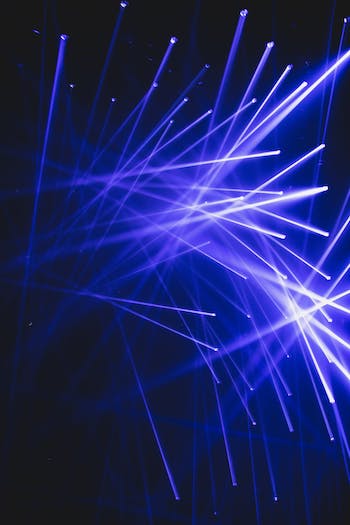
The development of blue LEDs was particularly challenging due to the difficulty in manufacturing the required material, gallium nitride, without defects. However, blue LEDs are essential for creating other colors in displays and are also used as the basis for white lights. Researchers are constantly working on improving LED technology, with scientists at Stanford University experimenting with LEDs made from perovskite crystals. These LEDs are cheap, easy to make, and can be tuned to desired colors. However, stability remains an issue that needs to be overcome.
In Japan, researchers have developed a blue LED that can be powered by a single AA battery, requiring only 1.47 volts instead of the usual 4 volts. This achievement was made possible by encouraging excited states within the LED to combine and produce light more efficiently. LED technology is also being explored for virtual reality and augmented reality devices, where extremely bright LEDs are needed for clear images. Companies are working on developing micro LEDs that are significantly smaller than current LEDs, allowing for even more compact and efficient devices.
LED technology continues to evolve, with researchers constantly pushing the boundaries of what is possible. There is still room for growth and improvement in the field of LEDs, and their potential applications are vast. From stadiums to landmarks to personal devices, LEDs have transformed the way we experience light and visual entertainment.
Original news source: The incredible power of blue LEDs (BBC)
📖 Vocabulary:
Group or Classroom Activities
Warm-up Activities:
– News Summary
Instructions: Ask students to read the article and write a brief summary of the main points. They should focus on capturing the key information and condensing it into a few sentences. After they have finished, have them compare their summaries with a partner and discuss any differences or similarities.
– Opinion Poll
Instructions: Divide the class into pairs or small groups. Ask each group to come up with a question related to the article that they can ask their classmates. The question should be something that elicits an opinion or personal response. Once the questions are prepared, have each group take turns asking their question to the rest of the class. Encourage discussion and debate around the different opinions shared.
– Word Association
Instructions: Provide the class with a list of words related to the article, such as "LEDs," "lighting," "technology," "innovation," etc. Have students take turns saying a word from the list and then quickly saying the first word that comes to mind. This can be done in a rapid-fire manner, with each student taking turns as quickly as possible. Encourage them to make connections between the words and discuss their associations.
– Sketch It
Instructions: Divide the class into pairs. Give each pair a whiteboard or a piece of paper and a marker. Ask one student in each pair to describe a scene or image related to the article while the other student tries to draw it based on the description. After a set amount of time, have the pairs switch roles. Once both students have had a chance to describe and draw, have them compare their drawings and discuss any differences or similarities.
– Future Predictions
Instructions: Ask students to imagine how LED technology could continue to evolve in the future. Have them write down their predictions and discuss them with a partner. Encourage them to think creatively and consider potential applications and advancements in LED technology. After the discussion, ask a few pairs to share their predictions with the class.
🤔 Comprehension Questions:
🎧✍️ Listen and Fill in the Gaps:
Blue LEDs have revolutionized the world of lighting and visual . These powerful LEDs were only invented in the 1990s and have since become a staple in stadiums, , and even the Las Vegas Sphere. The use of light-emitting diodes (LEDs) has for the creation of vibrant and dynamic light shows that enhance the spectator experience. LED technology has come a long way since its early days, when it was dismissed as ineffective. Engineers have been able to LEDs that emit more light, making them suitable for large-scale applications like stadiums. The development of blue LEDs was particularly challenging due to the difficulty in manufacturing the required , gallium nitride, without . However, blue LEDs are essential for creating other colors in displays and are also used as the basis for lights. Researchers are constantly working on improving LED technology, with scientists at Stanford University experimenting with LEDs made from crystals. These LEDs are cheap, easy to make, and can be tuned to desired . However, stability remains an issue that needs to be overcome. In Japan, researchers have a blue LED that can be powered by a single AA , only 1.47 volts instead of the usual 4 volts. This achievement was made possible by encouraging excited states within the LED to combine and produce light more efficiently. LED technology is also being explored for virtual reality and augmented reality devices, where extremely bright LEDs are needed for images. Companies are working on developing micro LEDs that are significantly smaller than current LEDs, for even more and efficient devices. LED technology continues to evolve, with researchers constantly pushing the boundaries of what is possible. There is still room for growth and improvement in the field of LEDs, and their potential are vast. From stadiums to landmarks to personal devices, LEDs have transformed the way we experience light and visual entertainment.
💬 Discussion Questions:
1. What is your opinion on the use of blue LEDs in lighting and visual entertainment?
2. How would you feel if all the stadiums and landmarks in your city were lit up with vibrant and dynamic light shows using LED technology?
3. Do you like the idea of using LED technology for virtual reality and augmented reality devices? Why or why not?
4. Do you think LED technology has had a significant impact on the way we experience light and visual entertainment? Why or why not?
5. How do you think the development of blue LEDs has revolutionized the world of lighting?
6. What is your experience with LED lights? Have you used them in your home or seen them in public spaces?
7. Do you think LED technology will continue to evolve and improve in the future? Why or why not?
8. What are some potential applications of LED technology that you can think of, beyond lighting and visual entertainment?
9. How important do you think it is for researchers to continue pushing the boundaries of LED technology?
10. What do you think are the advantages and disadvantages of using LEDs made from perovskite crystals?
11. How would you feel if all the light bulbs in your home were replaced with LED lights? Why?
12. Do you think LED technology will eventually replace traditional lighting methods? Why or why not?
13. What is your opinion on the use of extremely bright LEDs in virtual reality and augmented reality devices?
14. How do you think the development of micro LEDs could impact the design and functionality of personal devices?
15. What potential challenges or limitations do you see for the future of LED technology? Why?
Individual Activities
📖💭 Vocabulary Meanings:
Click a dot next to a word, then click the dot next to its meaning to draw a line connecting them.
Words
Meanings
🔡 Multiple Choice Questions:
🕵️ True or False Questions:
📝 Write a Summary:
Write a summary of this news article in two sentences.
Check your writing now with the best free AI for English writing!