

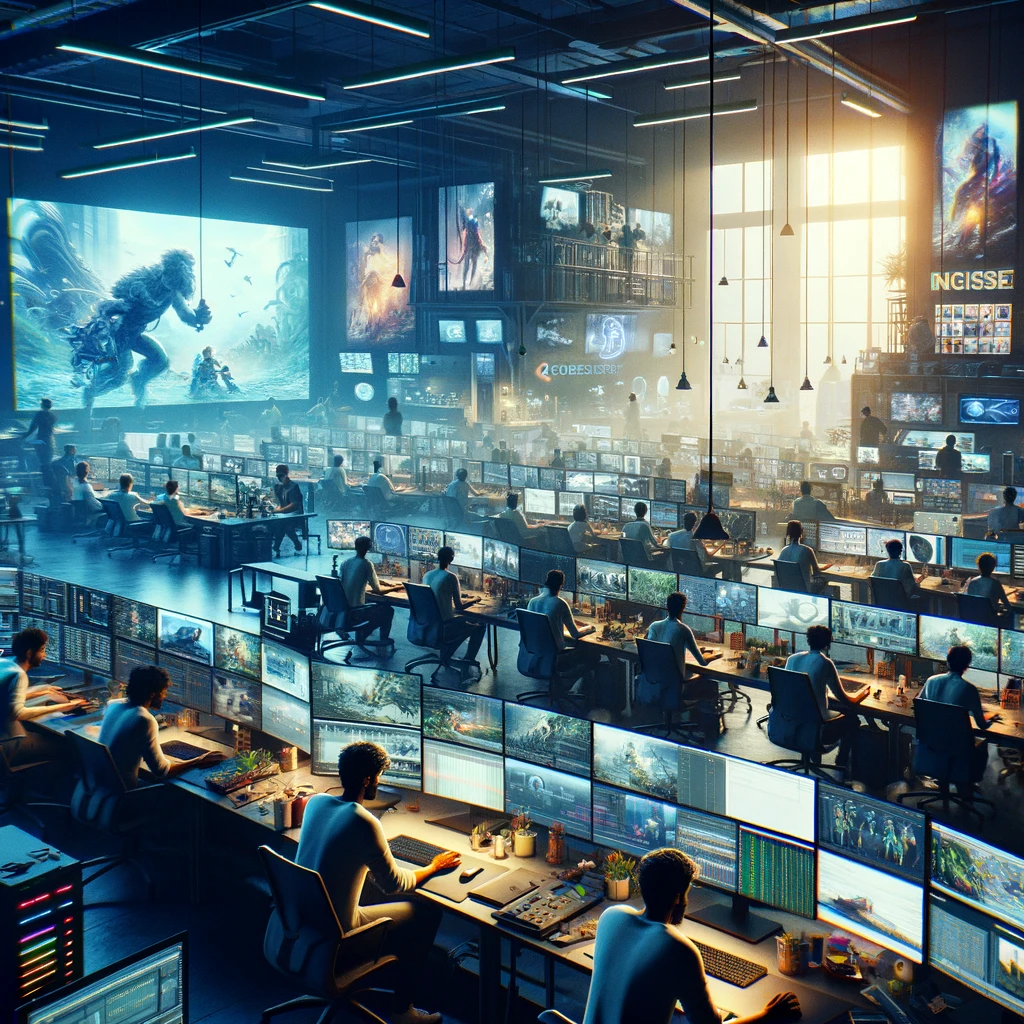
India's special effects industry is facing a staff shortage as demand for visual effects (VFX) increases. The industry has experienced a boom in recent years, with both domestic and international companies sending work to India. However, the recent strikes in Hollywood had a significant impact on the Indian market, leading to layoffs and delays in projects. Despite this setback, industry experts are confident that the market will recover. The next challenge for the Indian industry is finding enough skilled staff to meet the growing demand.
Currently, around 250,000 people work in the VFX and animation industry in India. However, it is estimated that by 2032, this number will need to balloon to 2.2 million. To address this shortage, the Animation, Visual Effects, Gaming and Comic (AVGC) Task Force is working with universities and colleges to develop courses and qualifications. The industry is also looking to involve senior members in education to inspire young people to pursue careers in VFX and animation.
While India has a large pool of young people with technical skills, such as engineering, there is a lack of courses that provide a deep understanding of filmmaking and the artistic side of visual effects. However, this shortfall is being addressed through the introduction of new VFX courses offered by universities and other institutions. Despite the potential for growth in the industry, the cost of VFX and animation courses, as well as the expensive hardware and software required for training, may pose a challenge for India. Industry experts suggest that big media and tech companies should contribute more to the cost to make these courses more accessible.
Artificial intelligence (AI) may also help alleviate the staff shortage in the industry. AI has already had a significant impact on the way films are made, allowing for quicker generation of CGI backgrounds, characters, and effects simulations. While some jobs may be lost to AI, it is seen as a powerful tool to enhance creativity and quality rather than a threat.
Despite the challenges, those working in the industry find great satisfaction in their work. The thrill of seeing their names in the credits of a film and the opportunity to work on fun and fantastical projects are some of the rewards of being part of the special effects industry in India.
Original news source: The staff shortage in India's special effects industry (BBC)
🎧 Listen:
📖 Vocabulary:
Group or Classroom Activities
Warm-up Activities:
– News Summary
Instructions: Divide the class into pairs or small groups. Give each group a few minutes to read the article. Then, ask them to summarize the main points of the article in one or two sentences. Have each group share their summary with the class.
– Opinion Poll
Instructions: Divide the class into pairs or small groups. Have each group discuss the following question: "Do you think the Indian special effects industry will be able to meet the growing demand for skilled staff?" After discussing their opinions, have each group present their views to the class.
– Word Association
Instructions: Write the word "VFX" on the board. Ask the class to brainstorm and write down as many words as they can think of that are associated with VFX and the special effects industry. After a few minutes, have each student share one word from their list and explain why they chose it.
– Sketch It
Instructions: Divide the class into pairs. Give each pair a few minutes to discuss and come up with a visual representation of the Indian special effects industry. They can draw a diagram, a mind map, or any other visual representation that captures the key aspects of the industry. Afterward, have each pair present their sketch to the class and explain their choices.
– Pros and Cons
Instructions: Divide the class into two groups. Assign one group to discuss the pros of working in the Indian special effects industry, and the other group to discuss the cons. Give each group a few minutes to brainstorm and come up with their points. Then, have each group present their arguments to the class and engage in a respectful debate.
🤔 Comprehension Questions:
🎧✍️ Listen and Fill in the Gaps:
India's special effects industry is facing a staff shortage as demand for visual effects (VFX) increases. The industry has experienced a boom in recent years, with both and companies sending work to India. However, the recent strikes in Hollywood had a significant impact on the Indian market, leading to layoffs and delays in projects. Despite this setback, industry are confident that the market will recover. The next challenge for the Indian industry is finding enough skilled staff to meet the demand. Currently, around 250,000 people work in the VFX and animation industry in . However, it is estimated that by 2032, this number will need to balloon to 2.2 million. To address this shortage, the Animation, Visual Effects, Gaming and Comic (AVGC) Task is working with and colleges to develop courses and qualifications. The industry is also looking to involve senior members in education to inspire young people to pursue in VFX and animation. While India has a large pool of young people with technical skills, such as engineering, there is a lack of courses that provide a deep understanding of filmmaking and the artistic side of effects. However, this shortfall is being addressed through the introduction of new VFX courses offered by universities and other institutions. Despite the potential for growth in the industry, the cost of VFX and animation courses, as well as the expensive and software required for training, may pose a challenge for India. Industry experts that big media and tech companies should more to the cost to make these courses more accessible. Artificial intelligence (AI) may also help alleviate the staff shortage in the . AI has already had a significant impact on the way films are made, allowing for quicker of CGI backgrounds, characters, and simulations. While some jobs may be lost to AI, it is seen as a powerful tool to creativity and quality rather than a threat. Despite the challenges, those working in the industry find great satisfaction in their work. The thrill of seeing their names in the credits of a film and the opportunity to work on fun and fantastical projects are some of the rewards of being part of the special effects industry in India.
💬 Discussion Questions:
1. What is the special effects industry and what role does it play in the film industry?
2. How would you feel if you were working in the special effects industry and experienced layoffs and delays in projects due to strikes in another country?
3. Do you think the Indian special effects industry will be able to recover from the setbacks caused by the strikes in Hollywood? Why or why not?
4. What challenges do you think the Indian special effects industry will face in finding enough skilled staff to meet the growing demand?
5. How do you think involving senior members in education can inspire young people to pursue careers in VFX and animation?
6. Do you think the introduction of new VFX courses offered by universities and other institutions will help address the shortfall in understanding of filmmaking and the artistic side of visual effects? Why or why not?
7. How do you think the cost of VFX and animation courses and the expensive hardware and software required for training can pose a challenge for India? What can be done to make these courses more accessible?
8. How do you think artificial intelligence (AI) can help alleviate the staff shortage in the special effects industry? What impact do you think AI will have on the industry as a whole?
9. Do you think AI is a threat to jobs in the special effects industry? Why or why not?
10. How do you think AI can enhance creativity and quality in the special effects industry?
11. What rewards do you think people working in the special effects industry in India find in their work?
12. How important do you think it is for big media and tech companies to contribute more to the cost of VFX and animation courses? Why or why not?
13. What other industries or fields do you think could benefit from the use of AI in a similar way to the special effects industry?
14. How do you think the special effects industry in India compares to the industry in other countries, such as Hollywood?
15. Would you consider pursuing a career in the special effects industry? Why or why not?
Individual Activities
📖💭 Vocabulary Meanings:
Click a dot next to a word, then click the dot next to its meaning to draw a line connecting them.
Words
Meanings
🔡 Multiple Choice Questions:
🕵️ True or False Questions:
📝 Write a Summary:
Write a summary of this news article in two sentences.
Check your writing now with the best free AI for English writing!