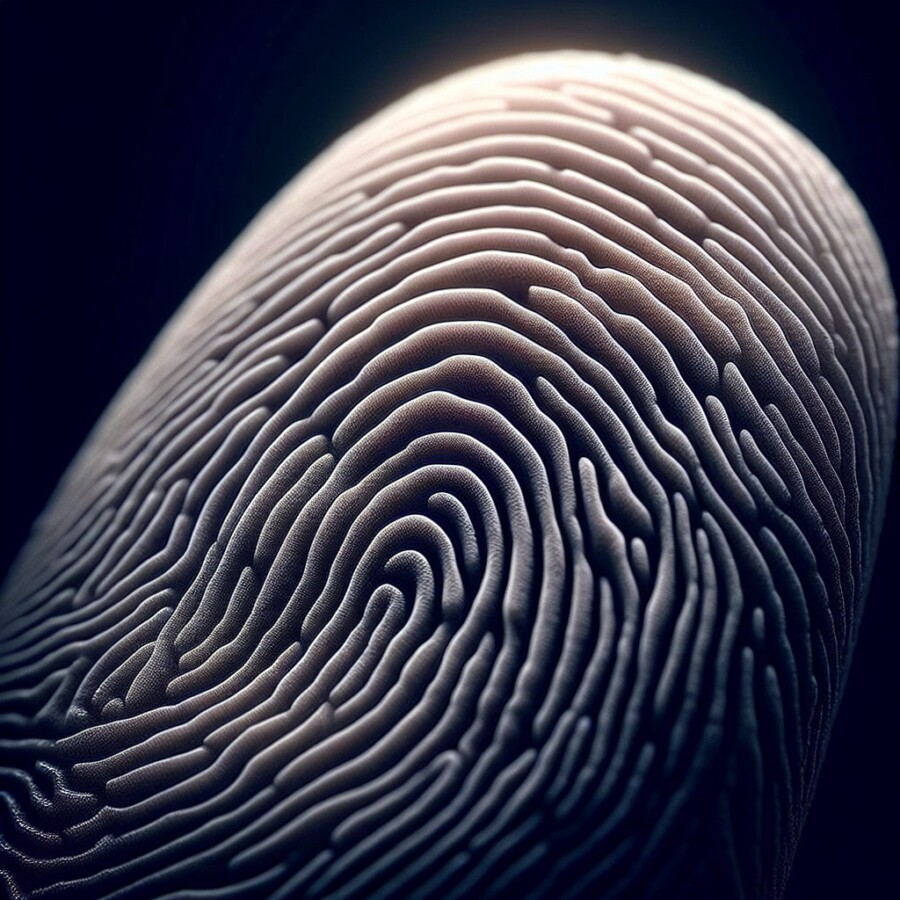
Recent research from Columbia University challenges the belief that each fingerprint is unique. The university's team trained an AI tool to analyze 60,000 fingerprints and determine whether prints from different fingers belonged to the same person. The technology was able to identify this with 75-90% accuracy, although the researchers are unsure of the exact method used by the AI. The tool seemed to focus on the orientation of the ridges in the center of the finger rather than the minutiae, which are the individual ridges' endings and forks. This approach differs from traditional forensic methods.
The results of this study could have implications for biometrics and forensic science. Currently, if an unidentified thumbprint is found at one crime scene and an unidentified index finger print at another, they cannot be forensically connected. However, the AI tool could potentially identify the connection. The researchers acknowledge that more research is needed, as the tool is not yet suitable for court cases. It is better suited for generating leads in forensic investigations.
Dr. Sarah Fieldhouse, an associate professor of forensic science, raises questions about the AI tool's markers and their consistency. She wonders if the markers remain the same when the skin twists upon contact with the print surface and over a person's lifetime. The researchers themselves are uncertain about how the AI tool works, as is often the case with AI-driven tools.
The Columbia University study has been peer-reviewed and will be published in the journal Science Advances. However, it is important to note that the study's findings may not have a significant impact on criminal casework at this stage. Despite this research, the belief that fingerprints are unique remains widely accepted.
Original news source: Our fingerprints may not be unique, claims AI (BBC)
🎧 Listen:
📖 Vocabulary:
Group or Classroom Activities
Warm-up Activities:
– News Summary
Instructions: In pairs, have students read the article and then summarize the main points in their own words. They should focus on the research findings, the implications for biometrics and forensic science, and the uncertainties surrounding the AI tool.
– Opinion Poll
Instructions: Divide the class into small groups. Have each group discuss and debate the following question: "Do you think the research findings challenge the belief that fingerprints are unique?" After the discussion, each group should conduct a poll within their group to determine the majority opinion. Then, have a representative from each group share their group's opinion and the poll results with the whole class.
– Pros and Cons
Instructions: Divide the class into two groups – one group representing the pros and the other representing the cons. Each group should brainstorm and discuss the advantages and disadvantages of the AI tool's ability to connect fingerprints from different fingers. After the discussion, have each group present their arguments to the class. Encourage a respectful debate and discussion among the students.
– Keyword Taboo
Instructions: Write down key words from the article on separate cards or pieces of paper. Divide the class into two teams. One student from each team will come to the front of the class. The teacher will show them a card with a keyword on it, and they will have to describe the word to their team without saying the keyword. The team members will try to guess the keyword. The team that guesses correctly in the shortest amount of time gets a point. Continue until all the keywords have been used.
– Future Predictions
Instructions: In pairs or small groups, have students discuss and make predictions about the future of fingerprint analysis and biometrics. They should consider the potential advancements in technology, the impact on forensic investigations, and any ethical concerns that may arise. After the discussion, have each group share their predictions with the class. Encourage students to support their predictions with reasoning and evidence from the article.
🤔 Comprehension Questions:
🎧✍️ Listen and Fill in the Gaps:
Recent research from Columbia challenges the belief that each is unique. The university's team an AI tool to analyze 60,000 fingerprints and determine whether prints from different fingers belonged to the same person. The technology was able to identify this with 75-90% accuracy, although the researchers are unsure of the method used by the AI. The tool seemed to focus on the orientation of the ridges in the center of the rather than the minutiae, which are the individual ridges' and forks. This approach differs from forensic . The results of this study could have implications for biometrics and forensic science. Currently, if an unidentified thumbprint is found at one crime scene and an unidentified index finger print at another, they cannot be forensically connected. However, the AI tool could potentially identify the connection. The researchers acknowledge that more research is needed, as the tool is not yet suitable for court cases. It is better suited for generating in forensic investigations. Dr. Sarah Fieldhouse, an associate professor of forensic science, raises questions about the AI tool's markers and their consistency. She wonders if the markers the same when the skin twists upon with the print and over a person's lifetime. The researchers themselves are uncertain about how the AI tool works, as is often the case with AI-driven . The University study has been peer-reviewed and will be published in the journal Science Advances. However, it is to note that the study's findings may not have a significant impact on criminal casework at this stage. Despite this research, the belief that are unique remains widely accepted.
💬 Discussion Questions:
1. What is your opinion on the belief that each fingerprint is unique?
2. How would you feel if you found out that your fingerprint was not as unique as you thought?
3. Do you think it is important for forensic science to accurately connect thumbprints and index finger prints from different crime scenes? Why or why not?
4. Have you ever had your fingerprints taken for any reason? How did you feel about it?
5. Do you think biometrics, such as fingerprints, are a reliable form of identification? Why or why not?
6. How do you think the AI tool analyzes the orientation of the ridges in the center of the finger?
7. Do you trust AI-driven tools in forensic investigations? Why or why not?
8. What other markers do you think could be used to identify fingerprints besides the ridges and minutiae?
9. How do you think the twisting of the skin upon contact with the print surface could affect the markers used to identify fingerprints?
10. Do you think the AI tool's method of focusing on the orientation of the ridges is more effective than traditional forensic methods? Why or why not?
11. How do you think this research could impact the future of biometrics and forensic science?
12. Do you think this research could potentially lead to wrongful convictions or releases in criminal cases? Why or why not?
13. Have you ever heard of any other scientific beliefs that were widely accepted but later proven to be incorrect?
14. How do you think the belief that fingerprints are unique became so widely accepted?
15. Do you think it is important for the general public to be aware of this research and its findings? Why or why not?
Individual Activities
📖💭 Vocabulary Meanings:
Click a dot next to a word, then click the dot next to its meaning to draw a line connecting them.
Words
Meanings
🔡 Multiple Choice Questions:
🕵️ True or False Questions:
📝 Write a Summary:
Write a summary of this news article in two sentences.
Check your writing now with the best free AI for English writing!