

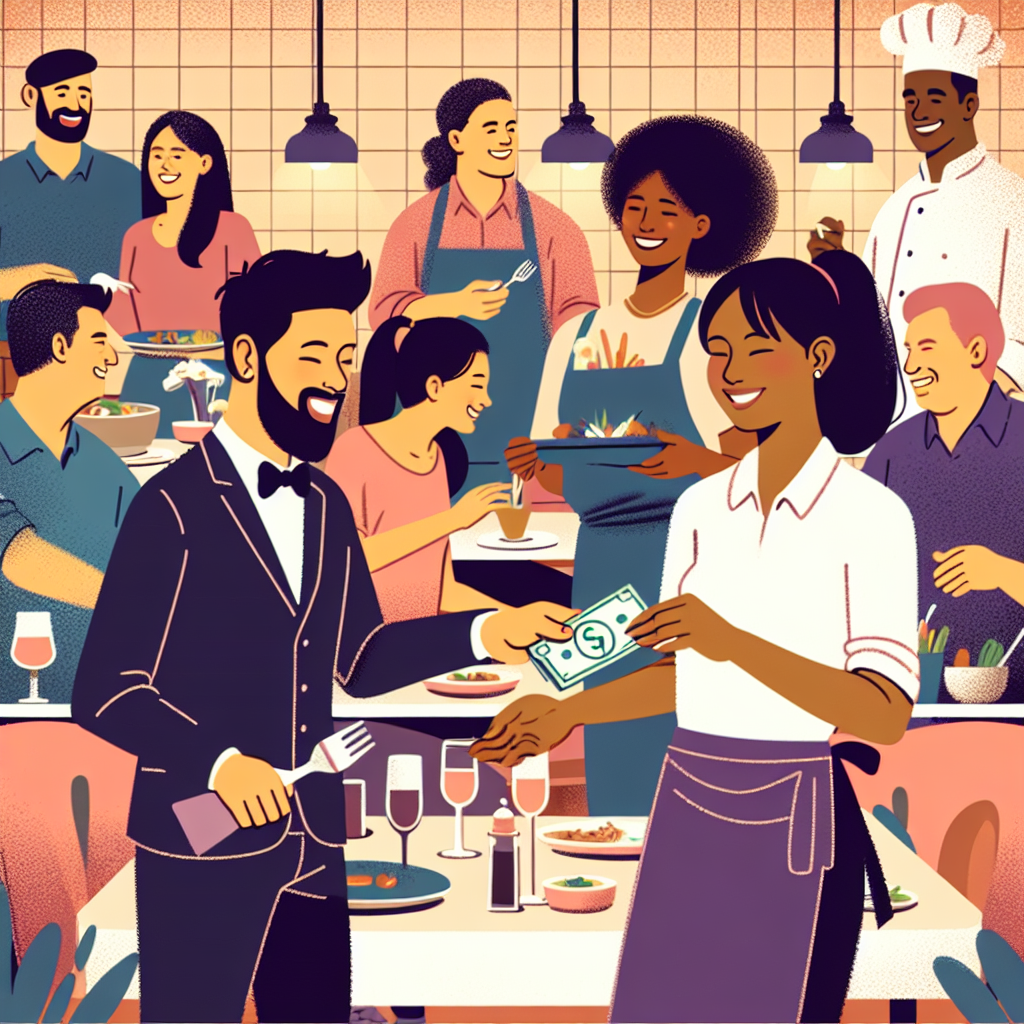
When dining out, the question of whether to tip, especially if the service was subpar, can cause some anxiety. Tipping is not only common in restaurants but also in various service industries like hair salons, taxis, and hotels. A recent law ensures that workers receive all their tips, benefiting millions of workers in the UK. While there are no strict rules on tipping amounts, showing appreciation for good service is important, according to etiquette experts.
Tipping practices vary among individuals and countries. In the UK, a service charge is often included in the bill, while a 10-15% tip is suggested. In the US, tipping can exceed 20% and is sometimes mandatory. In some Asian countries, tipping is considered rude, but Western influence is changing this perception. The level of tipping may depend on the dining establishment, with higher-end restaurants often receiving larger tips to convey a sense of generosity.
Some customers feel uncomfortable with automatic service charges on their bills, viewing it as coercive. It's essential to check if a service charge is included and request its removal if deemed unnecessary. Leaving a positive review on social media is becoming an alternative to tipping, as it can benefit the entire team, from front-of-house staff to kitchen workers. This gesture is highly appreciated by businesses and can have a lasting impact.
Tipping has evolved from leaving spare change to include card and contactless payments. The spirit of tipping remains strong as a way to thank hardworking staff. While tipping is a personal choice, it's crucial to ensure that staff receive their due recognition for good service. Ultimately, whether through tipping or leaving a positive review, acknowledging and appreciating the efforts of service workers is essential in the hospitality industry.
Original news source: Should you tip even if the service wasn't worth it? (BBC)
🎧 Listen:
📖 Vocabulary:
Group or Classroom Activities
Warm-up Activities:
– News Summary
Instructions: Ask the students to work in pairs and summarize the main points of the article in their own words. Encourage them to focus on the key information and practice paraphrasing skills.
– Vocabulary Pictionary
Instructions: Write down key vocabulary words from the article on the board. Divide the students into teams and have them take turns choosing a word to draw while their team guesses. This will help reinforce vocabulary retention in a fun and engaging way.
– Opinion Spectrum
Instructions: Designate one side of the room as "Agree" and the other side as "Disagree". Read out statements related to tipping from the article, and have students physically place themselves along the spectrum based on their opinion. Encourage them to discuss their viewpoints with classmates who are in different positions on the spectrum.
– Pros and Cons
Instructions: Divide the students into groups and ask them to list the pros and cons of tipping based on the information in the article. After a few minutes, have each group present their lists to the class. This activity will encourage critical thinking and debate skills.
– Future Predictions
Instructions: Ask the students to imagine the future of tipping and discuss how they think tipping practices will evolve in the coming years. Encourage them to consider technological advancements, cultural shifts, and societal changes that may impact tipping. This activity will engage their creativity and encourage them to express their thoughts in English.
🤔 Comprehension Questions:
Hair salons, taxis, and hotels.
In the UK, a service charge is often included in the bill, while a 10-15% tip is suggested. In the US, tipping can exceed 20% and is sometimes mandatory.
Western influence is changing the perception of tipping in some Asian countries where it was previously considered rude.
Some customers view automatic service charges as coercive and may feel uncomfortable with them.
Leaving a positive review on social media is becoming an alternative to tipping as it can benefit the entire team and is highly appreciated by businesses.
Tipping has evolved to include card and contactless payments in addition to leaving spare change.
It is important to ensure that staff receive recognition for good service to appreciate their efforts and motivate them to continue providing excellent service.
Acknowledging and appreciating the efforts of service workers is essential in the hospitality industry to show gratitude for their hard work and dedication, ultimately improving the overall customer experience.
🎧✍️ Listen and Fill in the Gaps:
When dining out, the question of whether to tip, especially if the service was subpar, can cause some anxiety. Tipping is not only common in restaurants but also in various service industries like hair salons, , and hotels. A recent law that receive all their tips, benefiting millions of workers in the UK. While there are no rules on tipping amounts, showing appreciation for good service is important, according to etiquette experts. Tipping vary among individuals and countries. In the UK, a service charge is often in the bill, while a 10-15% tip is suggested. In the US, tipping can exceed 20% and is sometimes mandatory. In some Asian countries, tipping is considered rude, but influence is changing this perception. The of tipping may depend on the dining establishment, with higher-end restaurants often receiving larger tips to convey a sense of generosity. Some feel uncomfortable with automatic service charges on their bills, viewing it as coercive. It's essential to check if a service charge is included and request its removal if unnecessary. Leaving a positive on social media is becoming an alternative to tipping, as it can benefit the entire team, from front-of-house staff to kitchen workers. This gesture is highly by businesses and can have a lasting impact. Tipping has evolved from leaving spare to card and contactless . The spirit of tipping remains strong as a way to thank hardworking staff. While tipping is a personal choice, it's crucial to ensure that staff receive their due recognition for good service. Ultimately, whether through tipping or leaving a review, acknowledging and appreciating the efforts of service workers is essential in the hospitality industry.
💬 Discussion Questions:
1. What is your opinion on tipping in restaurants and other service industries?
2. How would you feel if tipping was mandatory in your country?
3. Do you think tipping practices should be standardized worldwide? Why or why not?
4. Have you ever felt pressured to tip more than you wanted to? How did you handle it?
5. Do you like the idea of leaving a positive review on social media instead of tipping? Why or why not?
6. How do you think tipping culture differs between your home country and other countries you have visited?
7. What is the importance of showing appreciation for good service in your opinion?
8. Have you ever had a negative experience with tipping? Can you share what happened?
9. Do you think tipping should be based on a percentage of the total bill, or should it be a flat rate?
10. How do you feel about the idea of tipping being seen as a way to convey a sense of generosity in higher-end restaurants?
11. Have you ever worked in a job where you relied on tips for income? How was your experience?
12. What are your thoughts on the idea of tipping evolving to include card and contactless payments?
13. How do you think the perception of tipping in Asian countries is changing due to Western influence?
14. Why do you think some customers feel uncomfortable with automatic service charges on their bills?
15. In your opinion, what is the best way to ensure that service workers receive fair recognition for their efforts?
Individual Activities
📖💭 Vocabulary Meanings:
Click a dot next to a word, then click the dot next to its meaning to draw a line connecting them.
Words
Meanings
🔡 Multiple Choice Questions:
🕵️ True or False Questions:
📝 Write a Summary:
Write a summary of this news article in two sentences.
Check your writing now with the best free AI for English writing!