


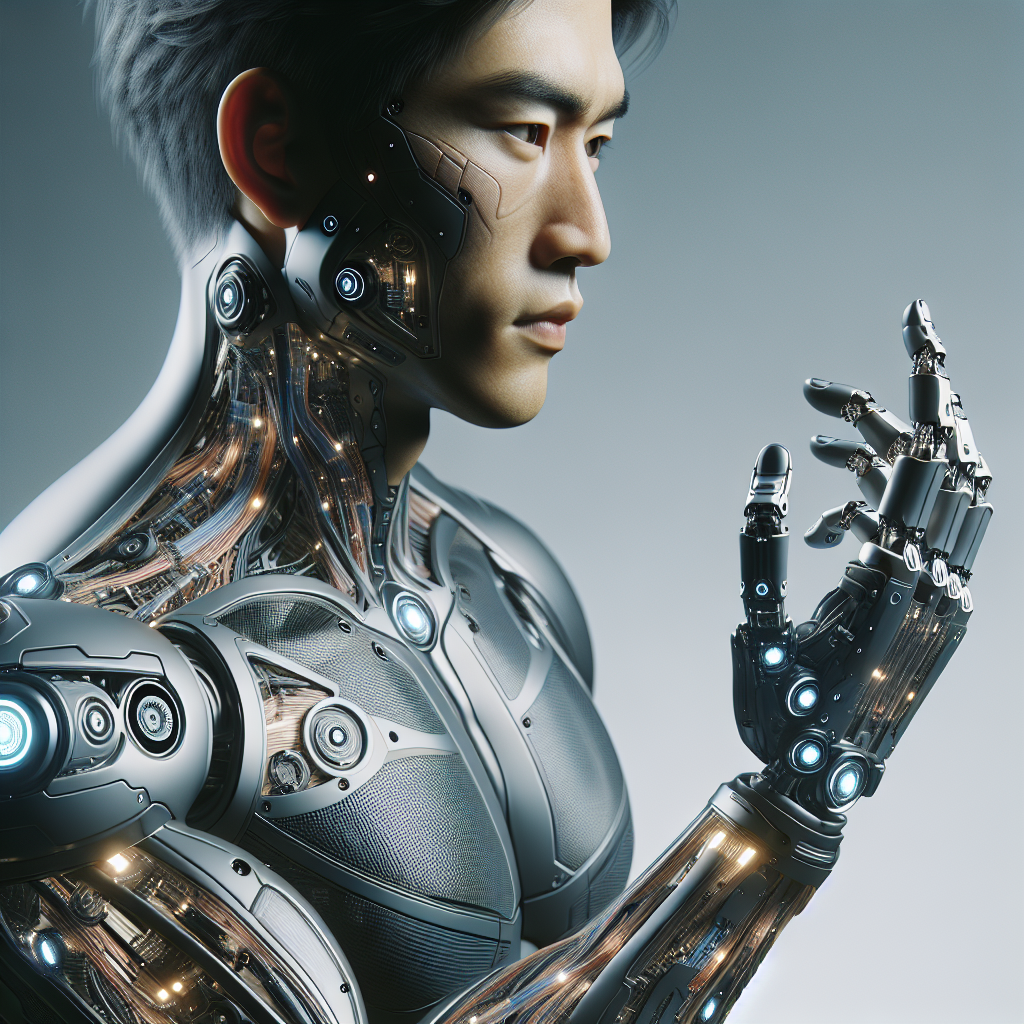
Prosthetic limbs have evolved significantly over the years, moving from wooden and tin designs to modern silicone and carbon fiber materials. The latest innovation in prosthetics is the development of bionic arms, which incorporate artificial intelligence (AI) technology. Atom Limbs, a company based in California, is at the forefront of this advancement. Their bionic arm utilizes advanced sensors and machine learning to interpret electrical signals from the user's brain, enabling them to control and manipulate the prosthetic limb with a full range of human motion.
The Atom Limbs bionic arm is lightweight and non-invasive, meaning it does not require surgery or implants to function. It attaches to the wearer's residual limb using sensors and a cup that fits over the top. The arm connects to an interface, allowing the user to operate it digitally on a computer screen. This technology provides a unique and mind-boggling experience, as users can control a part of their body that they do not physically possess.
While the technology is exciting, the cost remains a concern for many disabled individuals. Assistive devices often come with a hefty price tag, making them inaccessible for those with limited financial means. Atom Limbs aims to position their bionic arm around the $20,000 price point, which is relatively affordable compared to other similar products on the market. However, it is still a significant investment that may not be feasible for everyone.
In addition to cost, there are ethical and practical considerations surrounding the use of bionic arms. Some argue that the focus on innovation in prosthetics has overshadowed the importance of practical application. Social media star Tilly Lockey, who has been using bionic arms since a young age, emphasizes the need for user feedback and testing to ensure the effectiveness of these devices.
While the Atom Limbs bionic arm is still in the early stages of development, the company is collecting data for regulatory filings in the US. It will take some time before these arms become widely available for everyday use. However, the potential for this technology to improve the lives of individuals with limb differences is promising.
Original news source: The 'mind-bending' bionic arm powered by AI (BBC)
🎧 Listen:
📖 Vocabulary:
Group or Classroom Activities
Warm-up Activities:
– News Summary
Instructions: Divide the class into small groups. Assign each group a different aspect of the article to focus on (e.g. the development of bionic arms, the cost, the ethical considerations). Ask the groups to read their assigned section and then summarize the key points in a news article format. They should include a headline, a brief summary, and a few supporting details. Afterward, have each group present their news summary to the class.
– Opinion Poll
Instructions: Create a list of statements related to the article, such as "The development of bionic arms is a positive advancement" or "The cost of bionic arms is too high." Have the students individually rate each statement on a scale of 1 to 5, with 1 being strongly disagree and 5 being strongly agree. Once they have rated all the statements, collect their responses and tally the results. Use the class's opinions as a basis for discussion, encouraging students to share their reasoning and engage in a debate.
– Sketch It
Instructions: Give each student a blank piece of paper and ask them to sketch what they imagine a bionic arm looks like based on the article. Afterward, have students share their sketches with a partner and explain their design choices. As a class, discuss the different interpretations and similarities among the sketches, encouraging students to think creatively and critically about the concept of bionic arms.
– Speed Summarizing
Instructions: Divide the class into pairs. Give each pair a timer and ask them to take turns summarizing the key points of the article in one minute or less. Encourage them to practice speaking fluently and concisely as they relay the information. Afterward, have pairs switch partners and repeat the activity. This will give students multiple opportunities to practice summarizing and improve their speaking skills.
– Future Predictions
Instructions: In small groups, ask students to brainstorm and discuss their predictions for the future of bionic arms and prosthetic technology. Prompt them to consider aspects such as advancements in AI, accessibility, and affordability. After the discussion, have each group present their predictions to the class, encouraging them to support their ideas with evidence from the article or their own reasoning.
🤔 Comprehension Questions:
🎧✍️ Listen and Fill in the Gaps:
Prosthetic limbs have evolved significantly over the years, moving from wooden and tin designs to modern silicone and carbon fiber materials. The innovation in prosthetics is the development of bionic arms, which incorporate artificial intelligence (AI) technology. Atom Limbs, a company based in California, is at the forefront of this advancement. Their bionic arm utilizes advanced and machine learning to interpret electrical signals from the user's , them to control and manipulate the prosthetic limb with a full range of motion. The Atom Limbs bionic arm is lightweight and non-invasive, meaning it does not require surgery or implants to function. It to the wearer's residual limb using sensors and a cup that fits over the top. The arm to an interface, allowing the user to operate it digitally on a computer screen. This provides a unique and mind-boggling experience, as users can control a part of their body that they do not physically possess. While the technology is exciting, the cost remains a concern for many disabled individuals. Assistive devices often come with a hefty tag, making them inaccessible for those with financial means. Atom Limbs aims to position their bionic arm around the $20,000 price point, which is relatively affordable compared to other similar products on the market. However, it is still a significant investment that may not be for everyone. In addition to cost, there are ethical and practical considerations surrounding the use of bionic arms. Some that the focus on innovation in prosthetics has overshadowed the importance of practical application. Social media star Tilly Lockey, who has been using bionic arms since a young age, emphasizes the need for user feedback and testing to ensure the effectiveness of these . While the Atom bionic arm is still in the early stages of development, the company is collecting data for regulatory filings in the US. It will take some time before these arms become widely for everyday use. However, the for this technology to improve the lives of individuals with limb differences is promising.
💬 Discussion Questions:
1. What is a bionic arm and how does it differ from traditional prosthetic limbs?
2. How would you feel if you had the opportunity to control a part of your body that you do not physically possess?
3. Do you think the development of bionic arms is a significant advancement in prosthetics? Why or why not?
4. What are some potential benefits of using bionic arms for individuals with limb differences?
5. How do you think the use of artificial intelligence in bionic arms can enhance their functionality?
6. Do you think the cost of bionic arms is a barrier for many disabled individuals? Why or why not?
7. What are some ethical considerations surrounding the use of bionic arms?
8. How important do you think user feedback and testing are in the development of prosthetic devices?
9. Do you think the focus on innovation in prosthetics has overshadowed practical application? Why or why not?
10. How do you think the development of bionic arms will impact the lives of individuals with limb differences?
11. What are some potential challenges or limitations of using bionic arms?
12. How do you think the development of bionic arms will change society's perception of disability?
13. Do you think the use of bionic arms should be covered by healthcare systems? Why or why not?
14. How do you think the development of bionic arms will affect the job market for individuals with limb differences?
15. What are some other advancements in prosthetics that you would like to see in the future?
Individual Activities
📖💭 Vocabulary Meanings:
Click a dot next to a word, then click the dot next to its meaning to draw a line connecting them.
Words
Meanings
🔡 Multiple Choice Questions:
🕵️ True or False Questions:
📝 Write a Summary:
Write a summary of this news article in two sentences.
Check your writing now with the best free AI for English writing!