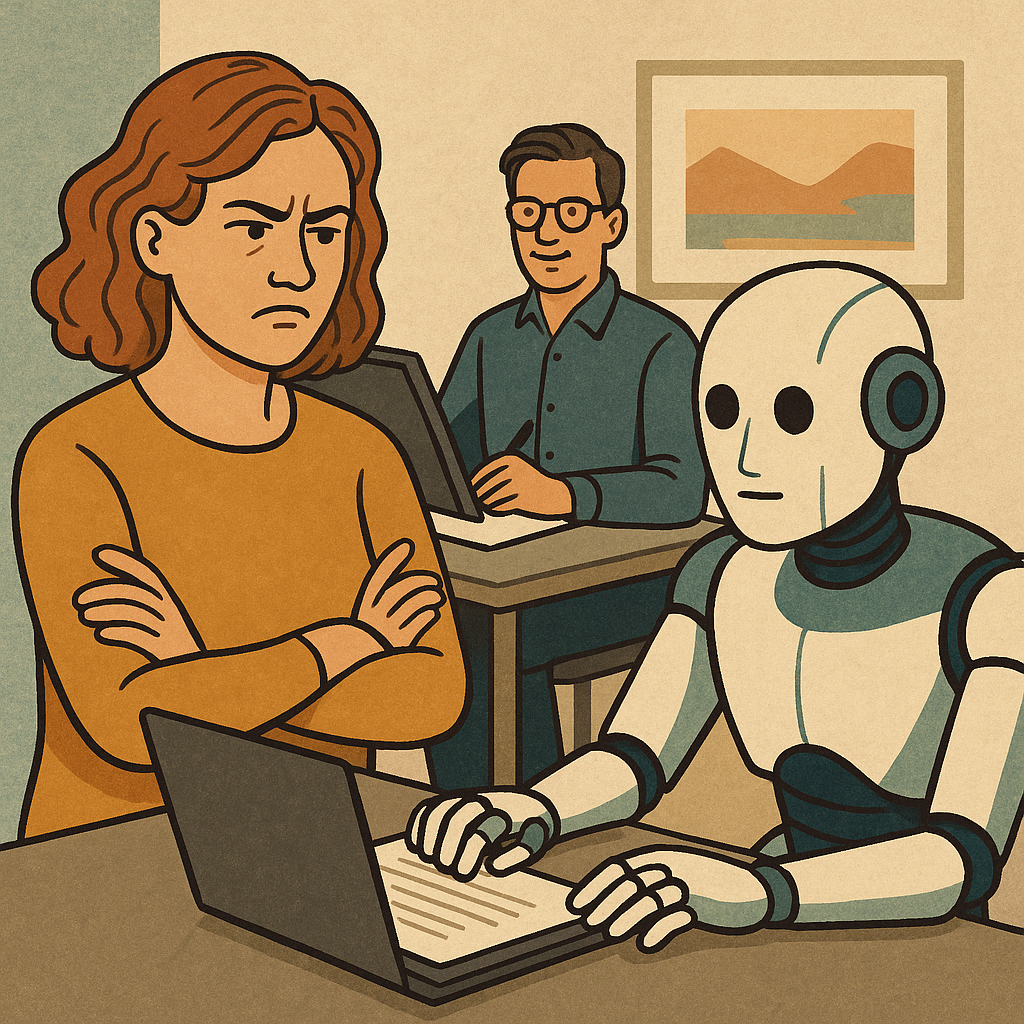
As artificial intelligence (AI) continues to permeate various sectors, some individuals are choosing to resist its adoption. One such person is Sabine Zetteler, who operates a communications agency in London. Zetteler expresses skepticism about the value of AI, stating, "Why would I bother to read something someone couldn't be bothered to write?" This perspective reflects her belief that AI-generated content lacks the human touch and emotional connection that she values in her work. For her, the idea of replacing human employees with AI tools diminishes the joy and purpose of her role as a founder.
The rise of AI tools like ChatGPT, which gained significant popularity after its launch in late 2022, has raised concerns about their environmental impact. According to a report by Goldman Sachs, a single query to ChatGPT consumes nearly ten times the electricity of a Google search. This energy consumption is troubling for individuals like Florence Achery, who owns a yoga retreat business. Achery emphasizes that her work is centered around human connection, and she feels that AI contradicts this ethos. She also highlights the environmental consequences of operating data centers that support AI technologies, suggesting that many people are unaware of these issues.
While Zetteler acknowledges the potential benefits of AI for certain applications, such as assisting visually impaired individuals, she remains skeptical about its long-term advantages for society. She questions whether the financial savings from using AI justify the potential negative impacts on human creativity and connection. Zetteler argues that success should not solely be measured by profit margins but also by the contributions made to society and personal fulfillment. This sentiment resonates with others who are wary of AI's influence on critical thinking and problem-solving skills.
Sierra Hanson, a public affairs professional in Seattle, shares similar concerns about the implications of AI on cognitive abilities. She believes that relying on AI for simple tasks undermines the importance of human critical thinking. Hanson emphasizes that our brains are designed to organize and manage our daily lives, and outsourcing these responsibilities to AI diminishes our capacity to think independently. In contrast, some individuals, like Jackie Adams, have found themselves compelled to adopt AI tools in their work environments, despite initial resistance based on environmental concerns. Adams acknowledges that her colleagues' use of AI for tasks like copywriting forced her to adapt to remain competitive in her field.
The discourse surrounding AI adoption is complex, with varying opinions on its implications for society and individual careers. James Brusseau, a philosophy professor specializing in AI ethics, suggests that while certain fields may still require human judgment, others, such as weather forecasting, are likely to be dominated by AI in the near future. As more professionals like Adams navigate the balance between embracing AI and preserving their autonomy, the conversation about AI's role in our lives continues to evolve. The challenge remains to find a way to integrate AI in a manner that enhances human capabilities rather than diminishes them.
Original news source: The people refusing to use AI (BBC)
🎧 Listen:
📖 Vocabulary:
Group or Classroom Activities
Warm-up Activities:
– CHARADES
Instructions: Students will act out various terms related to artificial intelligence (e.g., "AI," "machine learning," "data center," "critical thinking") without speaking, while the rest of the class guesses the term. After each round, discuss the significance of the term in relation to the article.
– OPINION POLL
Instructions: Students will be divided into small groups and asked to discuss their views on the statement: "AI will ultimately enhance human creativity." Each group will take a poll and share the results with the class, explaining their reasoning behind their opinions.
– MIND MAP
Instructions: In pairs, students will create a mind map that explores the pros and cons of AI based on the article. They should include ideas from the text as well as their own thoughts. After completing their mind maps, each pair will present their findings to the class.
– FUTURE PREDICTIONS
Instructions: Students will write down their predictions for the future of AI in various sectors (e.g., healthcare, education, creative industries). After a few minutes, they will share their predictions with a partner, discussing the potential impacts and implications based on the article.
– HEADLINE CREATION
Instructions: Students will work individually or in pairs to create catchy headlines that summarize the article's main points. After crafting their headlines, they will share them with the class, explaining the rationale behind their choices and how they reflect the article's content.
🤔 Comprehension Questions:
Zetteler is concerned that AI-generated content lacks the human touch and emotional connection that she values in her work. She believes that replacing human employees with AI tools diminishes the joy and purpose of her role as a founder.
Achery emphasizes that her work is centered around human connection and feels that AI contradicts this ethos. She is also concerned about the environmental consequences of operating data centers that support AI technologies.
The article mentions that a single query to ChatGPT consumes nearly ten times the electricity of a Google search, raising concerns about the energy consumption and environmental impact of AI technologies.
Zetteler argues that success should also be measured by the contributions made to society and personal fulfillment, rather than solely focusing on financial savings or profit margins.
Hanson believes that relying on AI for simple tasks undermines the importance of human critical thinking and diminishes our capacity to think independently, as our brains are designed to manage our daily lives.
Adams initially resisted the use of AI due to environmental concerns but felt compelled to adopt AI tools in her work to remain competitive, as her colleagues were already using AI for tasks like copywriting.
Brusseau suggests that while certain fields, such as those requiring human judgment, will still need human input, other fields like weather forecasting are likely to be dominated by AI in the near future.
The article presents a complex discourse surrounding AI adoption, highlighting the challenge of integrating AI in a manner that enhances human capabilities rather than diminishing them, as professionals navigate the balance between embracing AI and preserving their autonomy.
🎧✍️ Listen and Fill in the Gaps:
As artificial intelligence (AI) continues to permeate various sectors, some individuals are choosing to resist its adoption. One such person is Sabine Zetteler, who operates a communications agency in . Zetteler expresses skepticism about the value of AI, stating, "Why would I bother to read something someone couldn't be to write?" This perspective her belief that AI-generated content lacks the human touch and emotional connection that she values in her work. For her, the idea of replacing human employees with AI tools diminishes the joy and purpose of her role as a founder. The rise of AI tools like ChatGPT, which gained significant popularity after its launch in late 2022, has raised about their environmental impact. According to a report by Goldman Sachs, a single query to ChatGPT consumes nearly ten times the electricity of a Google search. This energy consumption is for individuals like Florence Achery, who owns a yoga retreat business. Achery emphasizes that her work is centered around human connection, and she feels that AI contradicts this ethos. She also highlights the environmental consequences of operating data centers that support AI technologies, suggesting that many people are of these issues. While Zetteler acknowledges the potential benefits of AI for certain applications, such as assisting visually impaired individuals, she skeptical about its long-term advantages for society. She questions whether the financial savings from AI justify the potential negative impacts on human creativity and connection. Zetteler argues that success should not solely be measured by profit margins but also by the contributions made to and personal fulfillment. This resonates with others who are wary of AI's influence on critical thinking and problem-solving skills. Sierra Hanson, a public affairs professional in Seattle, shares similar concerns about the implications of AI on cognitive abilities. She believes that relying on AI for simple tasks undermines the importance of human critical thinking. Hanson emphasizes that our brains are to organize and manage our daily lives, and outsourcing these to AI diminishes our capacity to think independently. In contrast, some individuals, like Jackie Adams, have found themselves compelled to adopt AI tools in their work environments, despite initial resistance based on environmental concerns. Adams acknowledges that her colleagues' use of AI for like copywriting forced her to adapt to remain competitive in her . The discourse surrounding AI adoption is complex, with varying opinions on its implications for society and individual careers. James Brusseau, a philosophy specializing in AI ethics, suggests that while certain fields may still require human judgment, others, such as weather forecasting, are likely to be dominated by AI in the near future. As more professionals like Adams navigate the balance between embracing AI and preserving their autonomy, the conversation about AI's role in our lives continues to evolve. The challenge remains to find a way to integrate AI in a manner that enhances human capabilities rather than them.
💬 Discussion Questions:
1. What is your opinion on the role of human creativity in a world increasingly influenced by AI?
2. How would you feel if your job was replaced by AI technology?
3. Do you think that AI can ever truly replicate human emotions in creative work? Why or why not?
4. What is a personal experience you have had with AI, either positive or negative?
5. How do you believe the rise of AI will impact future job markets?
6. Do you think the environmental concerns surrounding AI usage are being adequately addressed? Why or why not?
7. What is a situation where you would prefer human interaction over AI assistance?
8. How would you feel if your friends or family relied heavily on AI for decision-making?
9. Do you think that the benefits of AI, such as efficiency and cost savings, outweigh the potential drawbacks? Why?
10. What is a field or profession that you believe should never be replaced by AI, and why?
11. How do you think society can strike a balance between embracing AI technology and maintaining human connection?
12. Do you like the idea of integrating AI into your daily life? Why or why not?
13. How would you feel if AI began to take over creative industries, such as writing or art?
14. Do you think that schools should incorporate lessons about AI ethics into their curricula? Why?
15. What is a personal value or belief that you think AI could undermine in the workplace?
Individual Activities
📖💭 Vocabulary Meanings:
Click a dot next to a word, then click the dot next to its meaning to draw a line connecting them.
Words
Meanings
🔡 Multiple Choice Questions:
🕵️ True or False Questions:
📝 Write a Summary:
Write a summary of this news article in two sentences.
Check your writing now with the best free AI for English writing!