
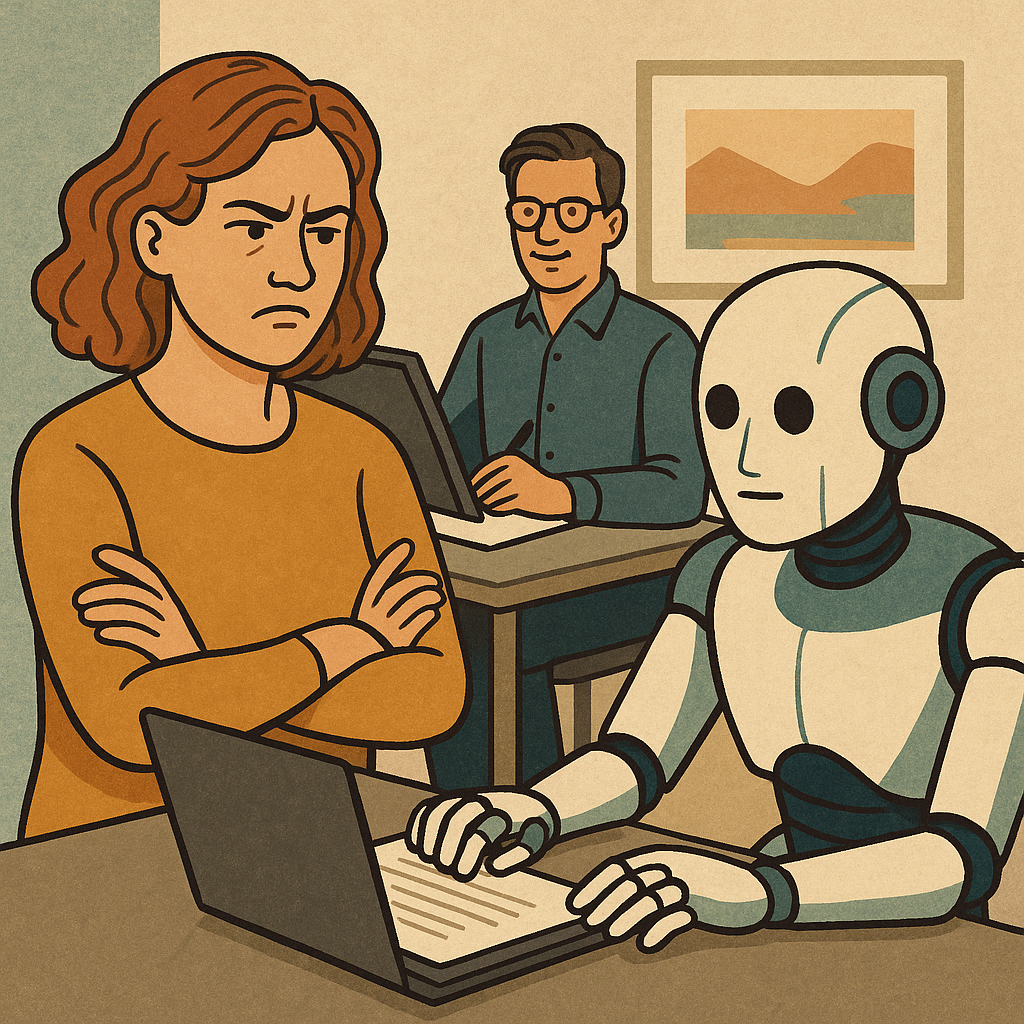
As artificial intelligence (AI) becomes more common in different industries, some people are choosing to resist using it. One of these individuals is Sabine Zetteler, who runs a communications agency in London. She is skeptical about AI, saying, "Why would I bother to read something someone couldn't be bothered to write?" This shows that she believes AI-generated content lacks the personal touch and emotional connection that she values in her work. For her, replacing human workers with AI tools takes away the joy and purpose of her job as a founder.
The popularity of AI tools like ChatGPT, which became well-known after its launch in late 2022, has raised worries about their environmental effects. A report from Goldman Sachs states that just one question to ChatGPT uses almost ten times more electricity than a Google search. This energy use concerns people like Florence Achery, who runs a yoga retreat business. Achery focuses on human connection in her work and feels that AI goes against this idea. She also points out the environmental issues caused by data centers that support AI technologies, suggesting that many people don’t realize how serious these problems are.
While Zetteler sees some benefits of AI, like helping visually impaired people, she is doubtful about its long-term benefits for society. She wonders if the money saved by using AI is worth the possible negative effects on human creativity and connection. Zetteler believes that success should not only be about making money but also about how much we contribute to society and find personal satisfaction. This view is shared by others who are concerned about how AI might affect our critical thinking and problem-solving skills.
Sierra Hanson, a public affairs professional in Seattle, shares similar worries about how AI affects our thinking abilities. She thinks that depending on AI for simple tasks can weaken our critical thinking skills. Hanson points out that our brains are meant to help us manage our daily lives, and relying on AI takes away our ability to think for ourselves. On the other hand, some people, like Jackie Adams, have felt pressured to use AI tools at work, even though they initially resisted due to environmental concerns. Adams admits that her colleagues' use of AI for tasks like copywriting pushed her to adapt in order to stay competitive in her field. The discussion about AI is complicated, with different opinions on how it affects society and careers.
Original news source: The people refusing to use AI (BBC)
🎧 Listen:
📖 Vocabulary:
Group or Classroom Activities
Warm-up Activities:
– CHARADES
Instructions: Divide the class into two teams. Each team takes turns choosing a word or phrase related to the article (e.g., "artificial intelligence," "environmental effects," "critical thinking"). One member of the team acts it out without speaking while their teammates guess the term. Set a time limit for each turn.
– OPINION POLL
Instructions: Create a series of statements based on the article (e.g., "AI has more benefits than drawbacks"). Students walk around the classroom, asking their classmates if they agree or disagree. After collecting responses, students can share the results and discuss the varying opinions in small groups.
– HEADLINE CREATION
Instructions: Students work in pairs to create catchy headlines that summarize the key points of the article. After brainstorming, pairs share their headlines with the class, and the group discusses which headlines best capture the essence of the article.
– MIND MAP
Instructions: On the board, draw a large circle and write "Artificial Intelligence" in it. In small groups, students brainstorm and add branches to the mind map with words and phrases related to the article, such as "environment," "human connection," and "critical thinking." Groups present their contributions to the class.
– TWO TRUTHS AND A LIE
Instructions: Each student writes down three statements about AI based on the article—two truths and one lie. They then take turns sharing their statements with a partner or the class, who must guess which statement is the lie. This encourages critical thinking and discussion about the content.
🤔 Comprehension Questions:
Sabine Zetteler is a communications agency owner in London. She believes that AI-generated content lacks the personal touch and emotional connection that she values, saying, "Why would I bother to read something someone couldn't be bothered to write?"
Florence Achery is worried that AI goes against the idea of human connection that she focuses on in her work. She also highlights the environmental issues caused by data centers that support AI technologies.
A question to ChatGPT uses almost ten times more electricity than a Google search.
Zetteler worries that AI might negatively affect human creativity and connection, and she questions whether the money saved by using AI is worth these potential downsides.
Sierra Hanson thinks that depending on AI for simple tasks can weaken our critical thinking skills, as it takes away our ability to think for ourselves.
Jackie Adams felt pressured to use AI tools because her colleagues were using them for tasks like copywriting, and she wanted to stay competitive in her field.
Zetteler believes that success should not only be about making money but also about contributing to society and finding personal satisfaction.
The discussion about AI is complicated because there are different opinions on how it affects society and careers, with some people seeing benefits while others are concerned about its negative impacts.
🎧✍️ Listen and Fill in the Gaps:
As artificial intelligence (AI) becomes more common in different industries, some people are choosing to resist using it. One of these individuals is Sabine Zetteler, who runs a communications agency in . She is skeptical about AI, saying, "Why would I bother to read something someone couldn't be bothered to write?" This shows that she believes AI-generated content lacks the personal touch and emotional connection that she values in her work. For her, replacing workers with AI takes away the joy and of her job as a founder. The popularity of AI tools like ChatGPT, which became well-known after its launch in late 2022, has raised worries about their environmental effects. A report from Goldman Sachs states that just one question to ChatGPT uses almost ten times more electricity than a Google search. This energy use concerns people like Florence Achery, who runs a yoga business. Achery on human connection in her work and that AI goes against this idea. She also points out the environmental issues caused by data that support AI technologies, suggesting that many people don’t realize how serious these problems are. While Zetteler sees some benefits of AI, like helping visually people, she is doubtful about its long-term benefits for society. She wonders if the money by using AI is worth the possible effects on human creativity and connection. Zetteler believes that success should not only be about making money but also about how much we contribute to society and find personal satisfaction. This view is shared by others who are concerned about how AI might affect our critical thinking and problem-solving skills. Sierra Hanson, a public affairs professional in Seattle, shares worries about how AI affects our thinking abilities. She thinks that depending on AI for simple can weaken our critical thinking . Hanson points out that our brains are meant to help us manage our daily lives, and relying on AI takes away our ability to think for ourselves. On the other hand, some people, like Jackie Adams, have felt pressured to use AI tools at work, even though they initially resisted due to environmental concerns. Adams admits that her colleagues' use of AI for tasks like copywriting pushed her to adapt in order to stay in her field. The discussion about AI is complicated, with different on how it affects society and careers.
💬 Discussion Questions:
1. What is your opinion about using artificial intelligence in everyday life?
2. How would you feel if you had to rely on AI for your schoolwork?
3. Do you think AI can ever replace human creativity? Why or why not?
4. Have you ever used AI tools like ChatGPT? If so, what was your experience?
5. What is a job that you think should never be done by AI? Why?
6. How do you think AI could affect your future career?
7. Do you like the idea of AI helping people with disabilities? Why?
8. How would you feel if you were in a job where AI was used to replace some tasks?
9. Do you think the environmental impact of AI is a serious issue? Why?
10. What is a situation where you think human connection is more important than efficiency?
11. How do you think using AI could change the way we think and solve problems?
12. Do you believe that success should be measured only by money? Why or why not?
13. Have you ever felt pressured to use technology, like AI, to keep up with others? How did it make you feel?
14. What is a positive use of AI that you can think of?
15. How would you feel if you had to choose between using AI tools or doing everything manually? Why?
Individual Activities
📖💭 Vocabulary Meanings:
Click a dot next to a word, then click the dot next to its meaning to draw a line connecting them.
Words
Meanings
🔡 Multiple Choice Questions:
🕵️ True or False Questions:
📝 Write a Summary:
Write a summary of this news article in two sentences.
Check your writing now with the best free AI for English writing!